
Commercial Roofers in Redlands
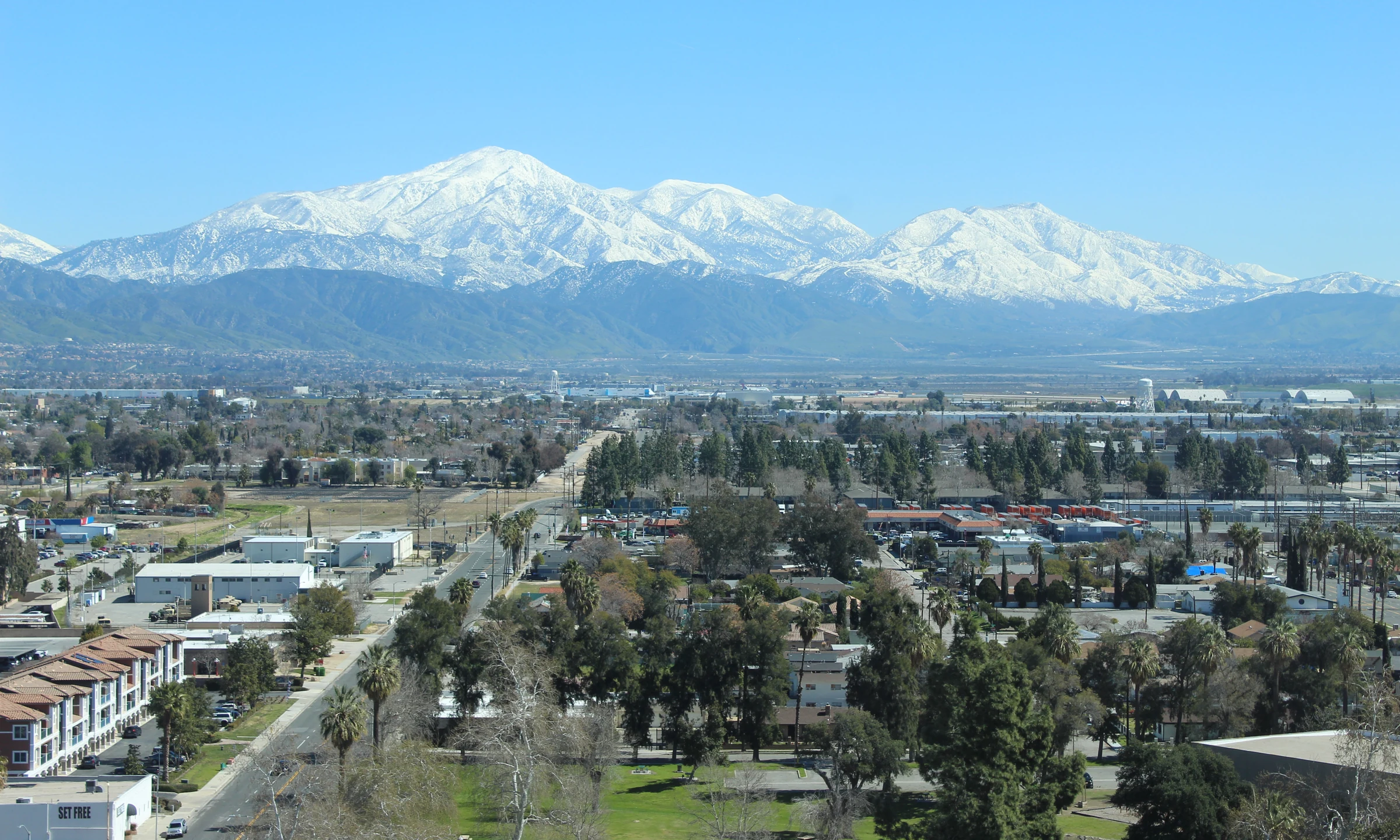
A practical commercial roofing plan for Redlands properties separates urgent leak control from repair, coating, maintenance, and replacement decisions supported by photos and condition findings. Redlands does not have one building type, it has two, on opposite ends of the same city. The Donut Hole and the industrial parcels toward San Bernardino Avenue are wall-to-wall new-generation distribution roofs, including Amazon facilities built in the last several years. Downtown, around State Street and the University of Redlands, the roof stock goes back to the citrus packing era. We work both sides, and the jobs could not look more different.
New Distribution Roofs in the Donut Hole
The unincorporated pocket between Redlands and Mentone that everyone calls the Donut Hole has filled in with the same big-box distribution product going up across the Inland Empire, TPO over long-span steel, interior drains, dock doors on one or two sides. These buildings are recent enough that most of our calls are inspection and maintenance rather than replacement: seam checks, penetration flashing around added racking or refrigeration equipment, and drain clearing before the rainy season arrives.
Because a lot of this space sits close to the county line and outside city limits, permitting for roof work here runs through San Bernardino County rather than the City of Redlands. We confirm the correct jurisdiction before work starts, which saves owners a stop-work order over a paperwork mismatch.
Several of the newer buildings out here carry rooftop solar arrays installed after the base roof went in, and those racking systems create their own maintenance category. Mounting feet and conduit penetrations need periodic resealing, and cleaning crews servicing the panels leave foot traffic on the membrane that ordinary warehouse roofs never see. We coordinate directly with the solar maintenance vendor rather than letting two different crews work the same roof without talking to each other.
Esri's Campus Roofs Are a Different Job Entirely
Esri's headquarters campus is a cluster of connected office and lab buildings that never fully empty out, with landscaped courtyards and rooftop mechanical serving occupied space below. Roof work here is not about a single big membrane on an open field, it is about a series of smaller roof sections, each with its own drainage, its own rooftop units, and staff working underneath during business hours. We schedule around occupancy, protect the courtyards from debris, and keep noise-generating work to windows the facilities team approves in advance.
Campus-style buildings like this also tend to accumulate rooftop equipment over the years, added condensers, network antennas, security cameras, each one a penetration that was not part of the original roof design. Tracking those additions against the roof plan is most of the maintenance work on a campus like this.
Citrus-Era Buildings and Downtown State Street
Redlands built its early wealth on orange groves, and some of the packing houses and warehouses from that era are still standing and still in commercial use, converted to offices, event space, or specialty retail. These buildings carry older built-up roofs, some capped in gravel, some recoated more than once over the decades. Parapets, clerestory windows, and tie-ins to adjacent structures make every one of these jobs a custom fit rather than a standard spec.
Clay tile shows up on some of the older Mission-influenced commercial buildings near downtown too, usually over a low-slope built-up system underneath rather than as the actual weatherproofing layer. We treat the tile as decorative and the membrane below it as the roof that actually needs attention.
What Comes Up Most Often on Redlands Roofs
- Drain and scupper clearing on Donut Hole distribution buildings ahead of winter
- Penetration flashing around added racking, refrigeration, or solar equipment
- Occupied-building coordination and after-hours scheduling on the Esri campus
- Recoating and patch repair on downtown built-up roofs from the packing-house era
- Foothill wildfire-adjacent Class A roofing questions for buildings near the base of the mountains
- Leak tracing on multi-section roofs where water travels before it shows up inside
Foothill Weather and What It Does to a Roof
Redlands sits close enough to the San Bernardino Mountains that the climate behaves a little differently than it does out on the valley floor. Summers still bring the same relentless UV that ages membranes across the Inland Empire, but the foothill edge of the city, up toward Crafton Hills and the base of the mountains, carries real brush and wildfire exposure that flatter parts of the Inland Empire do not deal with the same way. Building owners near that edge ask us about Class A roof assemblies and ember-resistant detailing at vents and eaves more than owners anywhere else in our service area.
Answers for Redlands Building Owners
Do you handle roof permits differently for Donut Hole buildings versus buildings inside Redlands city limits?
Yes. Unincorporated parcels go through the county, incorporated parcels go through the city, and the requirements are not identical. We confirm jurisdiction before pulling anything.
Can you work on our Esri building without disrupting staff below?
Yes, that is most of what campus-style roof work requires. We plan around occupied hours, stage material away from courtyards, and keep the noisiest work to approved windows.
Our downtown building has clay tile. Does that mean we have a tile roof?
Usually not the way people assume. The tile is often decorative over a low-slope membrane that does the actual waterproofing. We inspect the membrane itself rather than the tile alone, since that is where the real failures start.
Are foothill buildings at higher wildfire roofing risk?
Buildings closer to the base of the mountains face more ember exposure during fire season. Roof vents, eave detailing, and the roof covering class all matter more there than they do on a valley-floor warehouse.
How old does a built-up roof have to be before recovering doesn't make sense anymore?
It depends more on moisture content than age. We core sample before recommending anything. A forty-year-old roof with dry insulation can sometimes be recovered; a fifteen-year-old roof with soaked insulation cannot.