
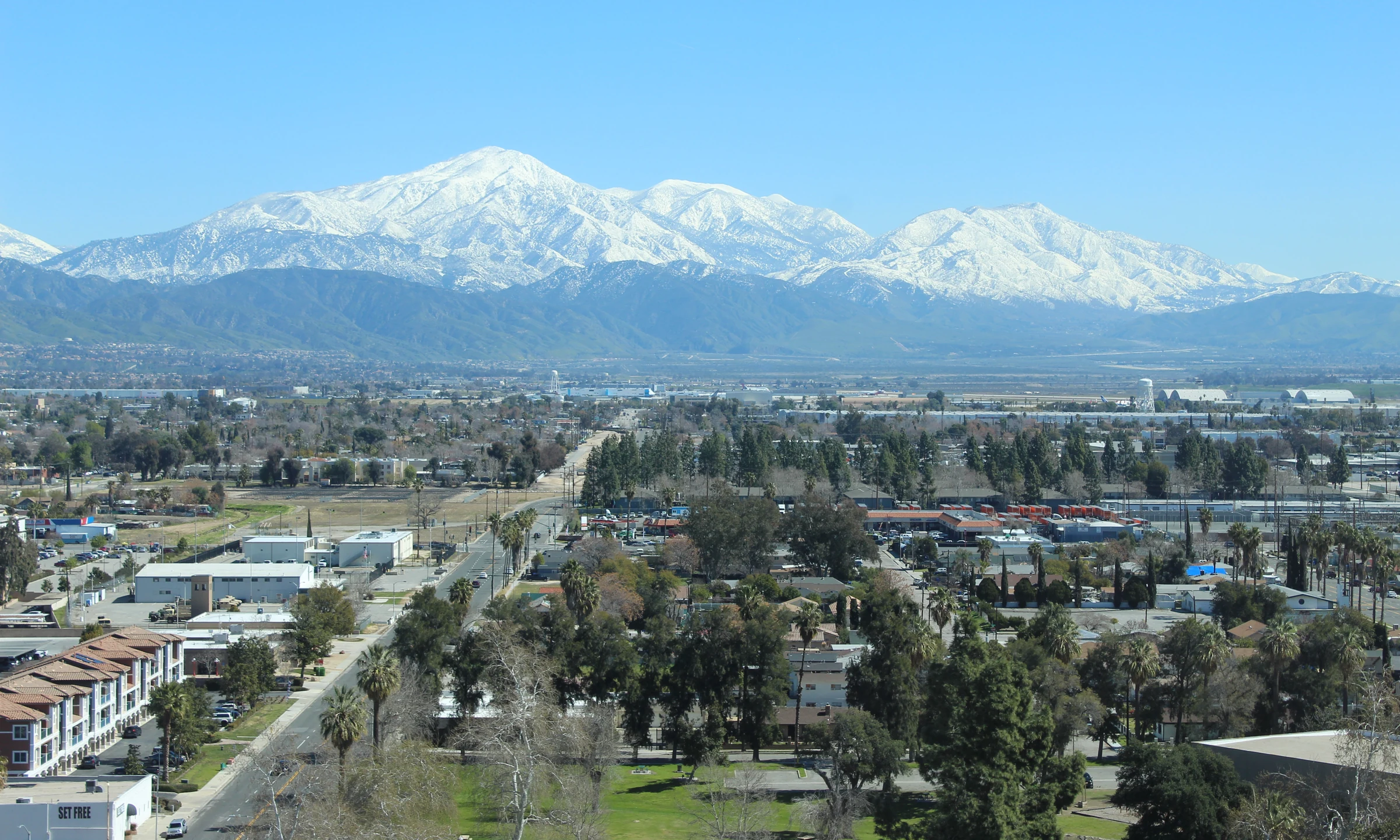
Commercial Roofers in Downtown San Bernardino
Commercial roofing in Downtown San Bernardino should begin with a documented assessment of membrane condition, seams, flashings, drainage, penetrations, and moisture before repair, coating, or replacement is selected. Downtown San Bernardino has some of the oldest commercial roofs we touch anywhere in the county. Masonry storefronts on E Street, mid-century office blocks around Court Street, civic buildings near the courthouse and County Government Center. These roofs were built in a different era, and fixing them takes a different skill set than rolling membrane across a new tilt-up in Fontana.
What Sixty-Year-Old Built-Up Roofs Actually Look Like
Pull up a corner of a downtown roof and you usually find layers. Original built-up asphalt, a recover from the eighties, maybe a cap sheet from the two-thousands, patches on top of patches. Somewhere down there is a deck that might be wood plank, might be lightweight concrete, might be both on the same building where an addition got tacked on.
That history matters because code limits how many roofs can stack on a building. Once you are at two, the next job is a tear-off down to the deck, and the price needs to account for whatever the deck turns out to be. We core-sample before we bid downtown so the number you get reflects what is actually up there. Owners here have been burned by contractors who bid the surface and change-ordered the rest.
The good news is that these old buildings were often overbuilt. Sound wood decks from the fifties can take a modern insulated single-ply system and come out with a better roof than the building has had in decades.
Parapets, Coping, and Where Downtown Buildings Really Leak
On the older masonry buildings, the roof membrane is frequently not the problem. The parapet walls are. Decades of thermal movement open up mortar joints, clay coping tiles crack, and counterflashing rusts loose. Water gets in through the wall above the roofline, runs down inside the masonry, and shows up as a stain two floors below, nowhere near the actual entry point.
We chase these leaks methodically. Hose testing section by section, moisture readings inside the wall, checking the coping before condemning the field membrane. Plenty of downtown owners have paid for roof patches that never had a chance because the water was coming through the parapet. Getting the diagnosis right the first time is most of the value we bring on these buildings.
Civic Buildings and the Paperwork That Comes With Them
Downtown carries a concentration of government work: county offices, court facilities, the city's own buildings, plus the school district and nonprofit buildings scattered through the core. Public work runs on documentation. Prevailing wage, certified payroll, insurance certificates, submittals, closeout packages.
We are set up for that. Our proposals for public buildings spell out the spec by manufacturer and product, the crew handles badge and escort requirements without drama, and the closeout binder shows up complete. Facility staff downtown juggle deferred maintenance across dozens of roofs, so we also give them straight condition rankings: which roofs need money this year, which can wait, and which just need a maintenance visit.
Drainage Problems on Flat Roofs Built Decades Ago
The valley gets its rain in bursts. A winter storm can drop an inch in an afternoon, and summer monsoon cells occasionally do the same. Downtown's older flat roofs were designed around interior drains and scuppers sized generations ago, and time has not been kind to them.
Common drainage failures we correct on these buildings:
- Cast-iron drain bowls rusted through at the deck line, leaking every time it rains regardless of membrane condition
- Drains sitting high after multiple recovers raised the roof surface around them
- Scuppers through parapet walls with failed liners and rotted wood sleeves
- Sagging deck sections ponding water for days after a storm
- Downspouts and conductor heads clogged with decades of debris and pigeon nesting
Ponding water accelerates every other failure mode on a roof, and it adds structural load the original engineer never planned for. When we reroof downtown we fix the drainage as part of the job, tapered insulation to move water, new drain assemblies, rebuilt scuppers, instead of putting new membrane under the same old puddles.
Recover or Tear Off: The Downtown Decision
Every owner of an aging downtown building eventually faces the same choice. A recover saves tear-off cost and landfill fees. A tear-off resets the clock and lets us fix the deck and insulation properly. The right answer depends on how many roofs are already up there, whether the insulation is wet, what the deck is made of, and how long the owner plans to hold the building.
We run moisture surveys and core samples before recommending either path. A recover over wet insulation locks the moisture in and rots the deck from above, it fails early and takes the new investment with it. When the survey says the existing roof is dry and there is only one system in place, a recover is honest value and we say so. Buildings around the old Carousel Mall site are seeing new interest as redevelopment talk continues, and owners positioning to sell or lease want defensible roof reports either way. We write them.
Straight Answers for Downtown Building Owners
My building has two roofs on it already. What are my options?
Code caps you at two roof systems, so the next move is a tear-off to the deck. On old downtown buildings we price deck repair as a defined unit cost up front, so you know what each replaced plank or section costs before the job starts instead of arguing about it after.
Water stains keep appearing but patches never fix it. Why?
On masonry buildings, look above the roof. Failed coping and open mortar joints let water into the wall itself, and it travels before it shows. We test the parapets before touching the field of the roof.
Is a vacant or half-vacant building worth reroofing?
Sometimes the right move is a lower-cost repair program that keeps the building dry while you decide its future. A watertight building holds value and stays leasable. We will scope minimum-necessary work honestly instead of pushing a full replacement you may not need yet.
Can you work on a building with tenants on the ground floor?
Yes. Downtown storefront work means protecting entrances, scheduling loud work around business hours, and keeping the sidewalk clean and open. Standard practice for us, spelled out in the proposal.
Do you handle the old tile and metal details on historic facades?
We handle the roofing side, coping, counterflashing, gutters, and edge metal, and we match profiles where the look matters. Full facade restoration is masonry trade work, but we coordinate with those contractors regularly on downtown buildings.