Getting Water Off a Flat Roof Before It Becomes a Problem
A flat commercial roof does not shed water on its own. It relies entirely on drains, scuppers, and the slope built into the deck or insulation to move water off before it sits long enough to cause damage. We repair and correct drainage on distribution and retail roofs from Redlands' Donut Hole corridor out through Bloomington, and drainage problems are behind more roof failures than most owners expect.
Why Drainage Fails Quietly for Years
A clogged drain doesn't announce itself. Debris builds up slowly, dust and grit that blow in constantly during dry Santa Ana months, leaves and roofing granules that wash toward low points, sometimes construction debris left behind from tenant improvement work. None of it causes a visible problem until a heavy rain arrives and the drain can't keep up.
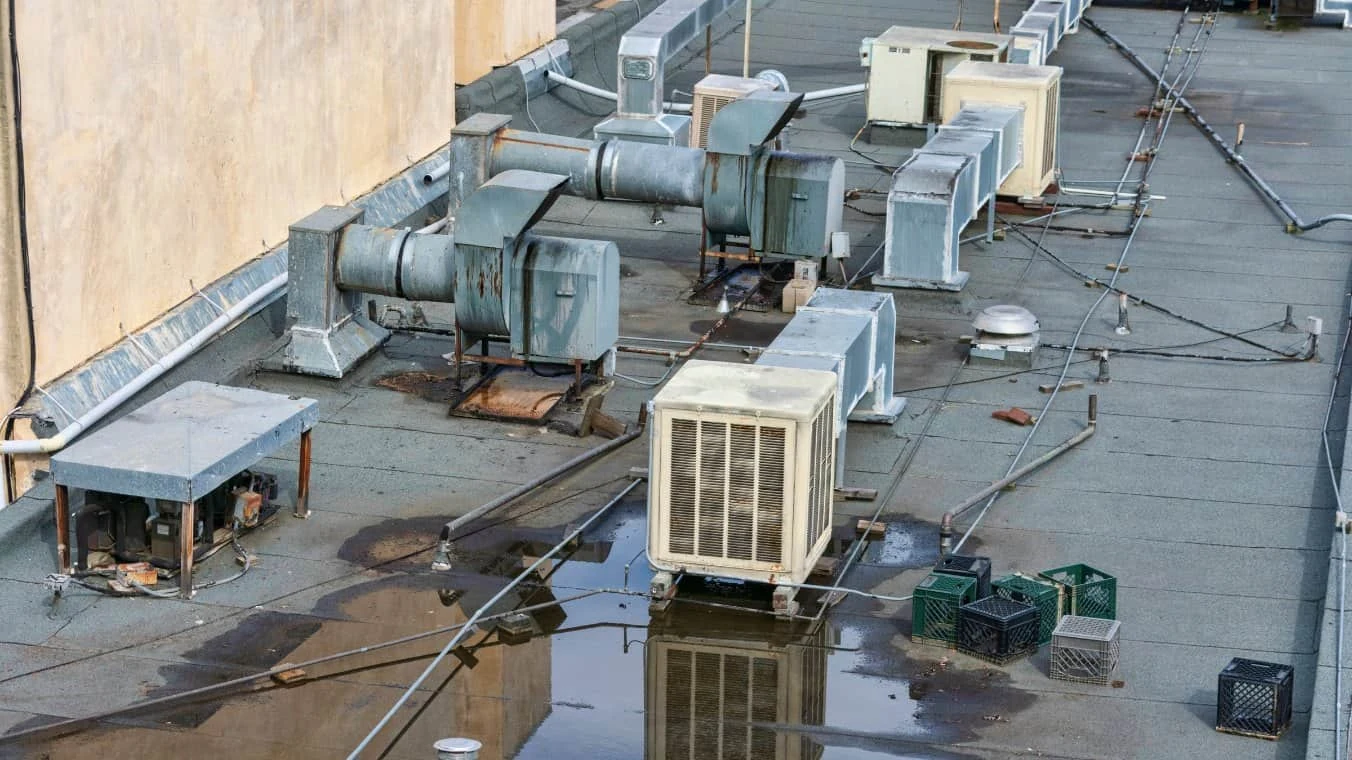
By the time an owner notices standing water, that drain has usually been partially restricted for a long time. Standing water that sits for more than about two days after rain is doing real damage the whole time it's there, UV combined with standing water accelerates membrane breakdown at a much faster rate than dry membrane exposure alone, and structural deflection can actually deepen the low spot over time, making the ponding worse with every rain event rather than better.
Large Distribution Roofs Have Long Drainage Runs
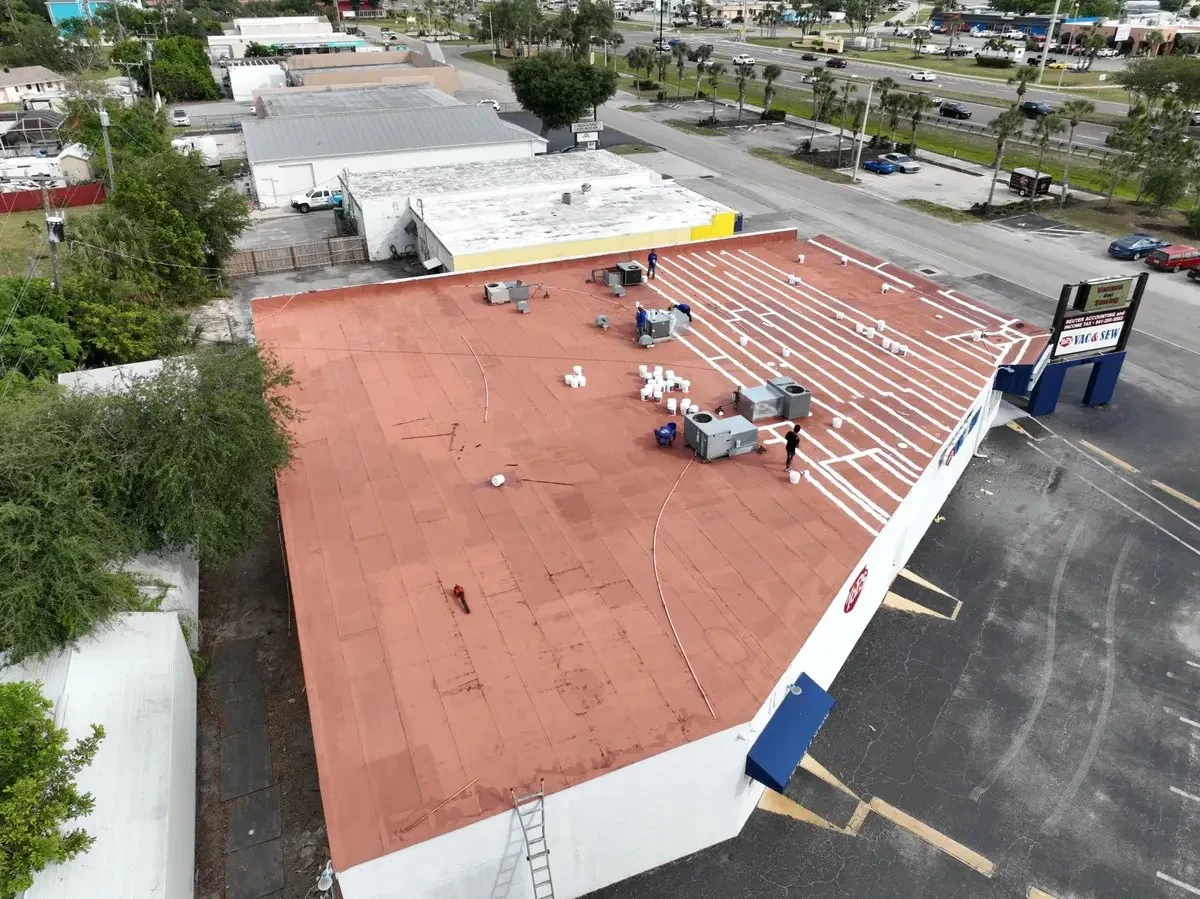
Warehouse and distribution buildings around Redlands' Donut Hole corridor and the growing warehouse conversions in Bloomington often have enormous flat fields with drains spaced far apart. Water on these roofs has to travel a long distance across the field to reach a drain, and any slight deflection in that path creates a low spot that never fully clears.
We map the actual drainage pattern on roofs like this rather than assuming the original design still works as intended. Buildings settle, insulation compresses unevenly over the years, and a drainage plan that worked when the roof was new can develop dead zones a decade or two later that the original design never accounted for.
Monsoon Rain Overwhelms Marginal Drainage Fast
Late-summer monsoon cells drop rain fast, and a drainage system that handles a slow winter storm fine can get overwhelmed by that kind of downpour. Roofs with already-marginal drainage back up within minutes when a monsoon cell hits, and we get more emergency calls in that August window than almost any other time of year, almost always tied to drains that were already partially restricted.
Scuppers built into parapet walls face their own version of this problem. They're often smaller in cross-section than interior drains and sit at wall penetrations where sealant and flashing can deteriorate, so a scupper backup doesn't just pond water, it can push water into the wall assembly itself.
What Drain and Scupper Repair Involves
Simple cases just need clearing, debris removed, strainer baskets reset, flow tested with actual water rather than assumed from a visual check. We test flow on every drain we service, because a drain that looks clear from above can still have a partial blockage further down the leader line that a visual check would miss entirely.
More involved cases need physical correction. A drain sitting slightly proud of the surrounding membrane creates a permanent low spot around it; that gets addressed with tapered insulation built up around the drain bowl. Scuppers with deteriorated through-wall flashing get rebuilt instead of merely resealed, since sealant alone doesn't fix a flashing detail that's failing structurally.
On roofs with chronic ponding that drain repair alone won't fix, we look at adding drains or scuppers rather than just maintaining the existing ones. Sometimes the original design simply didn't put enough drainage points on the roof for its size, especially after an addition increased the drainage area without adding capacity.
What a full drainage evaluation and repair covers:
- Flow testing every drain and scupper with actual water, not visual inspection alone
- Debris clearing at drain bowls, strainer baskets, and scupper throats
- Tapered insulation correction around drains sitting proud of the field
- Through-wall scupper flashing condition and rebuild where deteriorated
- Mapping actual water flow paths across the field to find hidden low spots
- Evaluation of whether existing drain count is adequate for current roof area
Preventing the Next Backup
Drains and scuppers belong on every maintenance visit we do, rather than an annual check alone. Clearing them twice a year, timed around the windy season and again before monsoon season, catches most buildup before it becomes a backup. Owners who skip this step are usually the ones calling us for an emergency after the first big August rain.
Drainage Questions Owners Ask
How long can water sit on my roof before it causes damage?
Most manufacturer guidance treats anything ponding more than about 48 hours after rain as a problem worth addressing. Longer than that, and the combination of UV and standing water accelerates membrane wear at that spot faster than the rest of the roof.
Why does my roof pond in the same spot every time it rains?
That's almost always a structural low point, either from original design, deck deflection, or compressed insulation. Clearing the drain nearby helps but doesn't fix a true low spot, that needs tapered insulation or a drain adjustment.
Do scuppers need different maintenance than interior drains?
Yes. Scuppers have through-wall flashing that interior drains don't, and that flashing deteriorates on its own timeline separate from drain clogging. We check both the opening and the wall flashing on every scupper.
Can you add drains to a roof that doesn't have enough?
Yes, when the evaluation shows the existing drain count can't handle the roof area, especially after an addition increased square footage without adding drainage. It's a more involved repair than clearing existing drains but often solves chronic ponding for good.
Is a clogged drain covered by insurance if it causes interior damage?
That depends on your policy and whether the clog is considered a maintenance failure versus storm-related. We document drain condition at every maintenance visit specifically so there's a record either way.