Wind Is the Roof Claim This Market Sees Most
San Bernardino sits close to the mouth of the Cajon Pass, and when a Santa Ana event sets up, wind that's been accelerating through that gap comes off the pass and hits the flat commercial roofs across the valley floor at speed. It's the single most common cause of the roof insurance claims we document in this market, ahead of anything else, and it leaves a recognizable pattern once you know where to look.
How Santa Ana Wind Damages a Low-Slope Roof
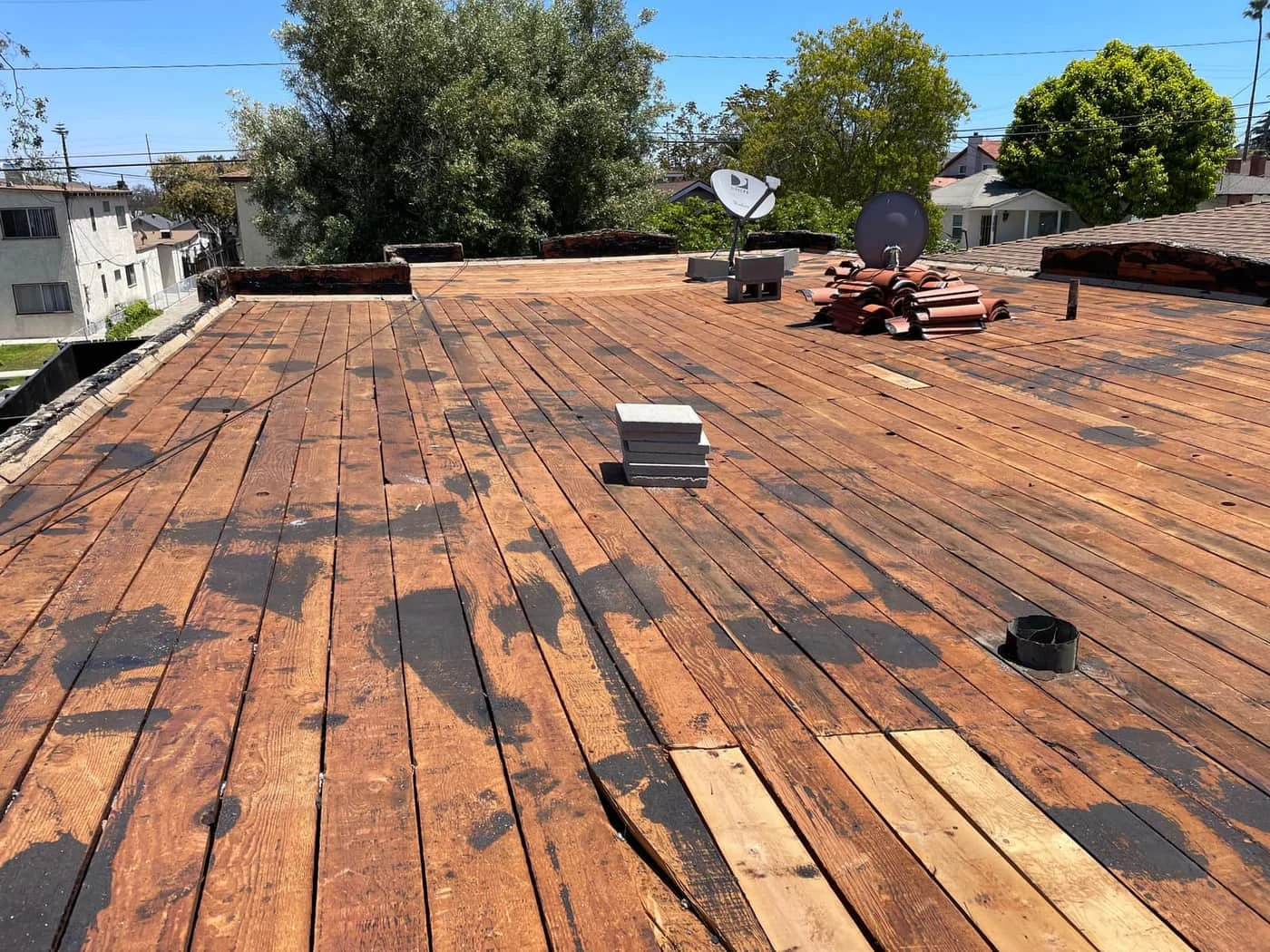
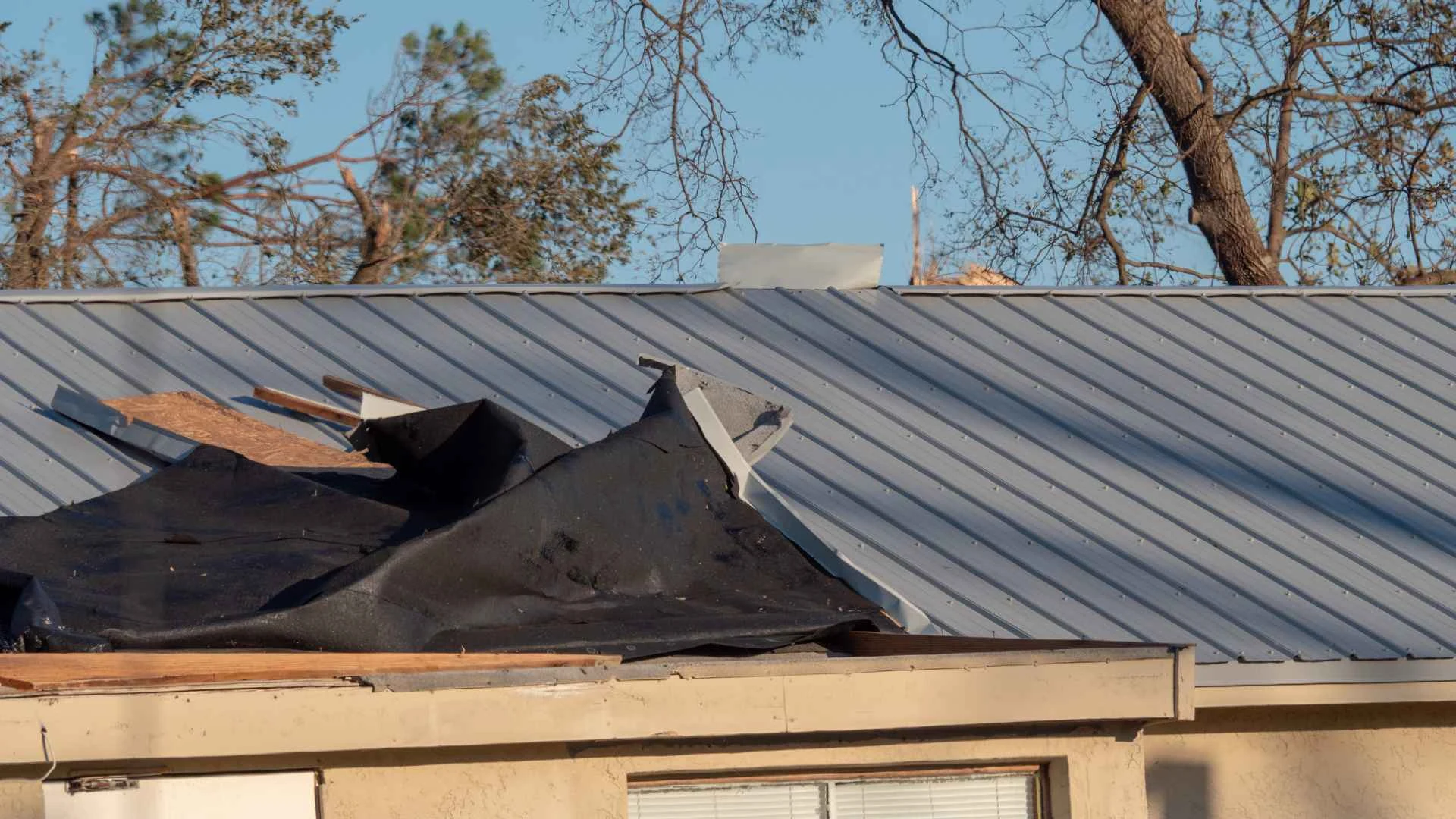
Sustained wind, not a single gust, is what does the damage. A Santa Ana event can push wind across a roof for hours, and uplift concentrates hardest at the perimeter, at corners, and around rooftop penetrations. On TPO and other single-ply membranes, that shows up as lifted or torn seams at the edge, detached edge metal, and fastener plates that have pulled through the membrane in the direction the wind was moving. On built-up and modified bitumen roofs, common on older commercial buildings around downtown San Bernardino, wind more often lifts and displaces gravel ballast or cap sheet at the edges, exposing the layers beneath.
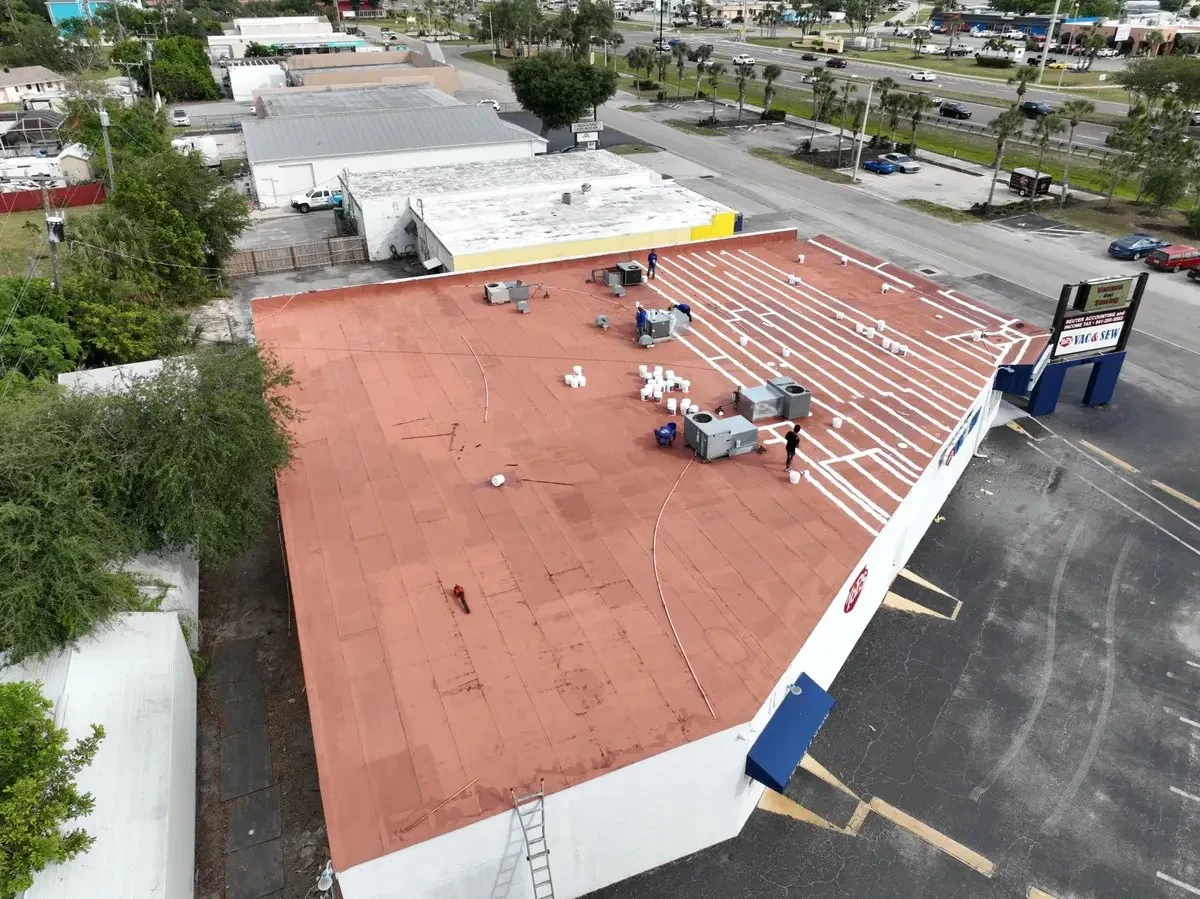
Warehouse and distribution buildings out toward the industrial corridor, including large-format roofs near the BNSF intermodal yard, present a particular documentation challenge simply because of scale. A single Santa Ana event can affect wide sections of a 150,000- or 200,000-square-foot roof, and the difference between an accurately scoped claim and an underpaid one usually comes down to whether every affected zone got measured, including sections beyond where the leak first showed up inside the building.
Retail Strips and Older Roofs Along the Pass Corridor
Beaumont and Banning sit even closer to where the wind funnels in, and commercial buildings there, including older retail strips and small commercial roofs, see wind claims more often than almost anywhere else in this market. A lot of that roof stock predates current wind-uplift fastening standards, which means damage there can be more extensive for a given wind speed than on a newer building with a modern fastening pattern. We document that context specifically, because it affects both the extent of damage and, in some cases, what code-required upgrades apply if a section is being replaced.
Winter Pacific Storms: A Different Kind of Damage
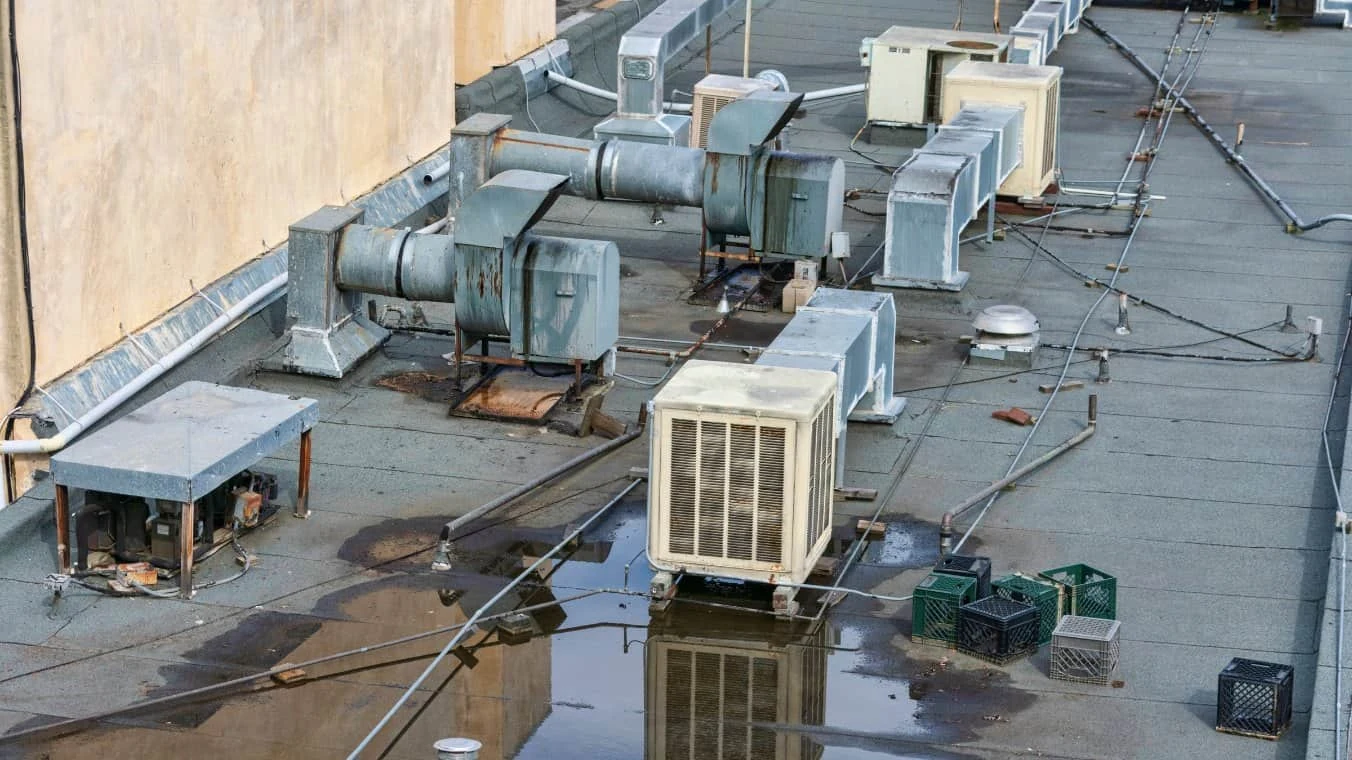
The second peril this market sees is the winter storm system moving in off the Pacific, usually a different animal from a Santa Ana wind event. These storms bring sustained rain rather than sustained wind, and the damage pattern shifts accordingly. Drains that were marginally undersized or partially blocked back up under sustained rainfall and create ponding that finds its way through any weak point in a seam or flashing detail. Roofs with tapered insulation that's settled unevenly over the years pond in low spots that weren't a problem during a normal rain but become one during an atmospheric river event that drops sustained volume over a day or two.
We document winter storm damage differently from wind damage for that reason. Instead of tracking uplift and fastener patterns, we're tracking water paths: where ponding occurred, which drains and scuppers were compromised, and where interior water damage traces back to a specific roof-level failure point rather than a general "roof is old" explanation that won't hold up with an adjuster.
Documenting a Wind or Storm Claim the Way an Adjuster Can Use It
For either peril, the approach is the same: systematic photos across the full roof, including areas beyond the visibly damaged section, measured square footage of affected membrane or flashing rather than a visual estimate, and a written scope that separates event-caused damage from anything that was already showing wear. Older roofs along the pass corridor especially need that last piece done carefully, since a claim that tries to attribute pre-existing wear to a single wind event loses credibility fast, while one that's upfront about the distinction tends to get the legitimate damage approved without a fight.
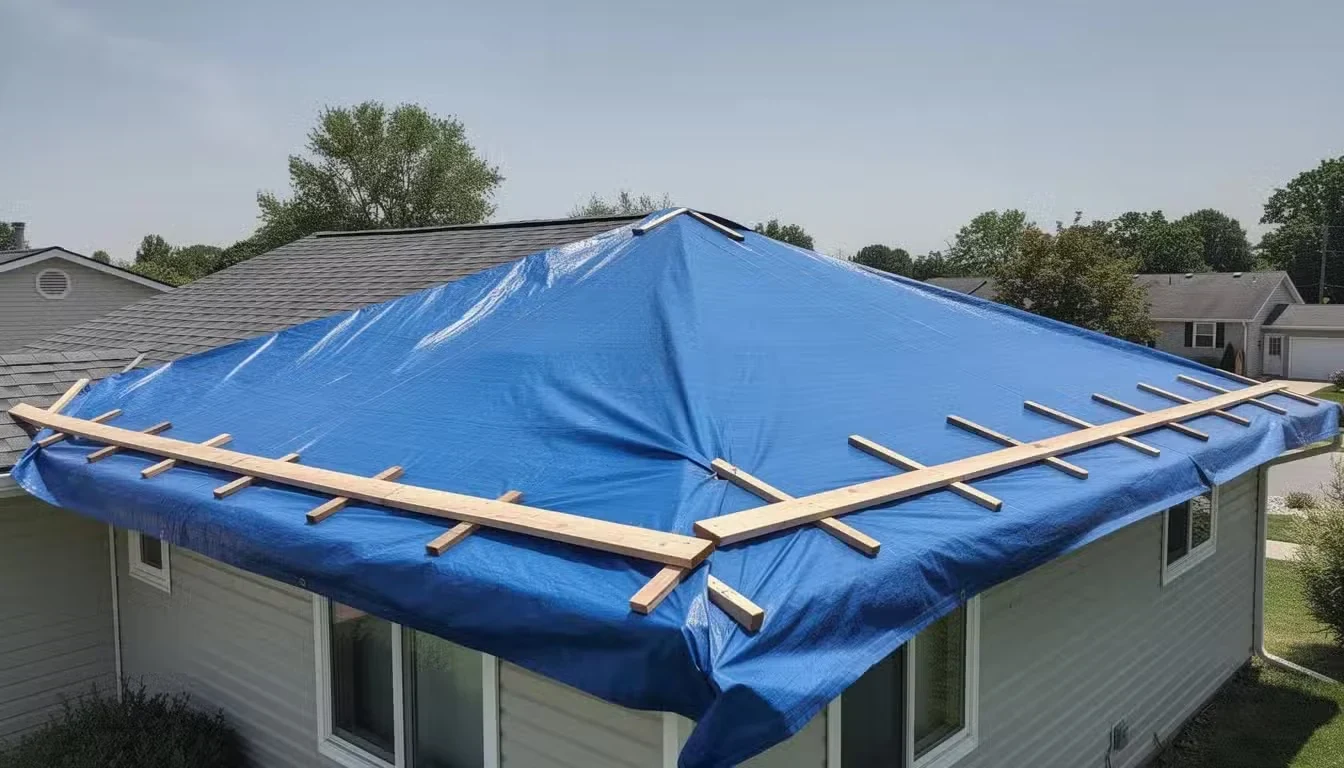
We meet the adjuster on the roof for the walkthrough and point directly to what we documented and why we characterized it the way we did. If the building needs protection before the claim is resolved, an emergency tarp and dry-in can go up the same visit, independent of where the claim stands.
We're your roofing contractor, not a public adjuster. We document and substantiate wind and storm damage so you and your adjuster are working from an accurate scope; we don't file the claim, negotiate the settlement, or guarantee what gets approved.
Questions About Wind and Storm Roof Claims
How do you tell wind damage from ordinary wear on a flat roof?
Wind damage shows a pattern: lifted or torn membrane concentrated at perimeters, corners, and penetrations, detached edge metal, and fastener pull-through in the direction the wind was moving. Ordinary wear is more even across the field and tends to show as UV-brittled seams or worn granules rather than tearing. We document both so the write-up doesn't overstate one as the other.
Does a winter storm claim look different from a wind claim?
The documentation approach is similar, but the evidence differs. Wind claims lean on membrane displacement and fastener patterns. Winter storm claims from heavy Pacific rain more often show water intrusion at seams, drains, and flashing that were already marginal, so we track ponding, drain backup, and interior water paths in addition to the wind damage itself.
Do you need to see the roof right after the storm, or can it wait?
Sooner is better. Debris gets cleared, membrane that was flapping can tear further, and standing water can obscure exactly where a leak originated. We can still document damage days or weeks later, but a prompt inspection gives the clearest record.
Will you separate storm damage from an older roof's pre-existing wear?
Yes, and we're direct about it. A write-up that honestly separates storm-caused damage from prior wear holds up better under review than one that claims everything as wind-related, especially on older built-up or modified bitumen roofs that were already showing age.
Can you tarp the roof before the claim is settled?
Yes. If wind or storm damage has left the building exposed, we can get an emergency tarp and dry-in in place right away, independent of where the claim stands, and document that work separately from the permanent repair scope.