Repairing Roofs After Wind, Monsoon, and Mountain Snow Loads Hit This Region
This market gets hit by three different kinds of weather that all damage roofs in different ways. Santa Ana wind through the Cajon Pass tears at flat commercial roofs down in the valley. Summer monsoon cells dump fast, heavy rain on roofs that are not built to shed that volume quickly. And up in the mountain communities, snow load and freeze-thaw work on a completely different set of buildings. We repair after all three.
Wind Damage on the Valley Floor
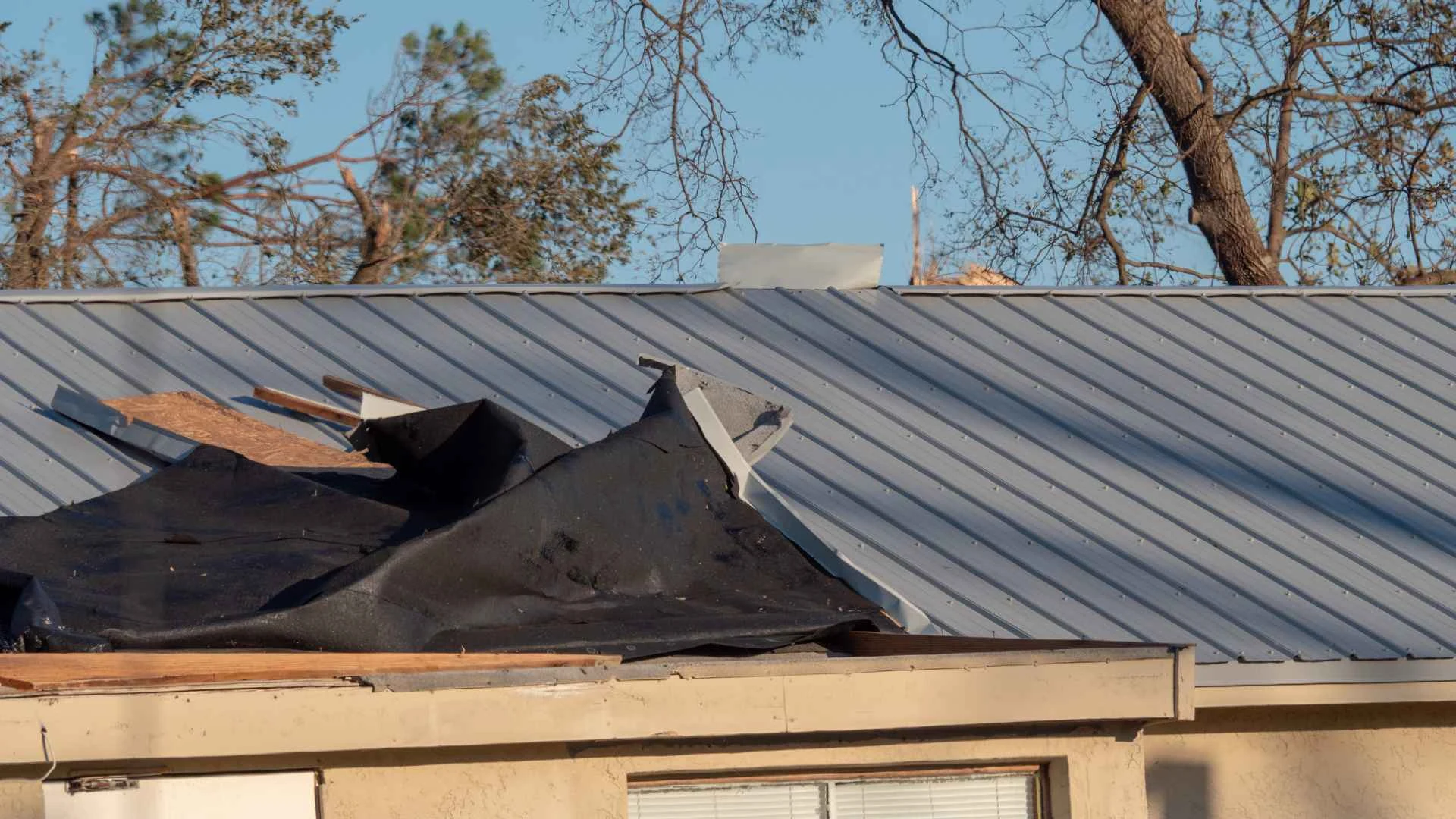
Santa Ana events funnel through the Cajon Pass and accelerate as they hit the open commercial buildings in Beaumont and Banning along the I-10 corridor. These are sustained wind events, not brief gusts, and they find every weak edge fastening pattern on a roof over the course of several hours.
The damage pattern is predictable once you've seen enough of it. Perimeter and corner zones fail first, because that's where wind uplift concentrates on any low-slope roof. A membrane that looks intact in the field can have completely detached edge metal and lifted insulation board at the corners. We check those zones first on every wind-damage call, even when the reported leak is somewhere in the middle of the field.
Older retail strips through Banning's pass-area commercial corridor often have roofs installed before current wind-uplift standards, and repairs there sometimes mean upgrading the fastening pattern in affected zones rather than just replacing what failed, so the same section does not blow out again in the next event.
Monsoon Rain and Fast-Moving Water
Late-summer monsoon cells that push up from the desert can drop a lot of rain in a short window, which is a different problem than a slow winter storm. Drains and scuppers that handle steady rain fine can get overwhelmed by a monsoon downpour, and roofs with any ponding history back up fast when that happens.
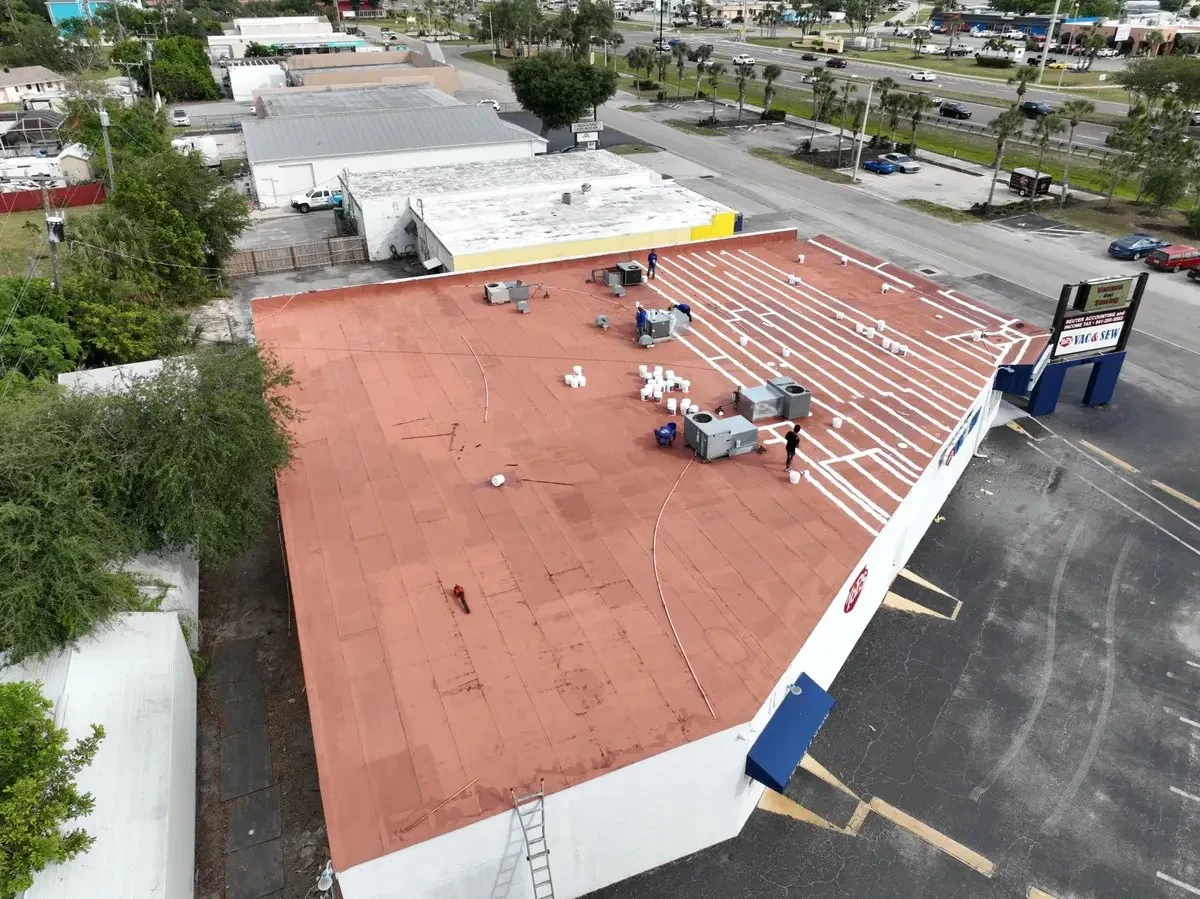
We see this most on distribution and manufacturing roofs with large flat fields and long runs to the nearest drain. When a monsoon cell hits, water sheets across the field faster than it can leave, and any low spot becomes a temporary pond. Storm repair work here often includes correcting the drainage path itself instead of patching only the spot that leaked.
Mountain Communities: A Different Roof Entirely
Up around Crestline, Lake Arrowhead, and Running Springs, the buildings are smaller, shops, lodges, restaurants serving the lake and highway traffic, but the roof loads are the biggest concern in the whole market. Snow accumulation on a low-slope commercial roof up there is a structural load question as much as a waterproofing one, and freeze-thaw cycling at the edges and drains causes its own damage pattern separate from anything the valley floor deals with.
Ice damming at drains and scuppers is common on these mountain buildings when snow melts during the day and refreezes overnight. We clear and repair drainage differently up there, sometimes recommending heat trace at chronic ice-dam locations rather than just re-flashing the same spot every spring.
How We Assess Storm Damage
Every storm call starts with a full roof walk rather than a look at only the reported leak. Wind and heavy rain rarely damage just one spot, and we have found secondary damage on more than a few roofs where the owner only knew about the one obvious leak.
We document everything with photos before touching anything, since that record matters for insurance and for the owner's own maintenance history. Then we separate what needs emergency dry-in from what can wait for a scheduled permanent repair, and price those as two different scopes so nothing gets held up waiting on the other.
What a full storm damage assessment covers:
- Perimeter, corner, and edge metal condition, where wind damage concentrates
- Drainage and ponding evaluation after heavy rain events
- Membrane and flashing condition across the full field rather than only the reported leak area
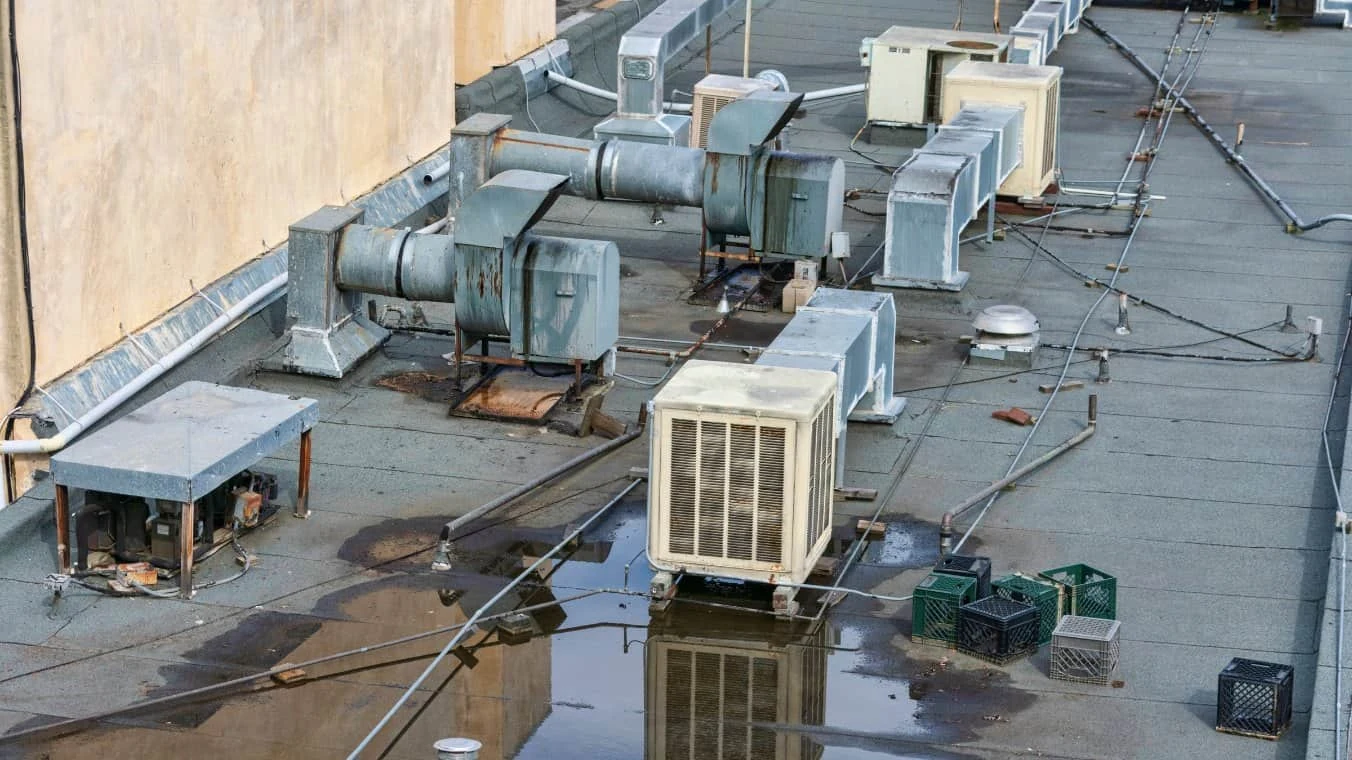
- Rooftop equipment and curb displacement from wind or debris impact
- Insulation moisture check in any area exposed to open water
- Photo documentation for insurance and ownership records
Getting From Damage to Repair
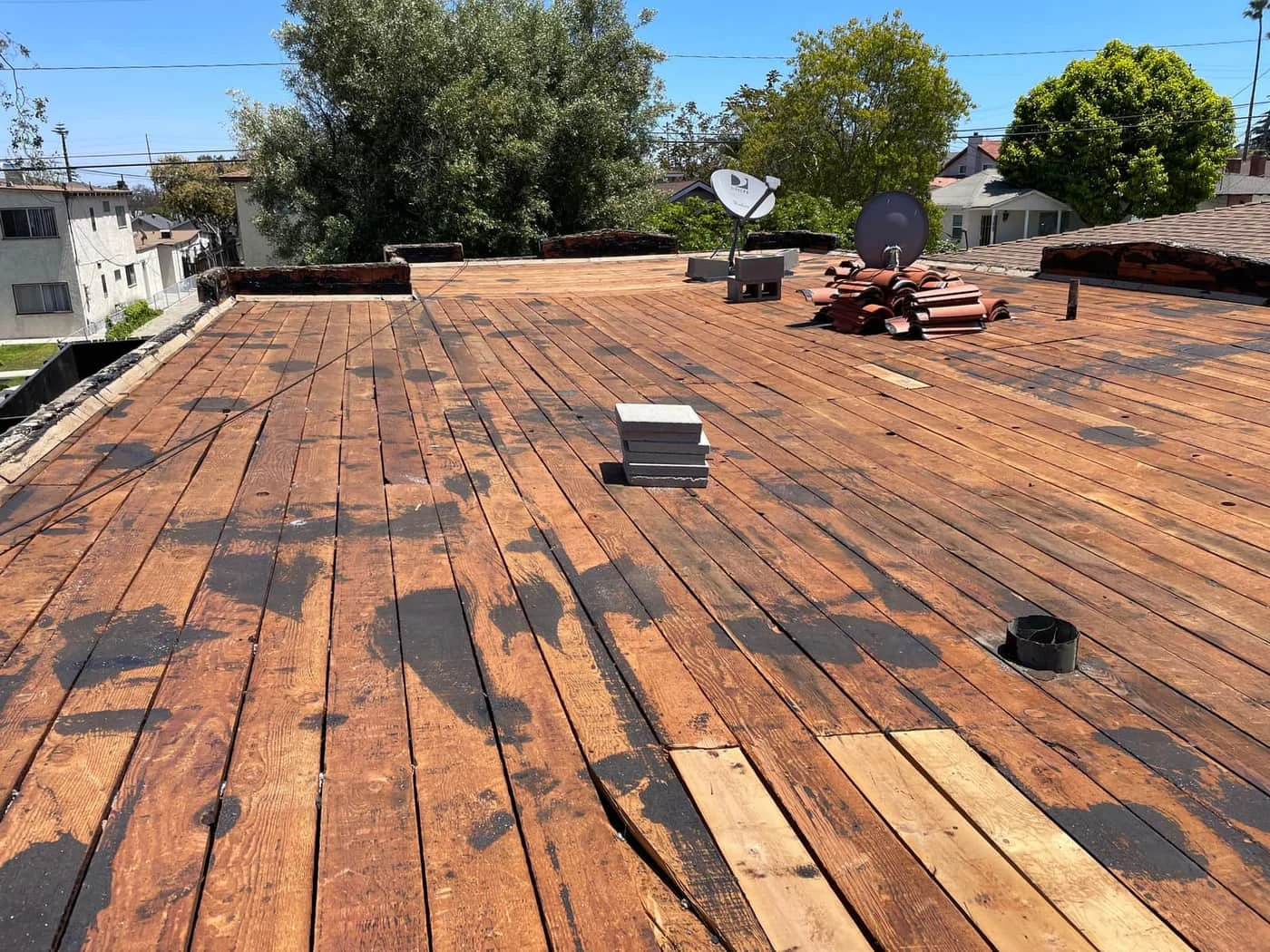
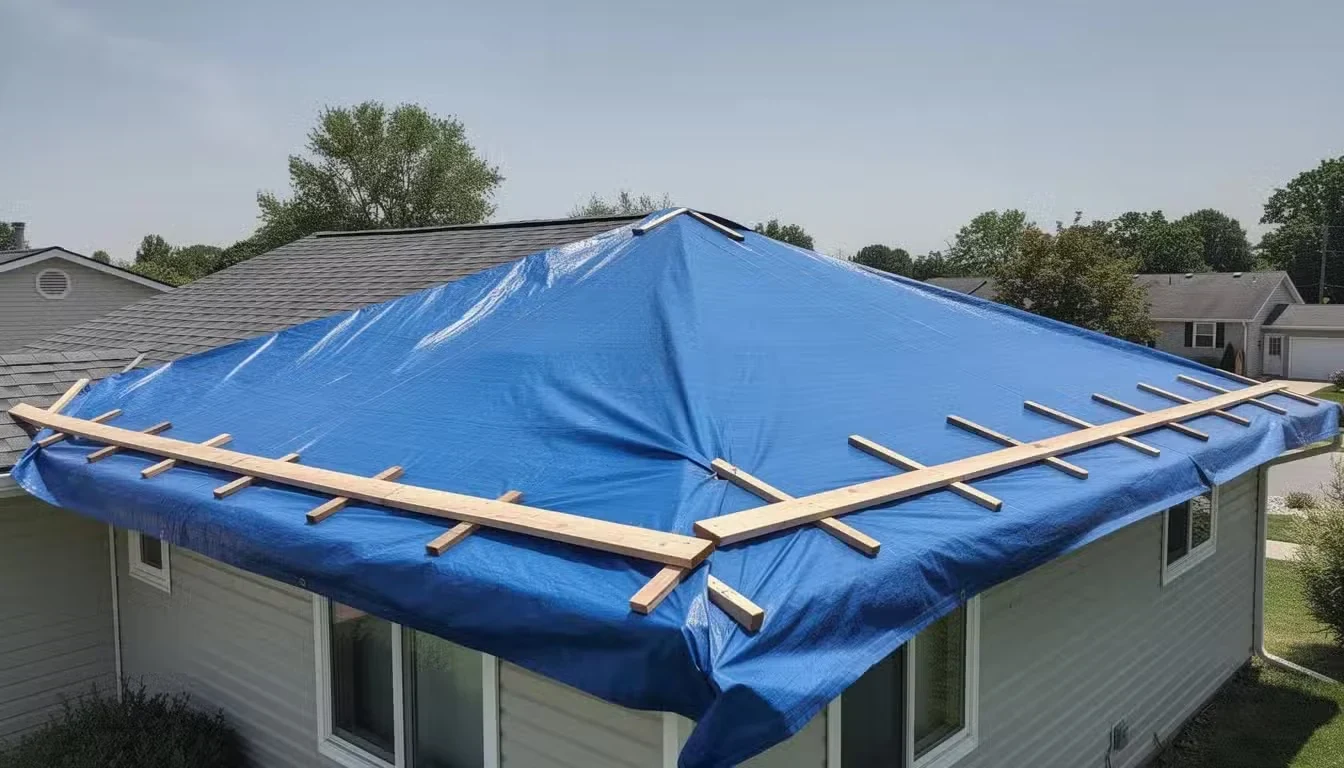
If water is actively entering the building, that gets an emergency dry-in the same day. Once the building is stable, we scope the permanent repair, which can range from a section patch to replacing edge metal across an entire perimeter run, depending on how far the damage spread.
Owners dealing with an insurance claim get documentation built to support that process from the first visit, not assembled after the fact once an adjuster asks for it.
Storm Repair Questions From Building Owners
How do I know if wind damage is limited to what I can see leaking?
You usually don't, which is why we walk the full roof rather than just the reported area. Perimeter zones fail first in wind events and often show damage before it ever leaks into the building.
Do you handle both the emergency stop-gap and the permanent repair?
Yes. We tarp or dry-in first if there's active water, then come back to scope and complete the permanent fix once the building is stable and materials are ready.
How is mountain-community storm damage different from valley-floor damage?
Snow load and freeze-thaw at drains are the main issues up in Crestline and Lake Arrowhead, while wind uplift and monsoon drainage dominate down in the valley. The repair approach and materials differ accordingly.
Will insurance cover a full reroof or just the damaged section?
That depends on the extent of damage and your policy. We document the full scope of what we find, and that record is what your adjuster uses to determine what's covered.
Can you upgrade a weak fastening pattern during a repair instead of just replacing what failed?
In many cases yes, especially on older roofs where the original design didn't account for current wind zones. We flag that option when it applies rather than just replacing like-for-like.