R-Panel Metal Roofing for Industrial and Storage Buildings
R-panel is the exposed-fastener metal roofing you see on self-storage facilities, truck yards, and the smaller buildings clustered around the county's bigger distribution campuses. It's cheaper and faster to install than standing seam, with a different maintenance profile to match.
Where R-Panel Makes Sense Over Standing Seam
Self-storage facilities scattered through Fontana, Rialto, and the high-desert edge of the territory are a natural fit for R-panel, large roof areas, budget-conscious construction, and no real architectural visibility requirement driving the decision. The same goes for truck and equipment yard buildings and the smaller ancillary structures, guard shacks, maintenance bays, that sit alongside the region's bigger logistics campuses.
Where a building's roofline is highly visible from the street or a corporate office wants a specific look, standing seam usually wins out. R-panel is the practical, lower-cost answer for buildings where function outweighs appearance.
Exposed Fasteners: The Trade-Off We Explain to Owners
R-panel screws directly through the panel face into the purlins below, with a rubber washer sealing each fastener. That's a straightforward, economical installation method, but every one of those thousands of fastener points is a potential leak path once the washer ages and hardens.
We're upfront with owners about that trade-off before they choose R-panel over a concealed-fastener system. It's a good roof for the price, but it needs fastener maintenance in a way that standing seam doesn't.
Panel Gauge and Purlin Spacing for Wind Load
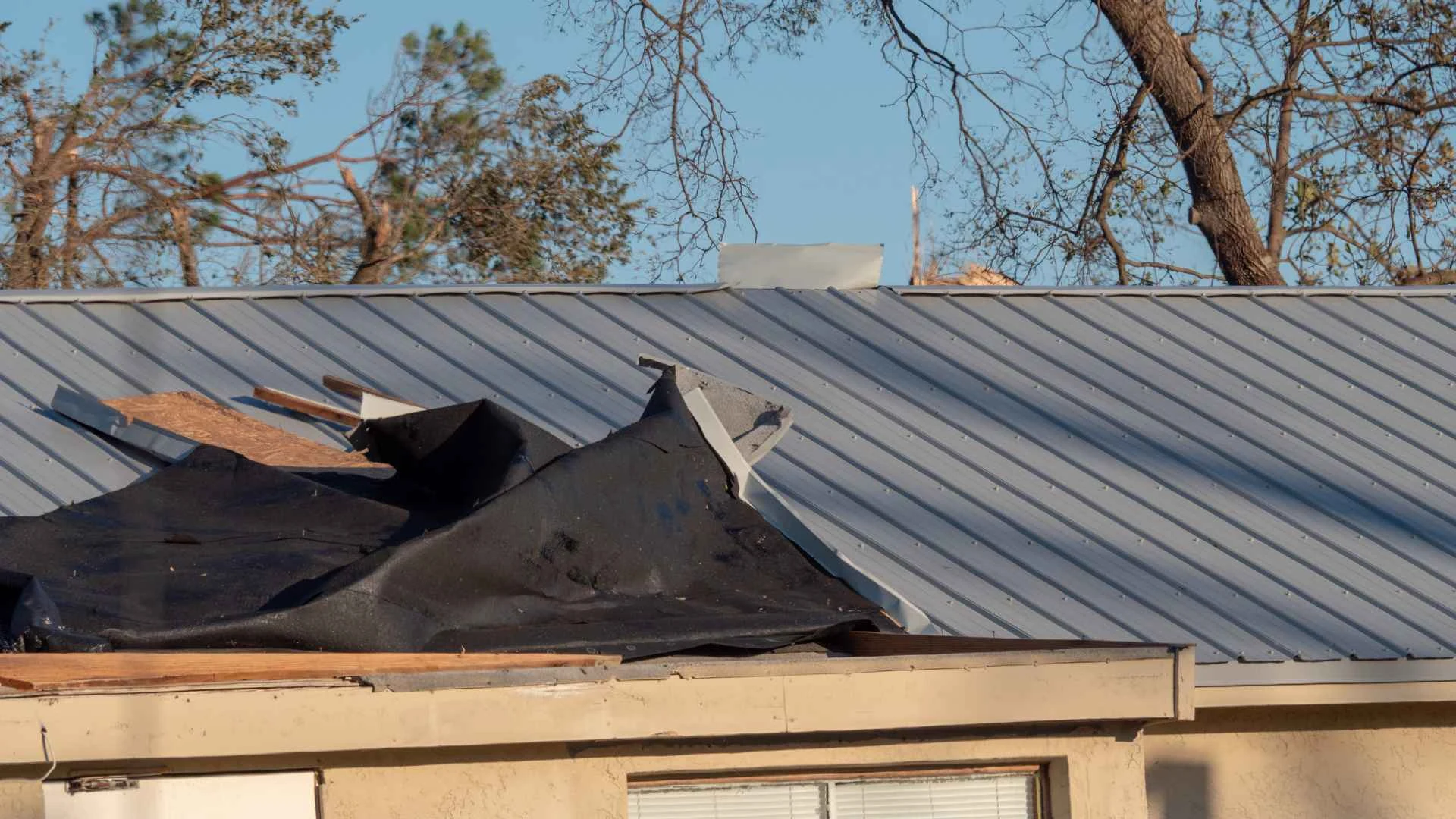
Panel gauge and purlin spacing both factor into how a roof holds up under Santa Ana wind events, which push through this region with enough force to matter on a large, exposed metal roof. We check that the original purlin spacing supports the panel gauge installed, especially on older buildings where a re-roof might have swapped panel type without revisiting the structural spacing underneath.
Rust at Fastener Heads and Cut Edges
The most common failure point on an R-panel roof isn't the panel field, it's the fastener heads and any cut panel edges where the factory coating has been compromised. Once rust starts at a fastener, water can track along the screw shaft into the building well before the surrounding panel shows any visible problem.
We check fastener condition on every R-panel inspection, since a fastener replacement pass is far cheaper than waiting for active leaks to show up at random points across the roof.
Cut edges at ridge caps, valleys, and penetrations deserve the same attention. A field-cut panel edge without proper coating or sealant is a rust starting point that a factory edge never has to deal with, and it's an easy detail to miss on a quick visual walk.
- Self-storage facility roofs
- Truck and equipment yard buildings
- Ancillary structures at distribution campuses
- Agricultural and flex industrial buildings
- Canopy and loading dock covers
- Small retail outbuildings
Re-Roofing Over an Existing R-Panel Roof
When an R-panel roof has reached the point of widespread fastener failure but the structure underneath is sound, we can often install new panels directly over the old ones using furring strips, avoiding a full tear-off. That approach works well on large storage and industrial buildings where minimizing downtime matters more than a from-scratch install.
If the purlins or structure show damage, or if code and insurance requirements call for full removal, we handle that as a complete tear-off and replacement instead.
Self-storage operators in particular tend to favor the recover approach, since a facility with occupied units can't easily shut down a building section for an extended tear-off. Furring over the existing panels keeps units accessible and dry through most of the project.
Questions We Get About R-Panel
How often do exposed fasteners need to be replaced?
It depends on the original fastener quality and sun exposure, but we typically recommend a fastener inspection and partial replacement pass well before the panels themselves show any wear.
Is R-panel a good choice for a self-storage facility roof?
Yes, it's a common and practical choice for that building type given the large roof area and limited architectural visibility concerns.
Can you re-roof over an existing R-panel system?
In many cases, yes, provided the structure underneath is sound. We evaluate the purlins and decking before recommending a recover over full tear-off.
How does R-panel handle Santa Ana wind events?
Properly spec'd panel gauge and purlin spacing handle regional wind loads well. Problems usually trace back to under-spec'd fastening on an older or improperly installed roof rather than the system itself.
What's the biggest maintenance item on an R-panel roof?
Fastener condition, without question. A regular fastener inspection catches washer failure and rust before it becomes an active leak.