PVC Roofing for Grease, Oil, and Chemical Exposure
PVC is the membrane we reach for when something other than sun and wind is attacking the roof. Restaurant exhaust along Hospitality Lane, fuel-adjacent truck yards in Bloomington and Mead Valley, and food-processing operations near the rail corridor in Colton all put grease, oil, or chemical vapor directly onto the membrane surface. Here's what makes PVC different from TPO and EPDM, and where that difference is worth paying for.
What Sets the Chemistry Apart
PVC, polyvinyl chloride, is a thermoplastic like TPO, which means it welds with hot air into seams that are effectively part of the sheet rather than a bonded joint. What sets it apart is the resin itself: PVC has a long track record resisting grease, oils, animal fats, and many industrial chemicals that will soften or degrade both TPO and EPDM over time. That's not a marketing distinction, it's basic polymer chemistry, and it's the reason PVC shows up disproportionately over kitchens and processing floors.
Older PVC formulations relied on plasticizers to keep the sheet flexible, and plasticizer migration out of the membrane over decades was a legitimate long-term concern in the industry. Current commercial-grade PVC from established manufacturers uses higher-retention plasticizer packages specifically to address that history, which is part of why we spec name-brand systems rather than generic sheet on any job with real chemical exposure.
Restaurant and Hospitality Corridor Exhaust
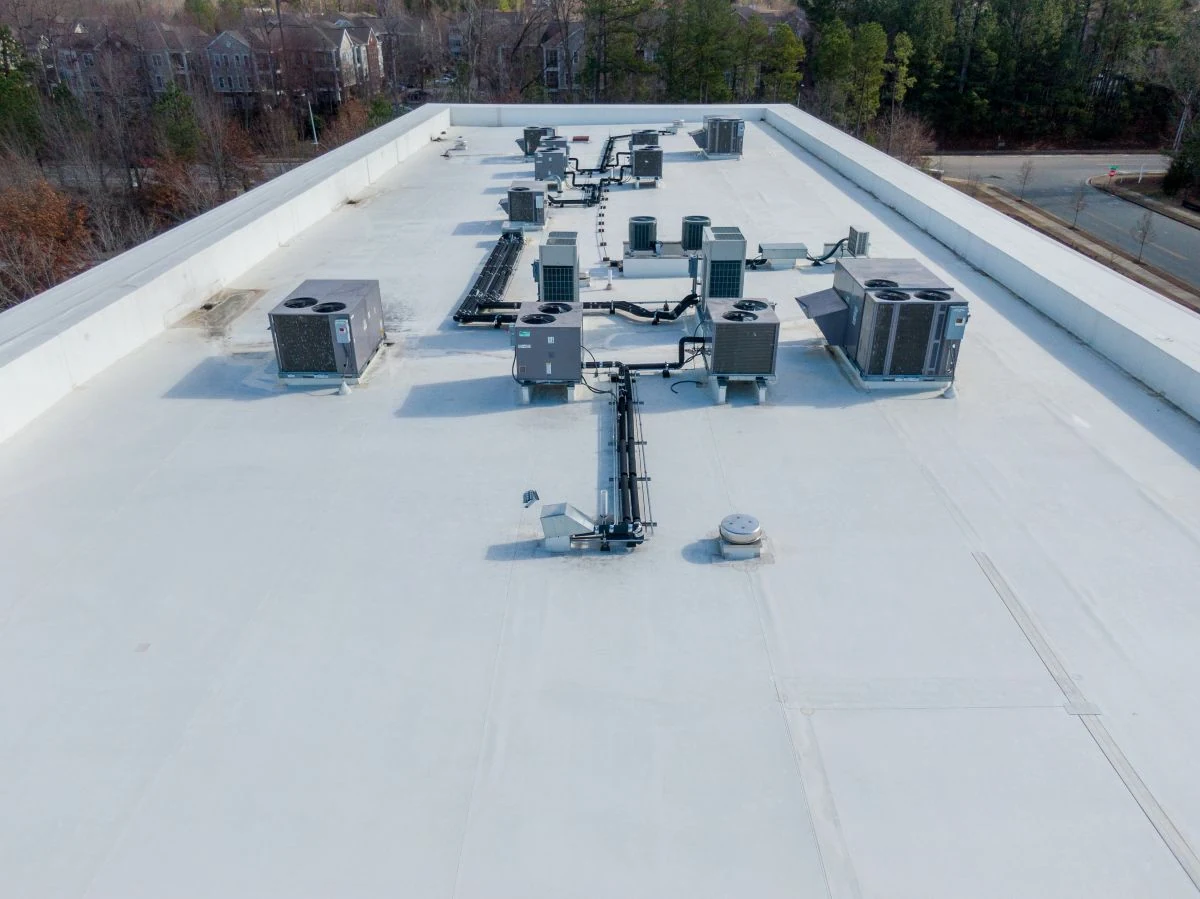
Hospitality Lane's hotel, office, and restaurant mix means a lot of roofs sitting directly downwind of kitchen exhaust fans. Grease-laden vapor condenses on nearby roof surfaces and, over years, will soften an unprotected membrane near the exhaust path. PVC handles that condensate without the surface degradation we see on grease-exposed TPO after a decade of service.
We still detail exhaust fan curbs and grease traps at the roof level regardless of membrane, because grease pooling directly at a curb will eventually find a seam no matter what the sheet is made of. PVC buys margin; it doesn't replace good housekeeping and drainage at the source.
Cold Storage, Food Processing, and Fuel-Adjacent Sites
Food-processing and cold-storage buildings near Colton's rail hub sometimes have rooftop exhaust or vent stacks carrying oils and processing byproducts, and PVC is the standard answer where that's a known condition. The same logic applies to truck yards and equipment lots scattered through Bloomington and Mead Valley, where diesel and hydraulic fluid exposure at ground level can also reach low parapets and rooftop equipment on adjacent structures.
Southern California Logistics Airport's surrounding commercial buildings in Victorville are another case where fuel handling and aviation-adjacent operations make chemical resistance worth specifying up front rather than discovering the problem after a TPO roof starts showing softened, tacky spots near a vent.
Attachment and Fabrication Notes
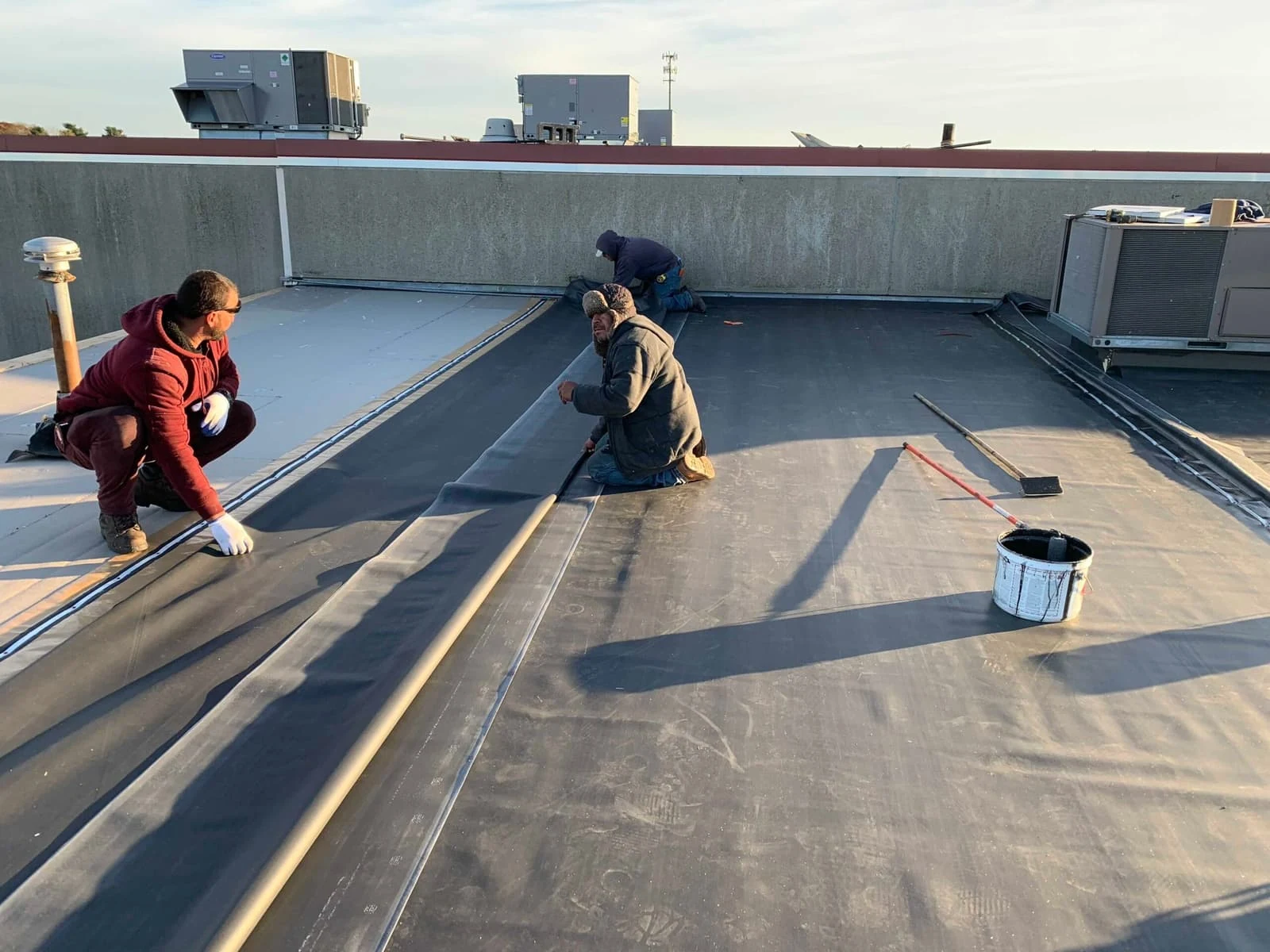
PVC handles like TPO in the field with a few differences worth knowing before bid day:
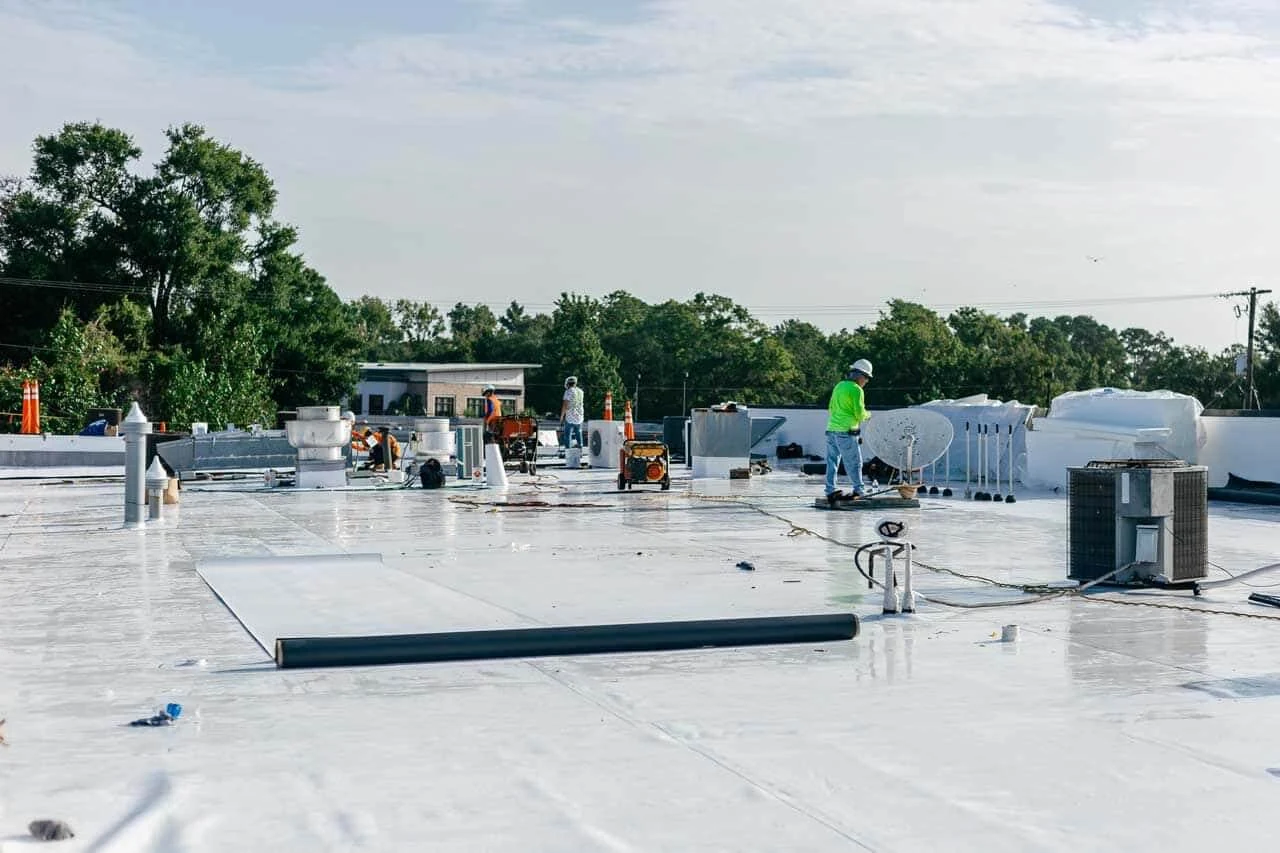
- Heat-welded seams, same principle as TPO, tested by probe and peel coupons on every project
- Fully adhered is common on chemical-exposure jobs since ballast can trap grease or fluid against the membrane surface
- Fleece-backed PVC is available for re-cover work over uneven or granulated existing roofing
- Pre-fabricated corners and pipe boots reduce field seams around the curb clusters typical of kitchen exhaust roofs
- Reinforced sheet options exist for areas with regular foot traffic near service equipment
Where PVC Isn't the Right Call
On a clean, low-traffic distribution warehouse field with no chemical exposure, PVC generally costs more than TPO for a similar reflectivity and warranty profile, and we say so plainly rather than upselling a membrane the building doesn't need. Most of the million-square-foot fulfillment centers in Fontana and Rialto are correctly specified in TPO, not PVC, because there's nothing on those roofs that PVC's chemical resistance actually protects against.
The other place we pull back is very large, unbroken fields where sheet cost adds up fast. PVC's price premium is easier to justify on a restaurant roof measured in a few thousand square feet than across five acres of warehouse where the added cost has no matching benefit.
Lifecycle Behavior on Exposed Roofs
A properly detailed PVC roof over a genuine chemical-exposure condition should outlast a TPO roof in the same location by a meaningful margin, because the failure mode that shortens TPO life there, surface softening from grease or oil contact, doesn't apply the same way. Ordinary UV aging still happens on schedule; PVC isn't a UV-resistance upgrade, it's a chemical-resistance one. Inspections still run on the same twice-yearly cadence, watching seams and curb flashings first, same as every membrane in this market.
Common Questions on PVC Roofing
Do I need PVC over my kitchen exhaust fan, or just a grease trap?
Both. A grease trap at the curb controls the source; PVC membrane protects the field against whatever vapor still condenses nearby over the years. We spec both together on any real exhaust condition.
Will PVC outlast TPO on a normal warehouse roof?
Not meaningfully, if there's no chemical exposure to protect against. The advantage is specific to grease, oil, and solvent contact, not a general durability upgrade.
Does old PVC really leach plasticizer and get brittle?
Older, lower-grade formulations sometimes did over multi-decade service. Current name-brand commercial PVC uses higher-retention plasticizer packages developed specifically to address that history, which is why the manufacturer matters on this membrane more than most.
Can PVC go over an existing built-up roof near a restaurant?
Often yes, as a fleece-backed recover once we've confirmed the substrate is dry and structurally sound, which lets us skip a full tear-off in a lot of Hospitality Lane restaurant and hotel applications.
How do you detail around a rooftop grease exhaust fan?
Pre-fabricated PVC boots and curb wraps, sloped to shed condensate away from seams, with the grease trap and cleaning schedule handled by the kitchen's maintenance contract, not by us.