Cold Storage and Refrigerated Warehouse Roofing in San Bernardino County
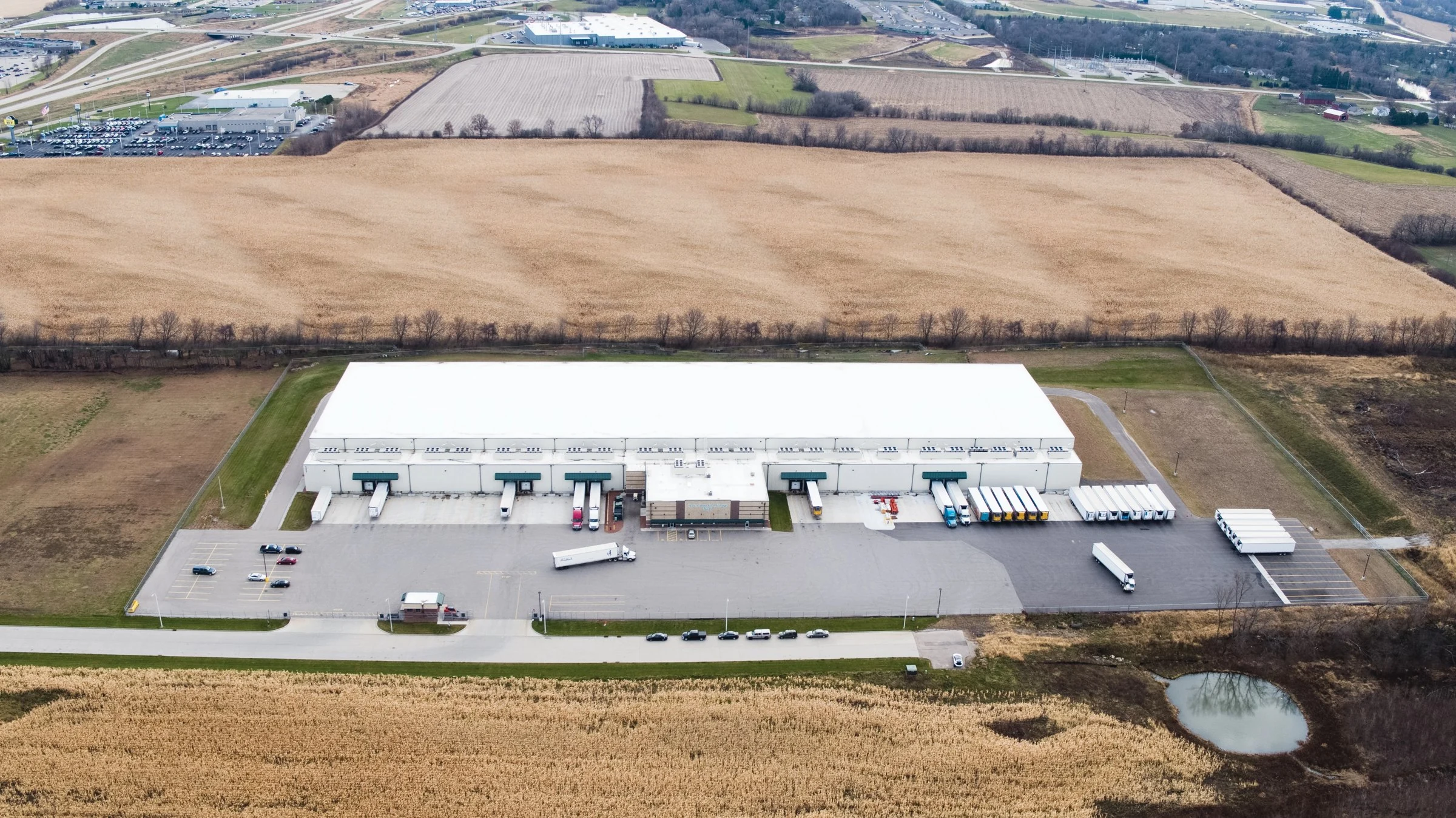
Refrigerated distribution has grown fast through the food-processing corridor near Colton and Rialto, and a cooler or freezer building asks more of a roof than a dry warehouse ever will. We build and service roof assemblies for cold storage buildings where the deck above sits forty or sixty degrees colder than the air below it, every hour of every shift.
Why a Refrigerated Roof Fails From Underneath
A dry warehouse roof mostly deals with weather coming from above. A refrigerated building fights moisture pushing up from below, all day, every day. Warm humid air inside a loading dock or processing room drives straight at the cold roof deck, and wherever that vapor finds a weak point in the barrier it condenses inside the insulation instead of on top of it.
That means the failure often shows up nowhere near where the water actually is. A ceiling stain over a case-pick aisle can trace back to a vapor path that started at a wall penetration forty feet away. We do not chase stains on these buildings. We core cut and check moisture content in the field before we ever price a repair, because guessing on a freezer roof means tearing open the wrong section twice.
Rust from underneath is the other tell. Steel deck on a cold building corrodes from trapped condensation long before the top side ever shows a leak, so an interior inspection from the warehouse floor matters as much as walking the roof itself.
Rooftop Refrigeration Equipment Sets the Whole Layout
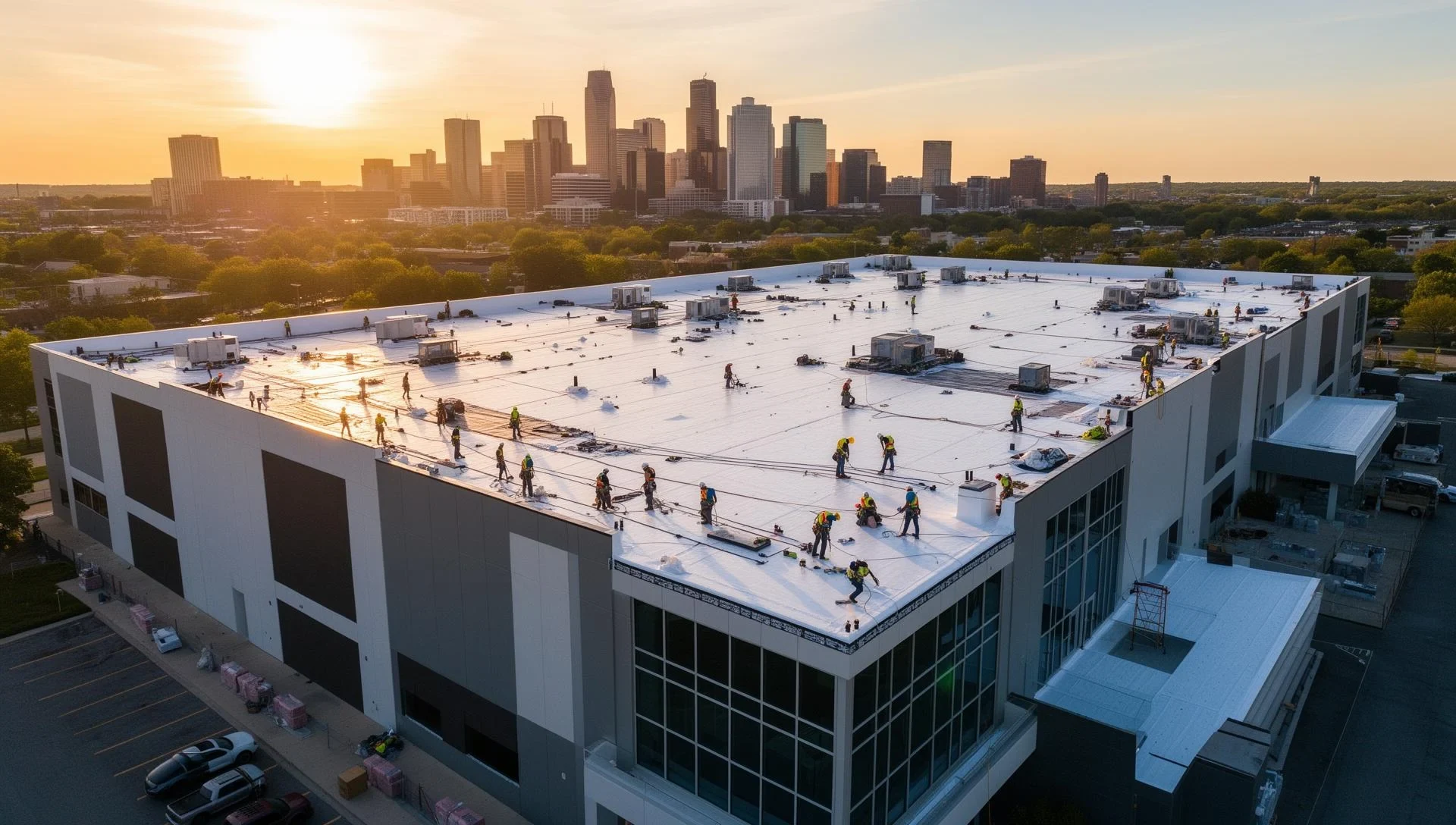
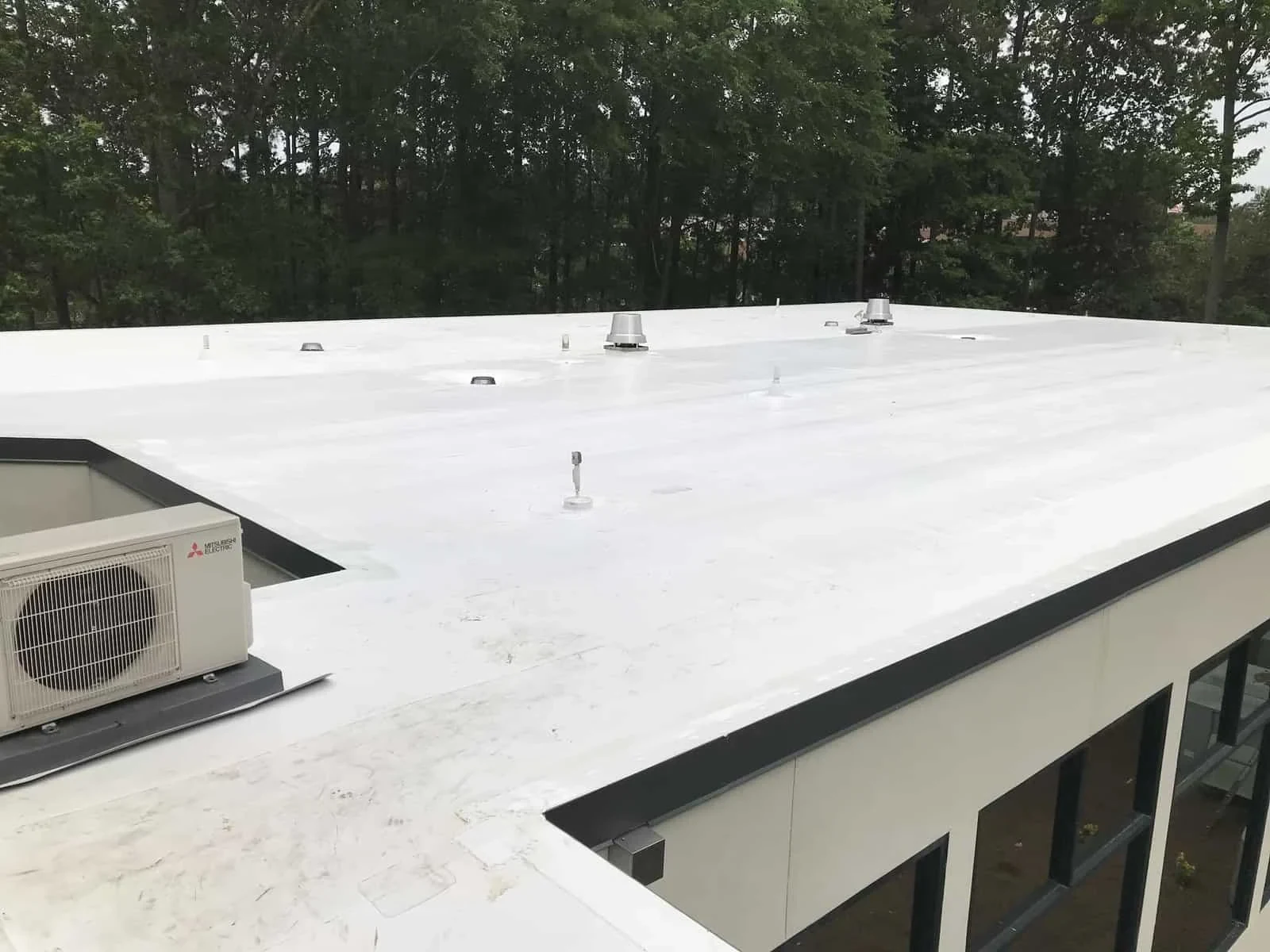
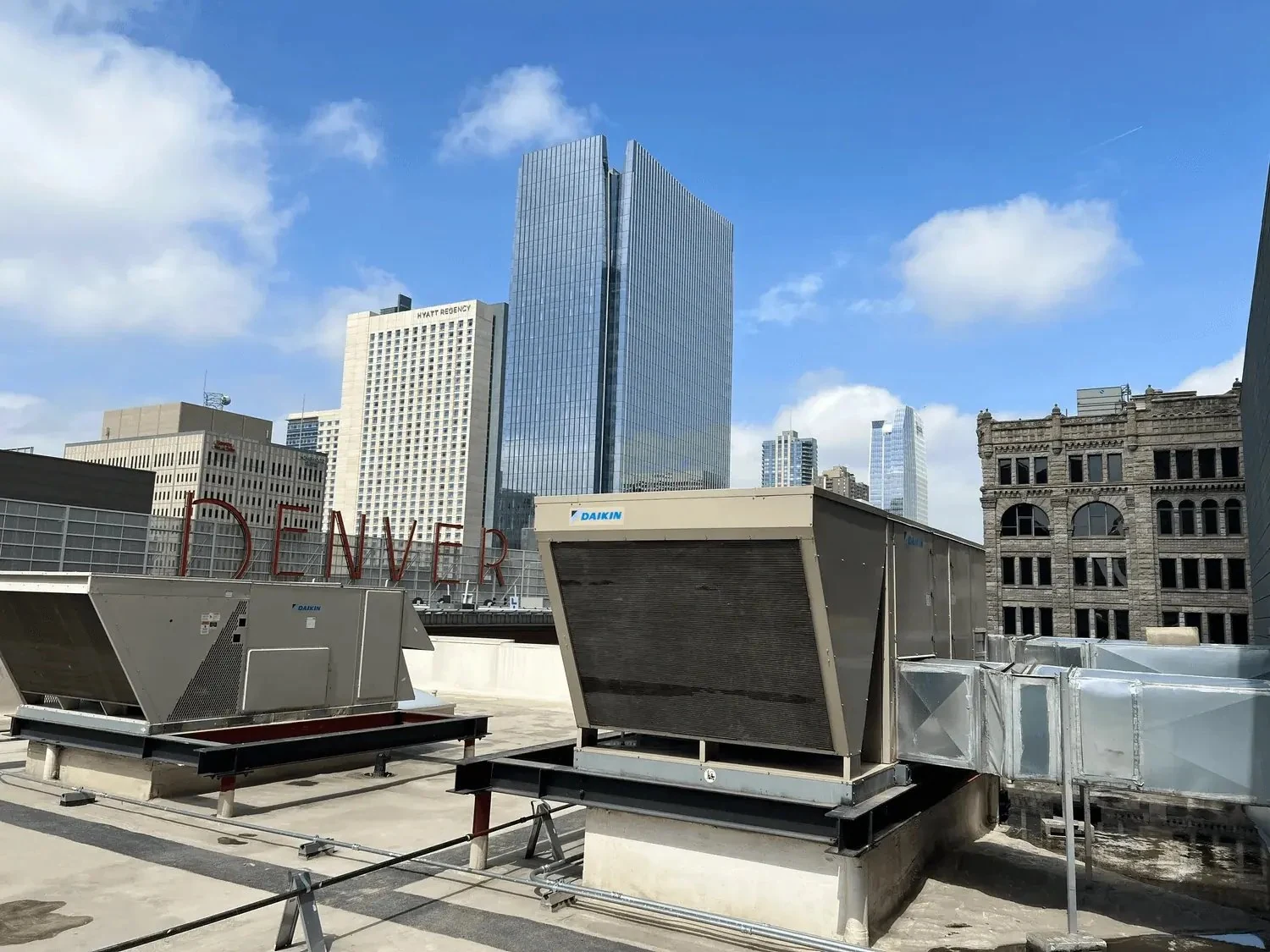
Condenser units, compressor racks, and chiller equipment sit bolted to curbs across most cold storage roofs in this market, and none of that equipment gets ignored when we plan a job. Refrigerant lines, control conduit, and electrical whips run between units in shallow trenches or on dunnage, and every one of those crossings is a penetration that has to be flashed correctly and tracked on a roof plan, not eyeballed.
Mechanical techs walk these roofs constantly for service calls, and foot traffic outside a defined walk pad grinds membrane down fast around curbs. We lay walk pads on the actual service routes, not a generic grid, because that is where the wear really happens.
Sequencing with the refrigeration contractor matters more here than on almost any other building type. Nobody wants a cold room losing temperature because a roof crew disconnected a line without warning. We set the cutting and patching order around the mechanical schedule before the first section opens.
Vapor Retarders and Insulation Thickness for Freezer Decks
A freezer assembly typically carries a heavier vapor retarder on the warm side of the insulation and a thicker insulation package than a standard reefer or dry building, with board joints staggered in multiple layers to cut thermal bridging. Get the vapor retarder wrong or leave a gap at a seam, and that single weak spot becomes where all the moisture in the building wants to go.
Colder box temperatures push the required R-value up, and every penetration through that insulation package is a place where the thermal path shortens and condensation risk climbs. We treat penetration details as the controlling factor on these jobs, not the field membrane, which is usually the easy part.
Even with a vapor-managed assembly, the roof still needs proper slope to drains. Cold storage owners sometimes assume a heavier insulation package solves drainage too. It does not, and ponding on top of a vapor-sensitive assembly compounds problems fast.
Here is what our cold storage roof survey typically checks:
- Core cuts through field and penetration areas to test insulation moisture content
- Interior ceiling and deck inspection from the warehouse floor for rust and staining
- Condition of vapor retarder laps at seams, curbs, and wall terminations
- Refrigerant line and conduit penetration flashing at every rooftop unit
- Walk pad placement against actual mechanical service routes
- Drain and scupper flow with slope verification across the field
- Dock canopy and loading apron membrane condition separately from the main field
Dock Aprons and Loading Canopies Take the Worst of the Wear
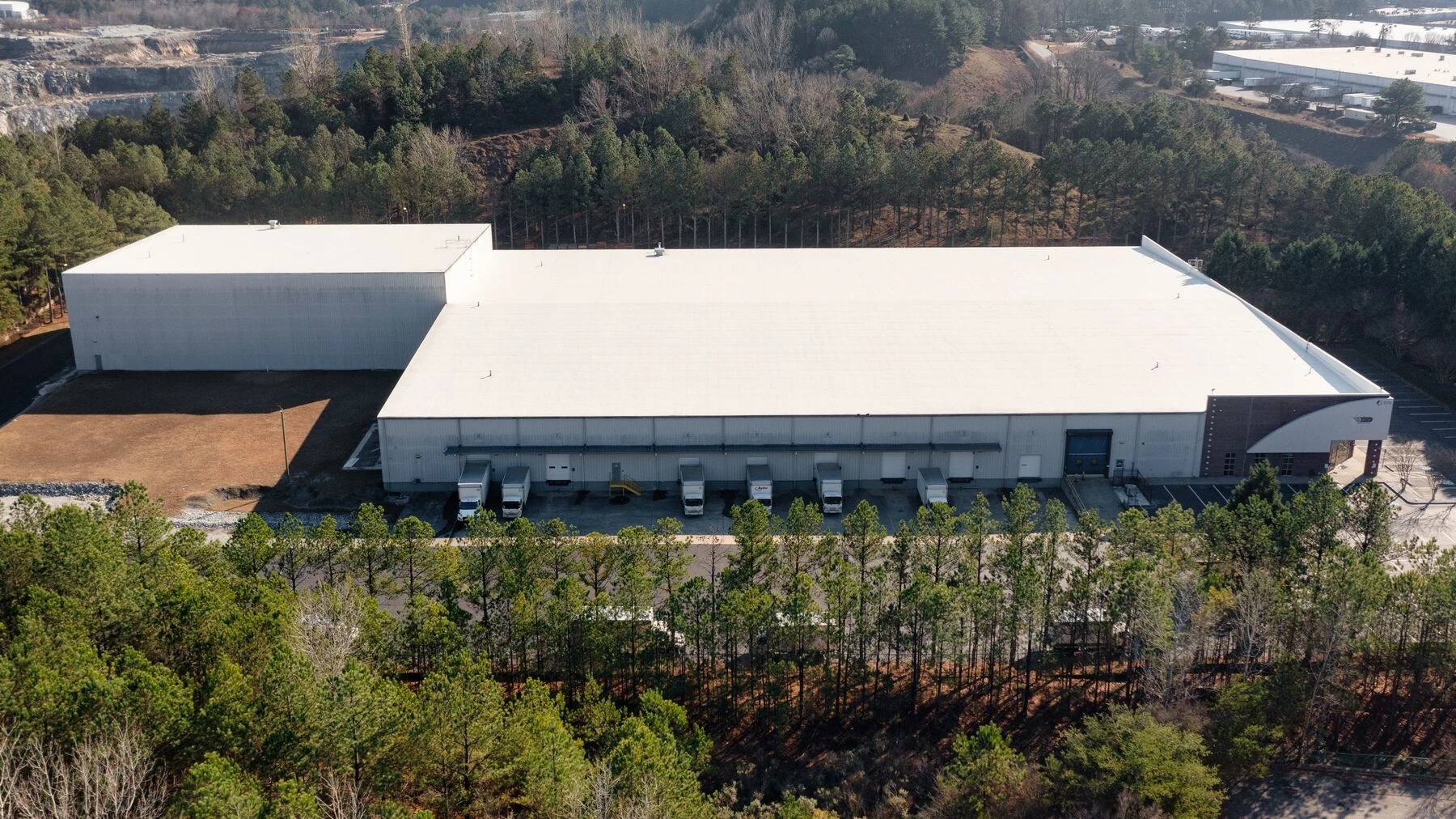
The canopy roof over a refrigerated dock apron takes a beating that the main field roof never sees. Truck exhaust, forklift traffic underneath, and constant door-open cycling all concentrate wear right at the building's busiest edge. On cold mornings, especially after cold air drains down out of the Cajon Pass overnight, condensation on canopy undersides can freeze before the sun clears it, which is unusual for this part of California but common right along dock aprons.
We treat dock canopies as their own zone on the survey and the repair plan. Membrane there wears faster than the field, gets patched more often by whoever is available, and usually needs a heavier walkway course at hatches and access points rather than the standard field spec.
Working Over a Building That Cannot Warm Up
You cannot open a wide section of deck over an active freezer room and walk away for the night. We phase cold storage work in sections small enough to dry-in and insulate before the shift ends, and we keep temporary vapor protection over any area left partly open, because a food safety auditor checking temperature logs the next morning does not care why the room ran warm.
Refrigeration alarms are part of the plan too. Cutting near a sensor or line without notice can trip a monitoring system and trigger a false product-loss event. We walk the sequence with your operations and maintenance leads before mobilization so nothing on the roof surprises anything happening underneath it.
Cold Storage Roofing, Straight Answers
How do you know if insulation under a freezer roof is already wet?
Core cuts and moisture readings, not a visual walk. Infrared scanning can help narrow down where to cut, but we always confirm with a physical core before pricing any repair.
Can an existing cold storage roof be recovered instead of torn off?
Sometimes, if moisture content is low and the vapor retarder is still intact. If cores show wet insulation or a failed retarder, recovering just seals the problem in rather than fixing it.
How do you handle refrigerant lines during a reroof?
We coordinate cutting and patching sequence directly with your refrigeration contractor, protect and temporarily support lines that stay in service, and never leave a line unsupported over open deck.
Does a freezer roof really need more insulation than a normal warehouse roof?
Yes, tied directly to box temperature and vapor control, and the penetration details around rooftop equipment matter as much as the insulation thickness itself.
What is the most common mistake owners make with these roofs?
Patching visible leaks for years without checking whether the insulation underneath is already saturated. By the time a patch stops holding, the assembly underneath is often further gone than it looks from the surface.