Keeping Strip Center Roofs Watertight From Barton Road to Highway 111
A retail strip center almost never has one tenant to answer to, and the roof above it rarely has one clean history either. We repair and replace strip center roofs from the Barton Road corridor in Grand Terrace out through the Highway 111 pass communities near Banning, where small parapet-wrapped centers sit at nearly every major intersection.
Nine Tenants, One Roof, Zero Agreement on Who Pays
Most strip centers share a single roof membrane across a row of separate leased suites, and that setup causes more disputes over cost than almost anything else in commercial property management. A nail salon owner does not think a leak over the sporting goods store three doors down is their problem, and technically they may be right depending on the lease structure, but the water does not respect suite lines.
We document leaks and roof condition by location on the field first, ahead of which suite happened to report the problem, so an owner or property manager has a clean record to work from when sorting out common area maintenance charges or tenant-specific repair costs. That distinction matters more than it sounds, since the suite that reports water is often not the suite where the roof actually failed.
Every Suite Change Adds a New Roof Penetration
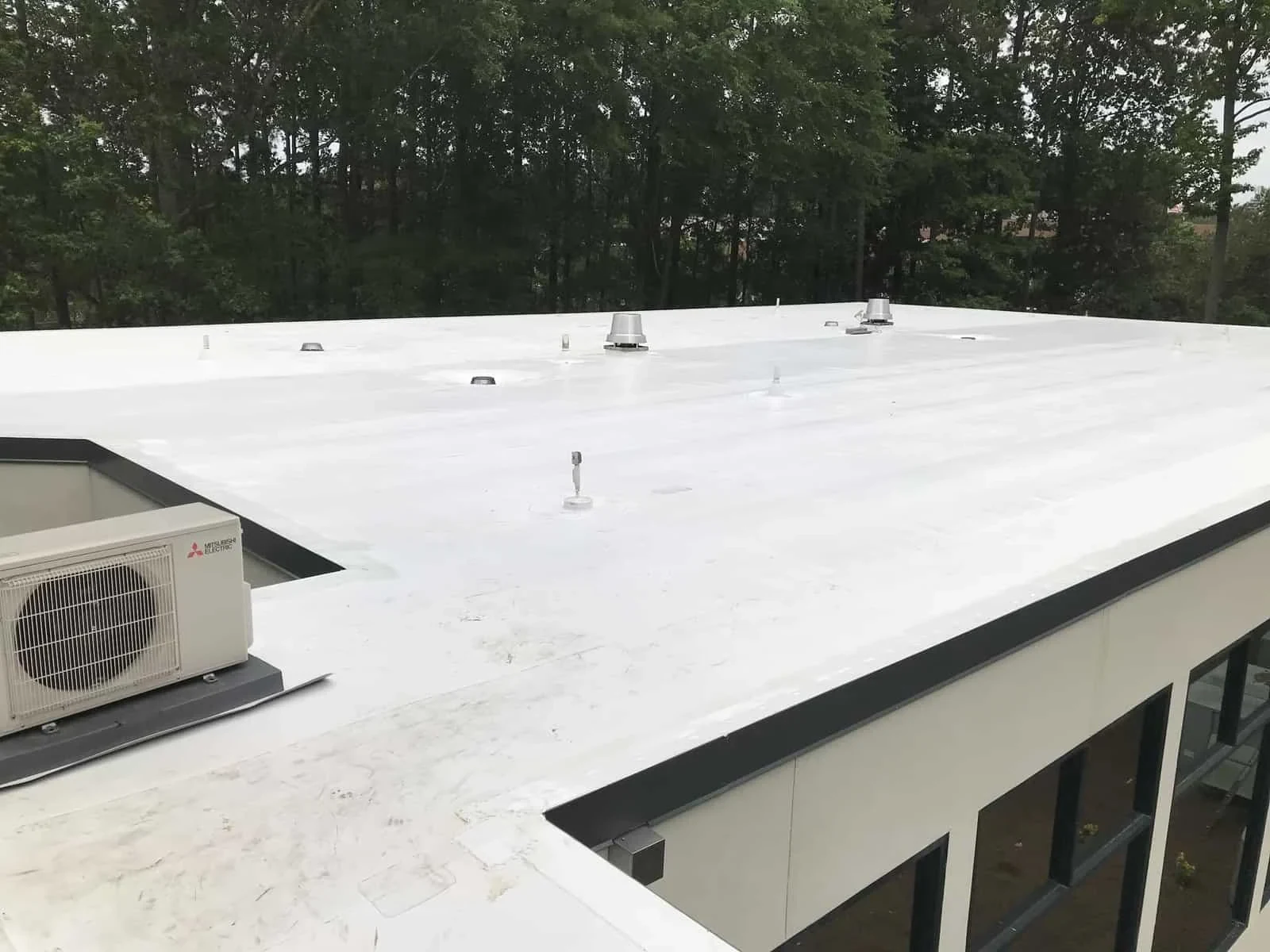
Tenant turnover is constant in strip retail, and every new tenant tends to bring a new exhaust fan, a new RTU, or a new sign transformer that needs power routed up through the roof. A center that has turned over tenants a dozen times over twenty years can carry a dozen generations of curb work, much of it done fast between one lease ending and the next one starting.
We check every curb against what should actually be active. A ventless nail salon that replaced a restaurant sometimes still has an old grease exhaust curb sitting capped, or capped poorly, right where a new roof section needs to tie in clean.
Parapet and Storefront Sign Bands Leak More Than the Field
Strip centers are built for street visibility first, which means tall parapets, sign bands, and decorative cornices that all interrupt the roofline. Water finds its way behind these features constantly, especially at sign attachment points where a tenant's electrician drilled through the parapet for conduit without ever calling a roofer first.
We inspect sign penetrations and parapet terminations as their own category on every strip center survey. A field membrane in good shape can still be losing water through a sign bracket nobody thought to check.
Here is what a typical strip center roof survey covers:
- Full roof plan mapped against current suite layout and lease lines
- Curb-by-curb inventory checking for active use versus abandoned equipment
- Sign band and parapet penetration inspection separate from the field
- Drain and scupper condition, since strip roofs often have limited slope
- Membrane age and patch history documented by section
- Common area versus tenant-specific repair scope broken out clearly
- Photo documentation an owner can hand directly to a property manager
Working Around a Full Parking Lot
Strip centers rarely have a slow season, and customer parking sits directly against the building on most of these properties. We stage material away from active storefronts, keep debris containment tight to the section under repair, and schedule anything loud or disruptive for hours when foot traffic is lightest, without shutting down access to any tenant's entrance.
Coordinating with several tenants at once takes more communication than a single-tenant job, and we handle that directly with the property manager rather than expecting each individual tenant to track project timing themselves.
A restaurant tenant with a busy lunch rush needs different scheduling consideration than a dry cleaner two doors down, and we ask for that kind of detail up front rather than assuming every business in the center runs the same hours.
Older Centers Near Downtown and the Pass
Some of the strip centers around older sections of the valley and out past the pass toward Banning and Calimesa date back decades, with roof systems that have been patched by more contractors than anyone can track. We treat these older properties as a documentation project first: establishing what is actually up there before recommending a repair or replacement path, because guessing on a roof with that much unknown history costs owners more in the long run. A center that changed hands two or three times over the decades often has no single point of contact who remembers what was done or when, and we build the record from the roof itself rather than relying on secondhand recollection.
Strip Center Roofing, Questions From Property Managers
How do you handle a leak that affects two adjoining tenants?
We document exactly where the water is entering on the roof, independent of which tenant reported it, so you have a clear basis for allocating the repair cost correctly.
Can you fix just the section over one suite?
Often yes, if the membrane condition allows it. We always tell you honestly if a small patch is likely to fail again soon versus holding for the long term.
What do you do about old equipment from tenants who moved out?
We inventory every curb and flag anything no longer in active use so it can be properly capped or removed rather than left as a future leak point.
Do sign installations really cause roof leaks?
Yes, often. Conduit run through a parapet for signage is frequently installed without a roofer present, and we check those penetrations on every strip center survey.
Our center has decades of patch history and no records. Where do you start?
With a full documentation survey before any repair recommendation. On a property with that much unknown history, guessing costs more than finding out first.