White EPDM for Cold-Storage and Food-Distribution Roofs
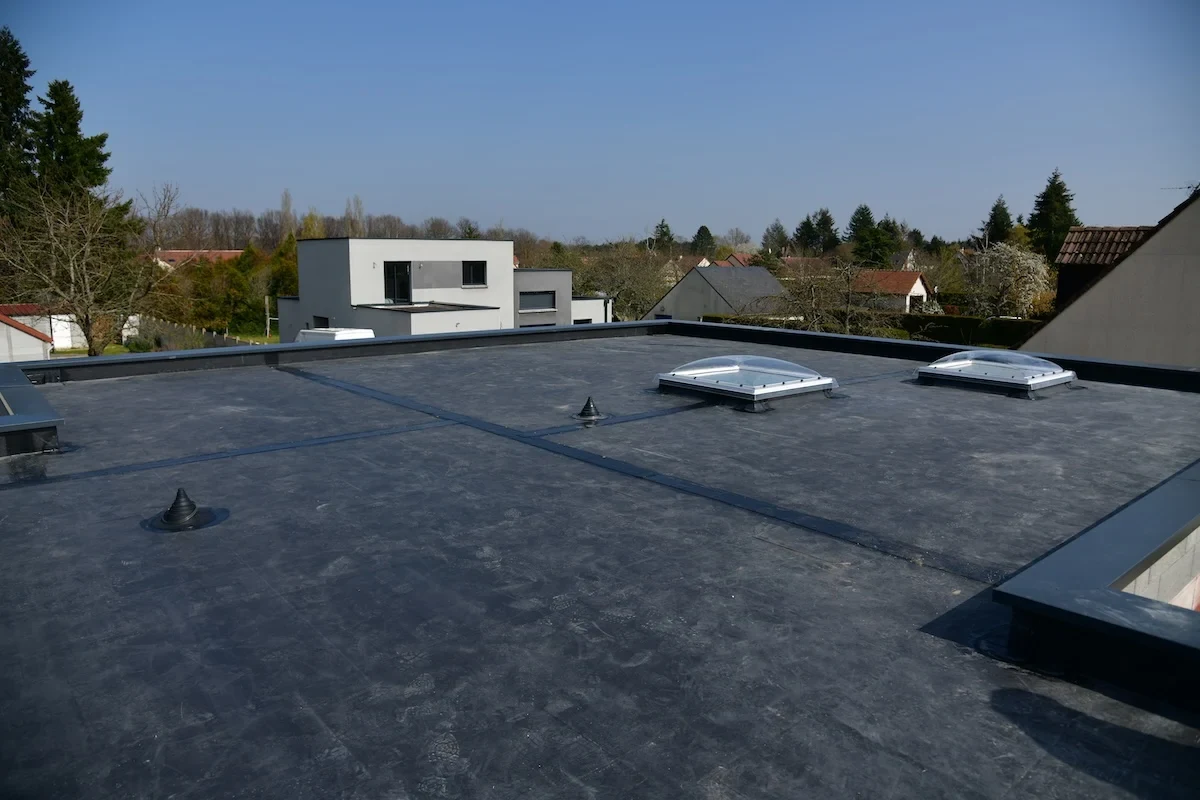
Most of the EPDM we install in this county is black, but there's a real slice of the market where the white sheet is the right call. Colton's food distribution buildings near the rail hub and the cold-storage tenants filling in around Perris are the two places we get asked about it most. This page covers what actually changes when EPDM goes white, and where we still steer owners back to black or to TPO.
The Rubber Doesn't Change, the Surface Does
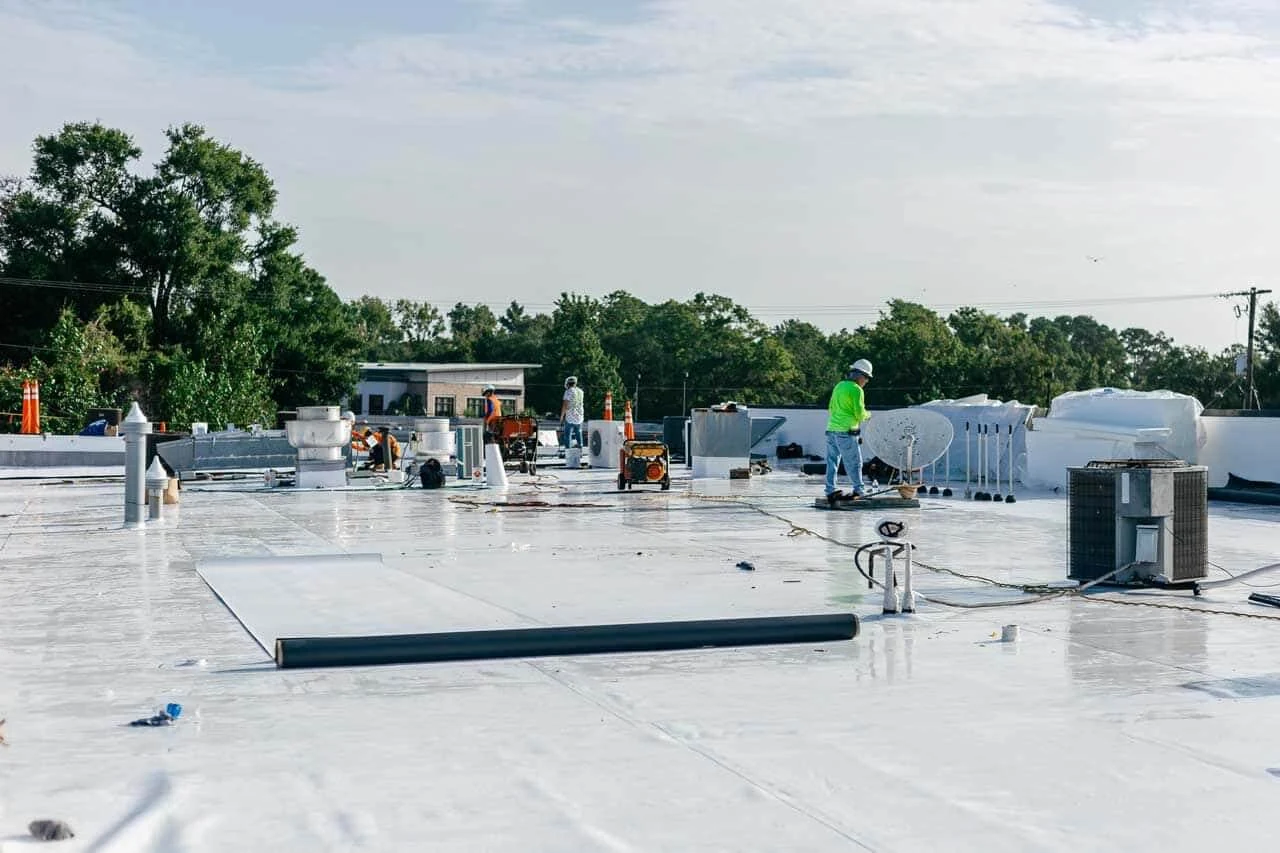
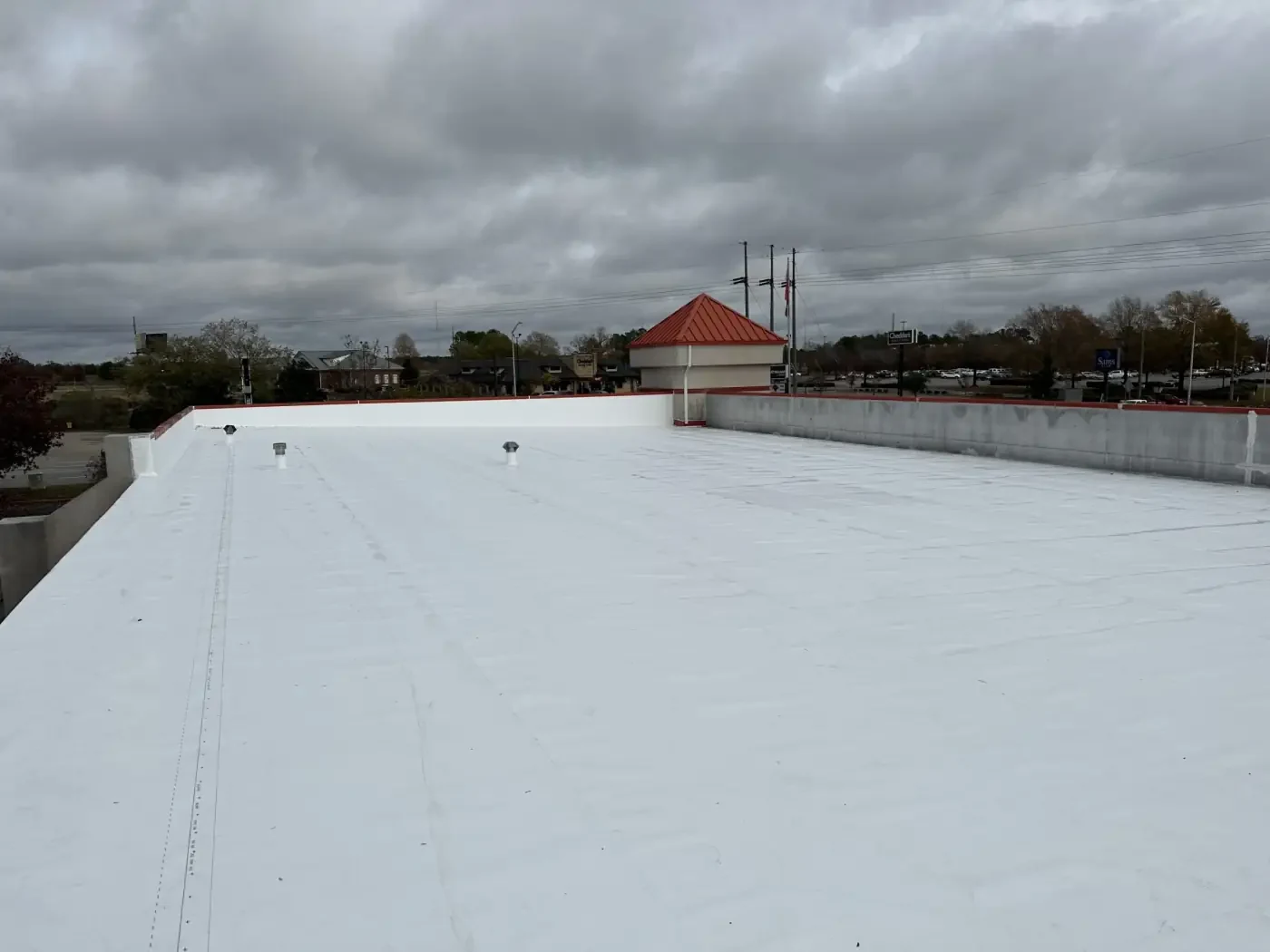
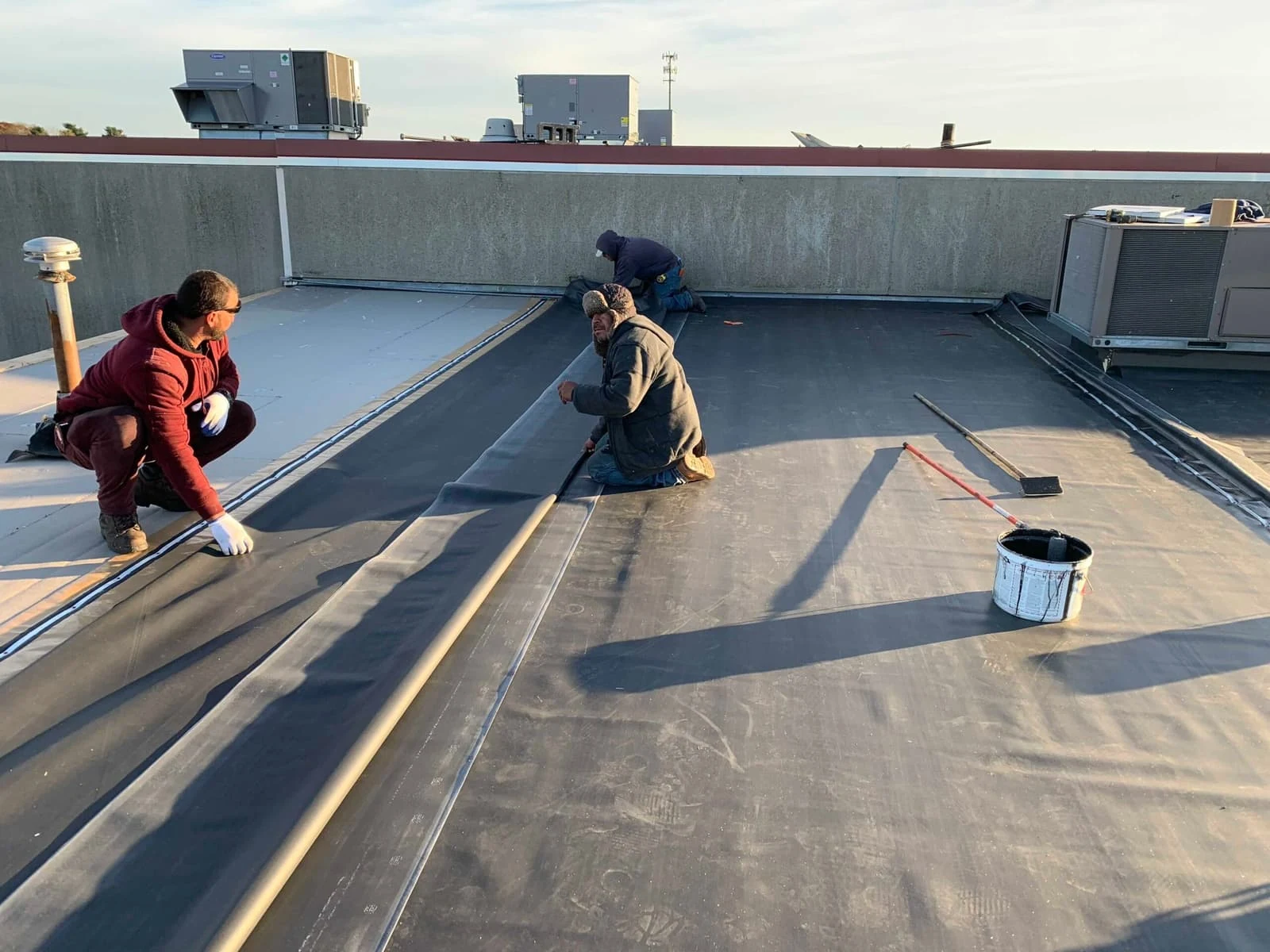
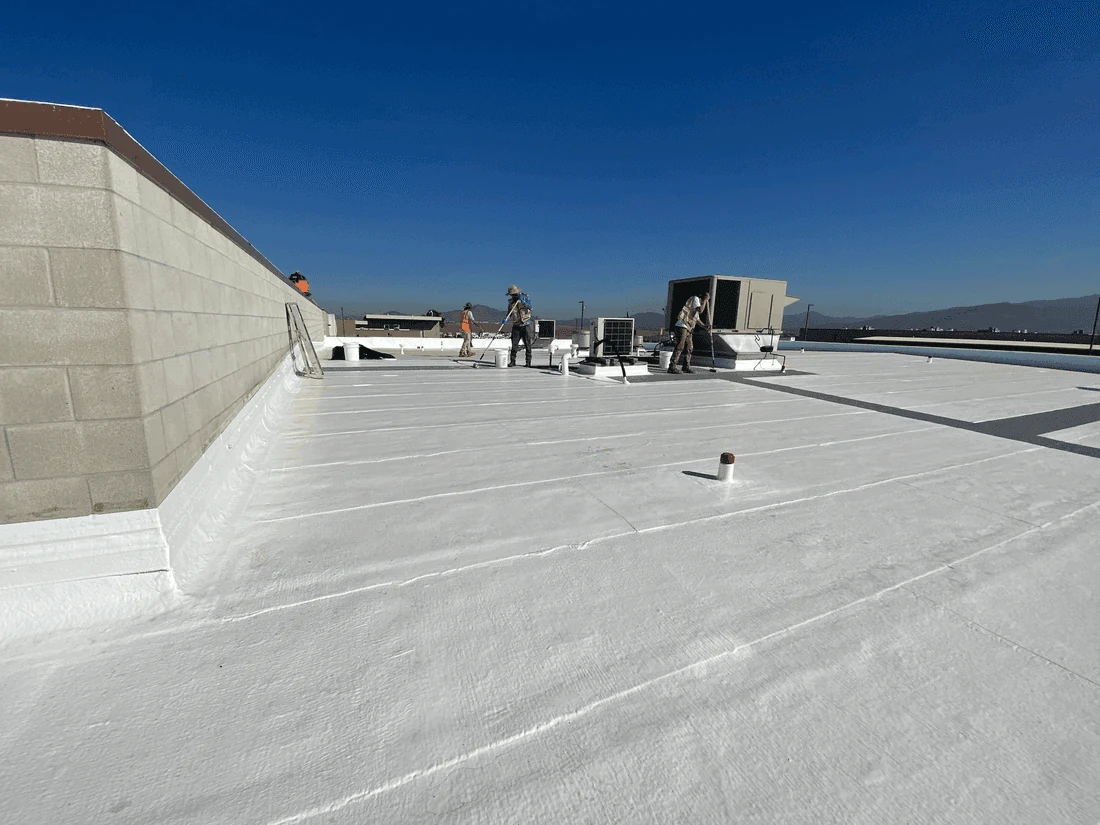
White EPDM is the same ethylene propylene diene monomer compound as black EPDM. Same elongation, over 300 percent before failure, same cold-weather flexibility, same resistance to ozone and weathering that comes from the base rubber chemistry rather than the color. What changes is the surface layer, formulated with a reflective pigment package instead of carbon black, so it behaves like a white roof for reflectivity while still stretching and recovering like rubber underneath.
That ozone resistance matters more than people assume around cold-storage docks. Refrigeration compressors, standby generators, and a steady stream of reefer trucks idling at the dock all put ozone and exhaust into the air right above the membrane. Rubber tolerates that environment better than some other polymer families over a 20-plus year service life.
Why Cold-Storage Owners Ask For It By Name
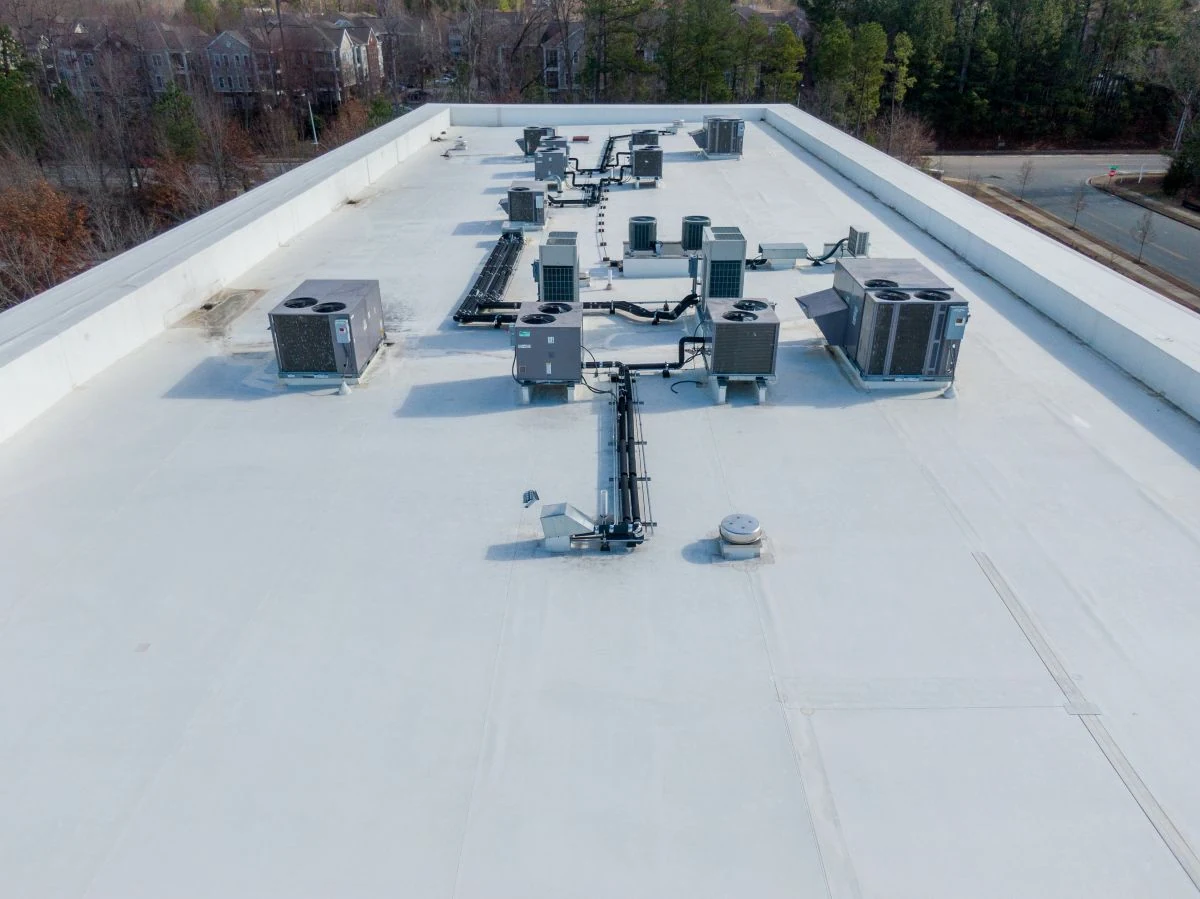
Colton's food distribution buildings and the newer cold-storage boxes going up along the Perris logistics corridor run condenser units and compressor racks on the roof around the clock. A reflective membrane keeps the roof surface itself cooler, which eases the ambient load those condensers are fighting against and slows the membrane's own aging. It doesn't lower the building's refrigeration bill by itself; the compressors are doing that work regardless of roof color. What it does is buy the roof more years before UV and heat fatigue catch up with it.
There's also a straightforward Title 24 angle. California's cool roof requirements for low-slope commercial construction are hard to meet with an exposed black membrane on new work or most re-roofs. White EPDM lets an owner who prefers rubber's flexibility over TPO's welded seams still land on the compliant side of that code without switching membrane families entirely.
Vapor Drive Is the Detail That Actually Matters Here
Freezer and deep cold-storage roofs run vapor drive backward compared to a normal warehouse. In summer, warm moist outside air pushes toward the cold interior instead of the reverse, and if the vapor retarder isn't detailed correctly at the deck, that moisture condenses inside the insulation where nobody can see it happening. Membrane color has nothing to do with this; it's an assembly design question we work through with the mechanical engineer before specifying anything.
EPDM's large sheet width, up to 50 feet on some rolls, means fewer field seams than a comparably sized job in narrower rolls. Fewer seams is fewer potential entry points for moisture over the life of the roof, which is a genuine advantage on a freezer building even before reflectivity enters the conversation.
Attachment and Detailing on a Cold-Storage Deck
Here's what changes in our approach on a refrigerated or food-distribution building compared to a standard warehouse:
- Fully adhered attachment preferred near dock doors and truck aprons where ozone and diesel exposure run highest
- Ballasted assemblies avoided on cold-storage roofs already carrying dense mechanical equipment near structural capacity
- Enhanced flashing at every compressor curb, since freezer units stack far more roof penetrations than a typical warehouse bay
- Tapered insulation and crickets sized to keep water off the membrane fast, because standing water reads differently to an inspector on a freezer roof than on ordinary storage space
- Walkway pads run the full service path to every condenser rather than stopping at the nearest hatch
- Vapor retarder continuity checked at every curb and penetration before insulation goes down
Where We Steer Owners Elsewhere
White EPDM earns its keep when rubber's flexibility solves a specific problem: compressor vibration, a building that racks slightly in wind, or an owner who's had good long-term luck with rubber roofs and wants to stay with the material. Where it doesn't have an edge is a clean, low-traffic field roof with no vibration source and no history favoring EPDM. On that building, white TPO wins the bid almost every time because welded seams cost less to install with equal reliability, and the reflectivity numbers land in the same range either way.
We also don't recommend it on roofs with heavy foot traffic from service techs walking equipment lines daily. EPDM's seam-taped system holds up fine under normal maintenance access, but a roof getting walked constantly benefits more from a heat-welded thermoplastic where every seam is functionally part of the sheet rather than a bonded joint.
Straight Answers on White EPDM
Does white EPDM cost more than black EPDM?
There's a modest premium for the reflective compound, generally smaller than the price gap between EPDM and PVC. On most projects it's a minor line item next to insulation and labor.
Is it a good fit for a food-distribution warehouse in Colton?
Often yes, particularly where the owner already runs EPDM elsewhere in a portfolio or where compressor vibration and dock-area ozone exposure are real considerations. We look at the specific building before recommending it over TPO.
Do the seams hold up under compressor vibration?
Properly primed and taped seams tolerate vibration well; it's one of the scenarios where EPDM's flexibility genuinely outperforms a stiffer membrane. We inspect seam integrity on a set schedule regardless.
Can white EPDM go over an existing black EPDM roof?
Sometimes, as a recover, once we've confirmed the existing membrane and insulation are dry and sound through core cuts. It isn't automatic; a moisture survey comes first.
How does this compare to white TPO on a cold-storage roof?
Reflectivity is similar. The real difference is seam method and flexibility. Choose based on whether vibration, movement, or an owner's material preference matters more than installed cost on that specific building.