60-Mil TPO on Inland Empire Warehouse Roofs
Walk any distribution park in Fontana, Rialto, or Moreno Valley and most of what you're standing on is 60-mil TPO. It's the default spec for big flat roofs out here, and for good reason. This page covers what the membrane actually is, where 60-mil makes sense in the San Bernardino market, and where we tell owners to spend more.
What 60 Mils Actually Gets You
TPO is a thermoplastic polyolefin sheet with a polyester scrim reinforcement running through the middle. The 60-mil number is total sheet thickness, about 1.5 millimeters. What matters more is the thickness over the scrim, because that top layer is what stands between UV and the reinforcement. On a quality 60-mil sheet you get roughly 21 to 24 mils above the scrim.
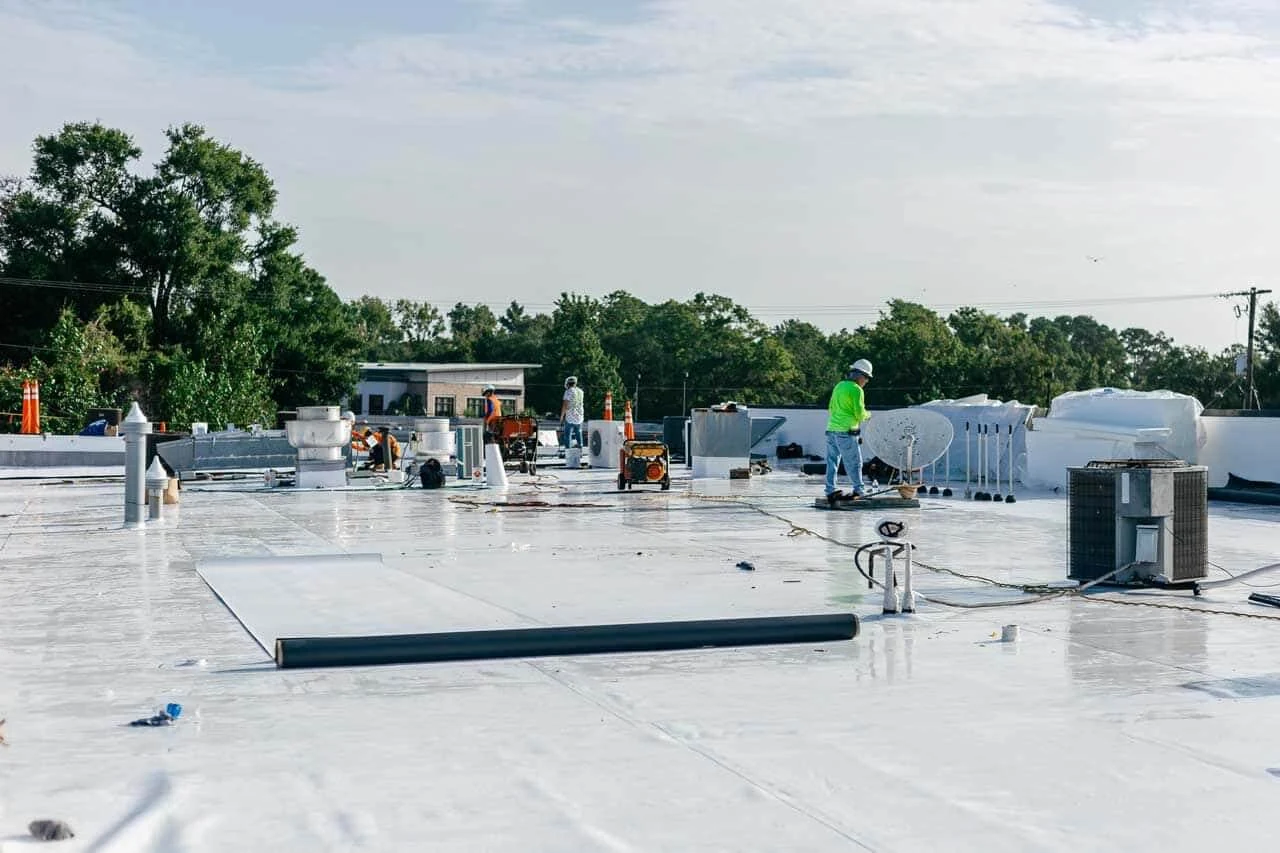
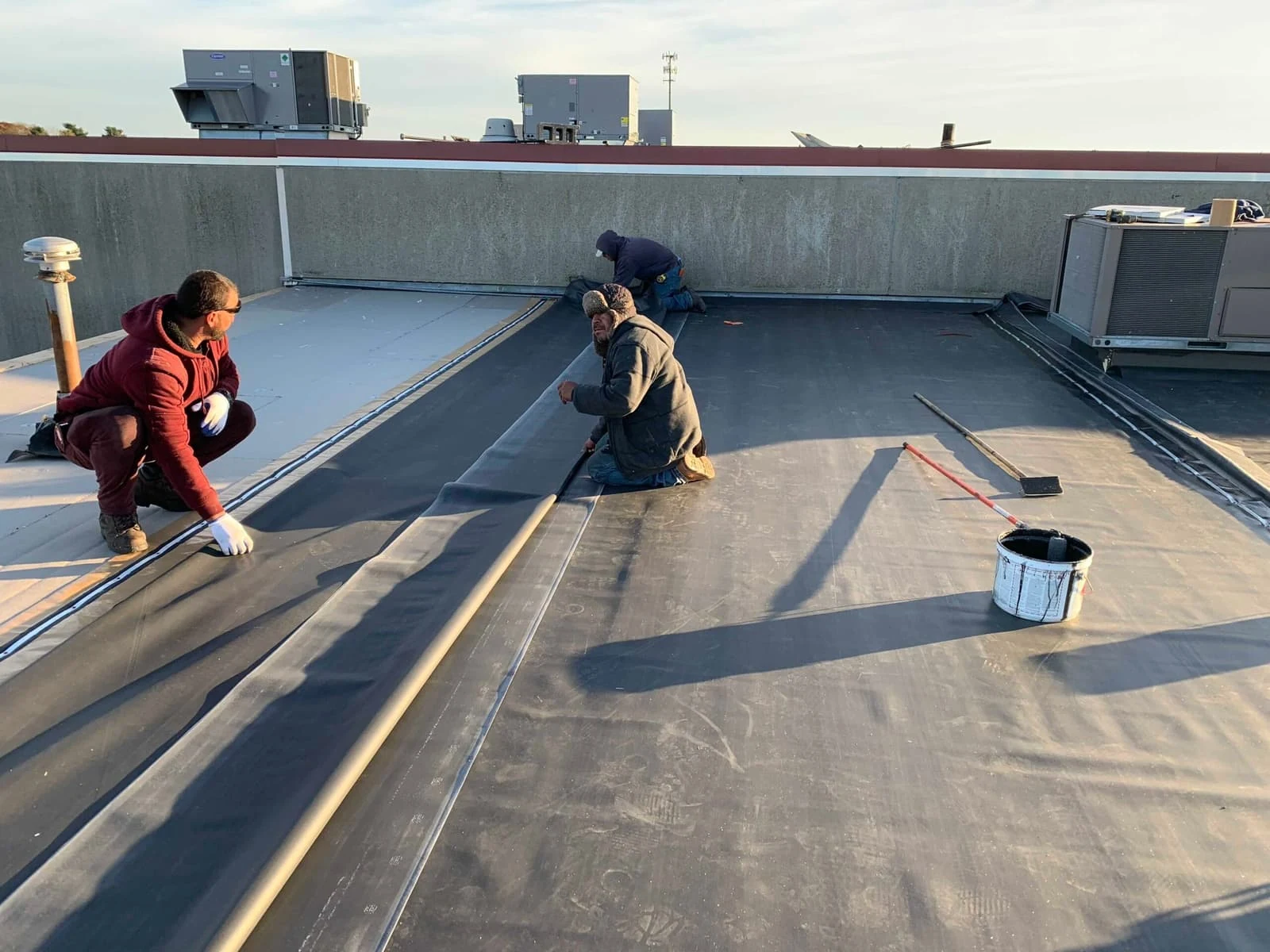
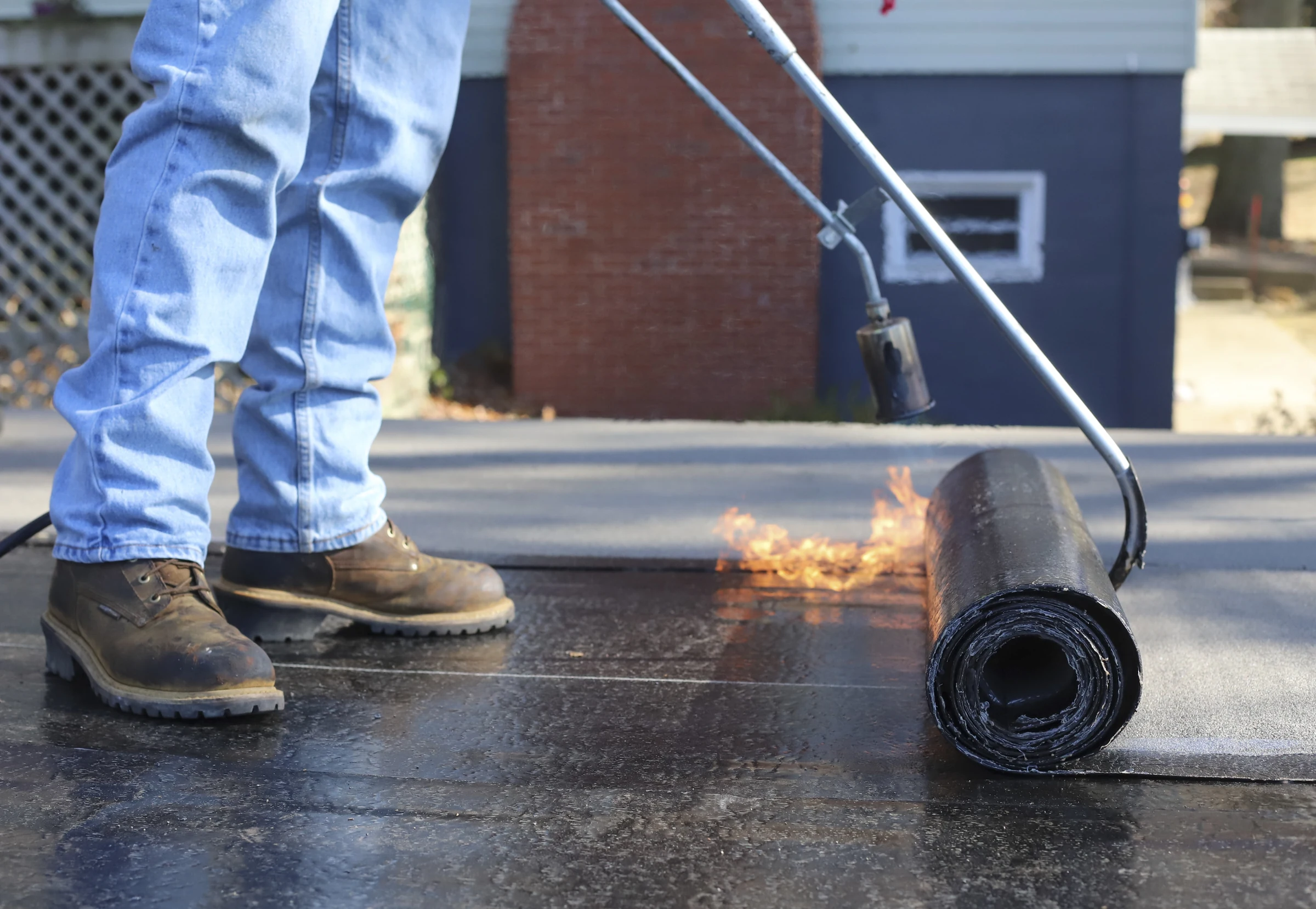
The membrane is heat-weldable. Seams get fused with hot air at around 1,000 degrees, so a finished seam is stronger than the sheet itself when it's welded right. That's the whole advantage of thermoplastics over glued rubber seams, and it's why TPO took over the warehouse market.
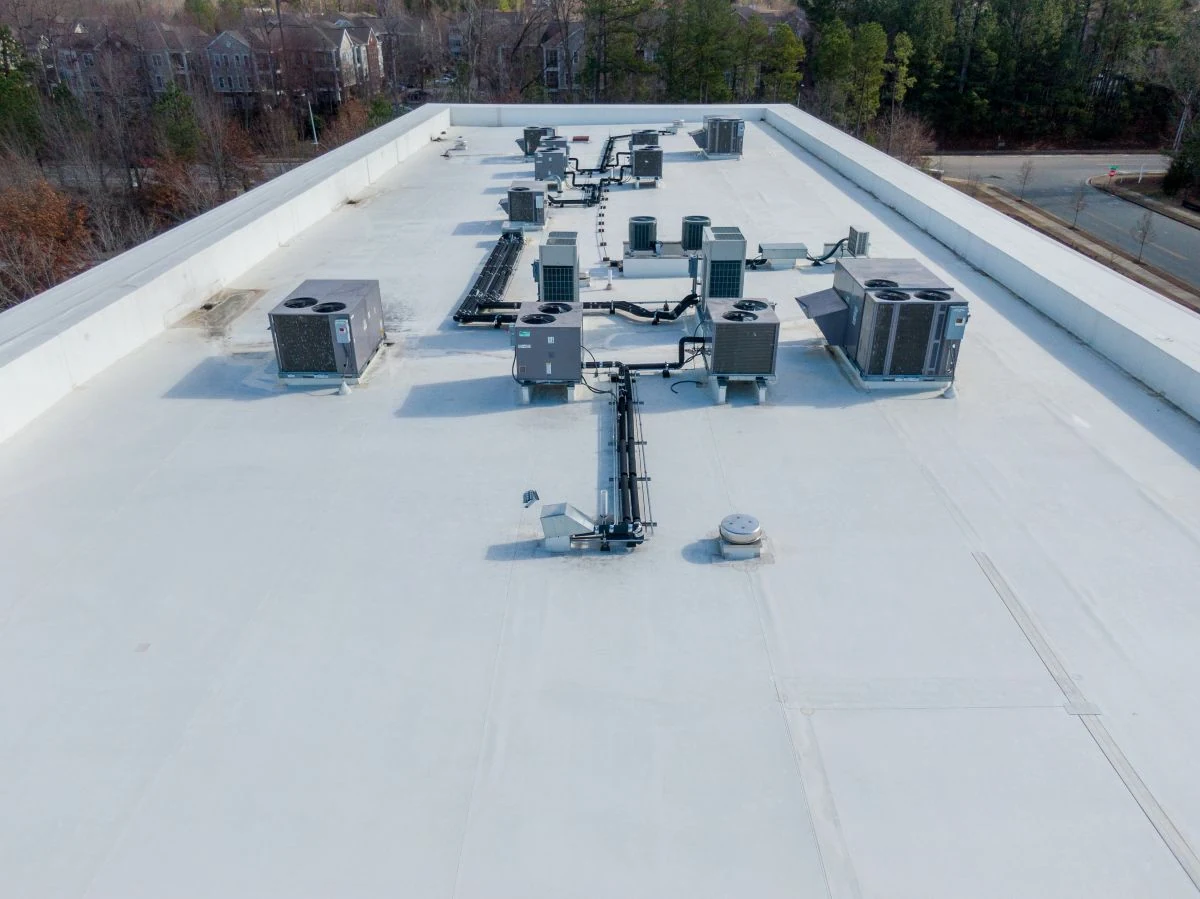
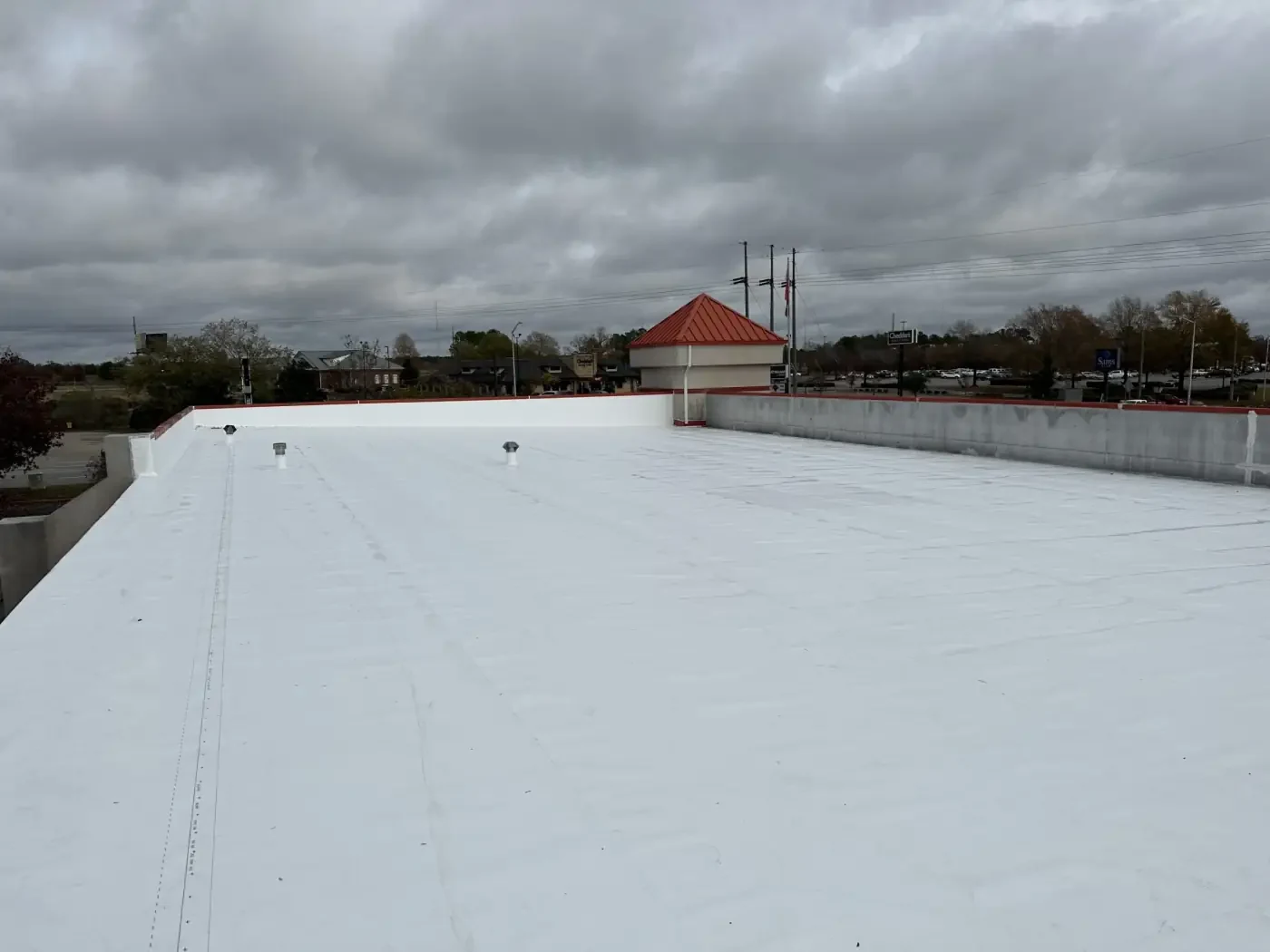
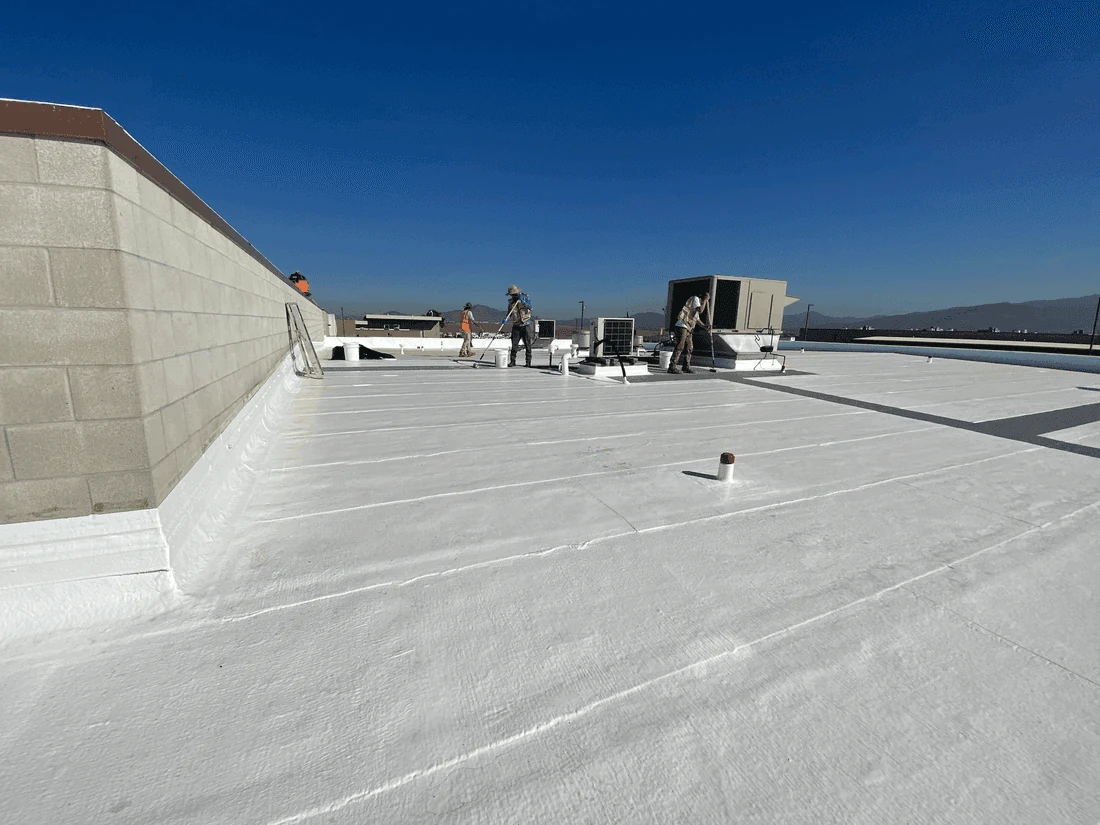
White TPO reflects most of the solar load. On a 500,000 square foot fulfillment center roof in Redlands, that reflectivity is the difference between a deck at 160 degrees and a deck at 110 in August. It also satisfies California Title 24 cool roof requirements for low-slope commercial, which is not optional on new work here.
Where 60-Mil Fits in This Market
Sixty mil is the right call for a lot of the building stock between the I-10 and the I-215. Institutional owners and REITs holding distribution product typically spec it because the math works: it hits a 15 to 20 year manufacturer warranty, it's the most competitive membrane to bid, and every crew in the valley knows how to install it.
We put 60-mil on tilt-up warehouses, multi-tenant industrial flex space, strip retail in Highland and Yucaipa, and self-storage roofs where foot traffic is close to zero. If the roof has minimal equipment, a clean deck, and an owner planning to hold ten to fifteen years, 60-mil is honest value.
Where we push back is roofs with heavy service traffic. A grocery store or cold storage building with mechanics walking the roof every week will scuff and gouge a 60-mil sheet faster than the warranty runs. Same for buildings planning rooftop solar. For those we quote 80-mil TPO and show the cost difference, which is usually smaller than owners expect.
Attachment Methods and Santa Ana Wind Loads
Wind is the design driver people forget in this valley. Santa Ana events push gusts through the Cajon Pass and across the open warehouse corridors of Bloomington and Rialto with nothing to slow them down. A membrane roof fails at the perimeter and corners first, so that's where the engineering has to be right.
Mechanically attached is the standard system: rows of plates and fasteners into the steel or wood deck, membrane welded over each row. It's fast and economical on big fields. Induction-weld systems fasten plates to the deck and then bond the sheet to the plates from above, which cuts the number of penetrations and spreads uplift loads better. Fully adhered costs more and shows up mostly on smaller roofs, odd geometries, and re-covers over concrete decks.
Whatever the field attachment, we run enhanced fastening in the corner and perimeter zones per the uplift calcs, and we pay attention to edge metal. Most wind losses we get called to in Fontana start at a shop-bent coping or gravel stop that let go, not in the middle of the sheet.
Installing TPO in High-Desert Heat
Welding TPO is temperature-sensitive work, and San Bernardino summers complicate it. A white deck at 7 a.m. and the same deck at 2 p.m. need different welder settings. Our crews run test welds at the start of every shift and again when conditions change, then peel-test the coupons before production welding starts.
Here is what we check on every 60-mil TPO install in this market:
- Probe every seam after it cools, the full length, not spot checks
- Cut and peel-test weld coupons each morning and after wind or temperature shifts
- Enhanced corner and perimeter fastening matched to the uplift report
- Cover board over the polyiso wherever there will be trade traffic
- Walkway pad paths to every piece of rooftop equipment
- Sealant-topped terminations at walls and curbs, checked before demobilizing
Dust is the other local issue. Truck yards and open desert lots throw fine grit that kills weld quality. Sheets get wiped ahead of the welder in dusty conditions, and we stop welding during active Santa Ana blows rather than chase contaminated seams later.
Service Life and What Kills It Early
A properly installed 60-mil TPO roof in this climate should give you 15 to 20 years of service. The sheet doesn't usually fail in the field first. What fails is the details: pitch pans, aging pipe boots, seams at curbs where movement concentrates, and punctures from dropped tools around HVAC units.
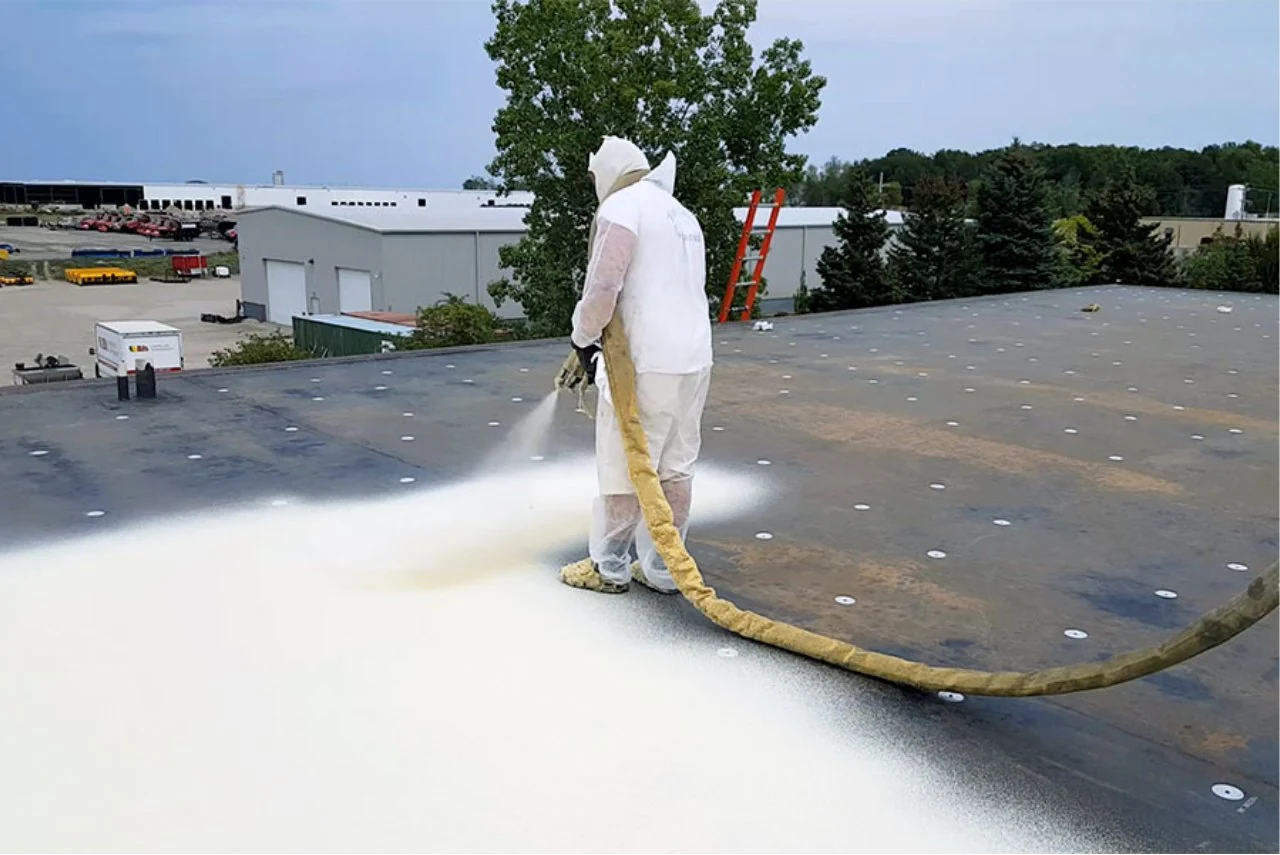
UV exposure out here is severe, and the membrane loses plasticity slowly over its life. By year 15 the sheet welds less reliably, which is why repairs on old TPO get harder every year. Twice-a-year inspections catch the small stuff while it's still cheap, and a well-kept 60-mil roof becomes a strong candidate for a silicone coating at the end of its life instead of a tear-off.
Common Questions on 60-Mil TPO
Is 60-mil TPO thick enough for a warehouse in Fontana?
For a standard distribution roof with light equipment and controlled roof access, yes. It's the market-standard spec for that building type. If the roof carries heavy mechanical traffic or solar is planned, we recommend stepping up in thickness.
How long does the manufacturer warranty run?
Most manufacturers offer 15 or 20 year system warranties on 60-mil TPO depending on the assembly and attachment method. Longer terms generally require thicker membrane.
Does white TPO really lower cooling costs here?
On conditioned buildings, yes, and the effect is bigger in this valley than in coastal markets because the solar load is higher. On unconditioned warehouse space the benefit is mostly lower roof temperature, which slows membrane aging.
Can you install TPO during Santa Ana season?
We schedule around wind events. Loose sheet and hot-air welders don't mix with 50 mph gusts, so we sequence tear-off and staging so nothing is left unsecured when the forecast turns.
What deck types take a mechanically attached system?
Steel deck is the most common in the Inland Empire and takes fasteners well. Wood decks on older buildings work too. Over structural concrete we usually go adhered or induction-welded instead of drilling thousands of holes.