Spray Foam Roofing for Irregular Rooflines and Built-In Drainage
Spray polyurethane foam solves a specific problem better than any membrane can: a roof with a lot of odd geometry, penetrations, and drainage that needs correcting rather than just covering. Additions at Loma Linda's medical campus, multifamily apartment roofs thick with vents and equipment curbs, and self-storage buildings with awkward roof transitions are where SPF earns its place in this market. Here's how the material actually works and where we don't recommend it.
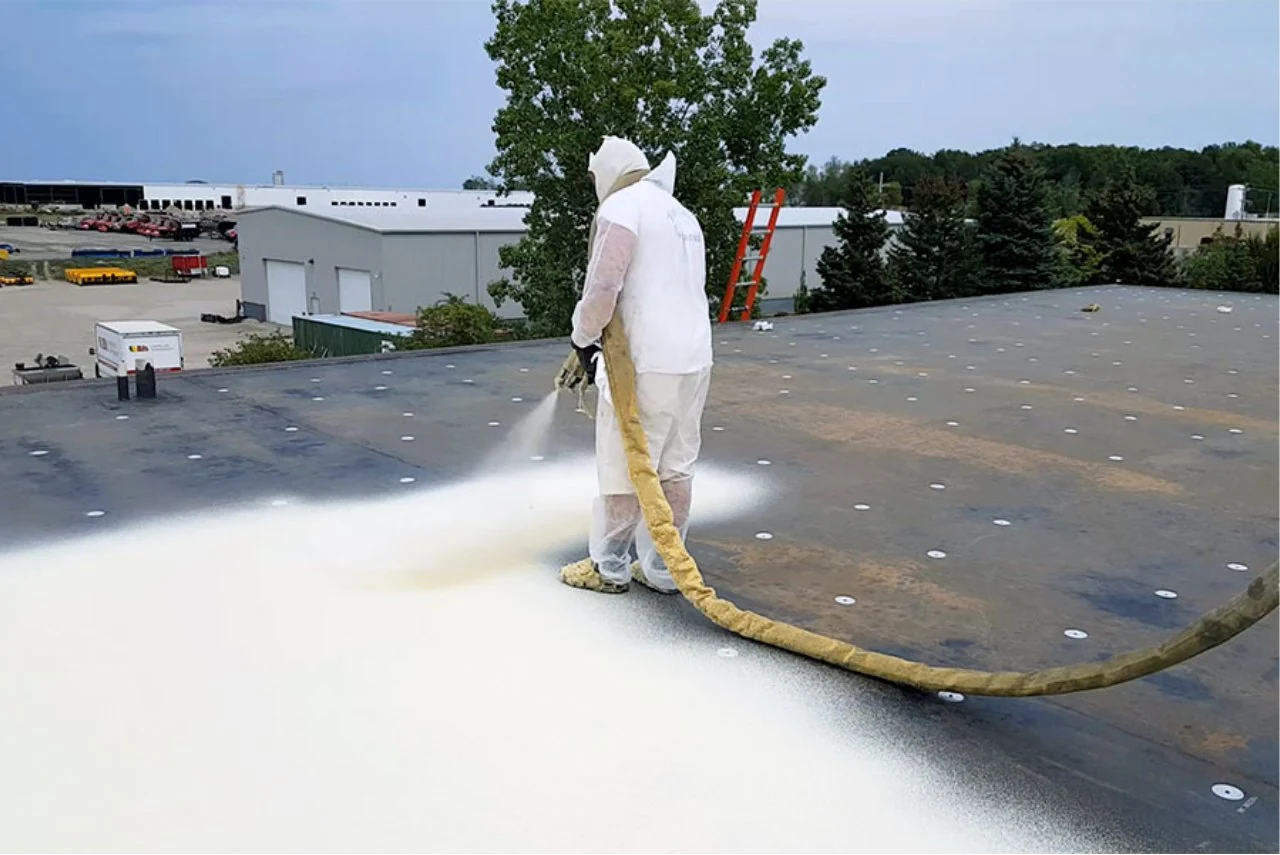
Foam Applied, Not Rolled
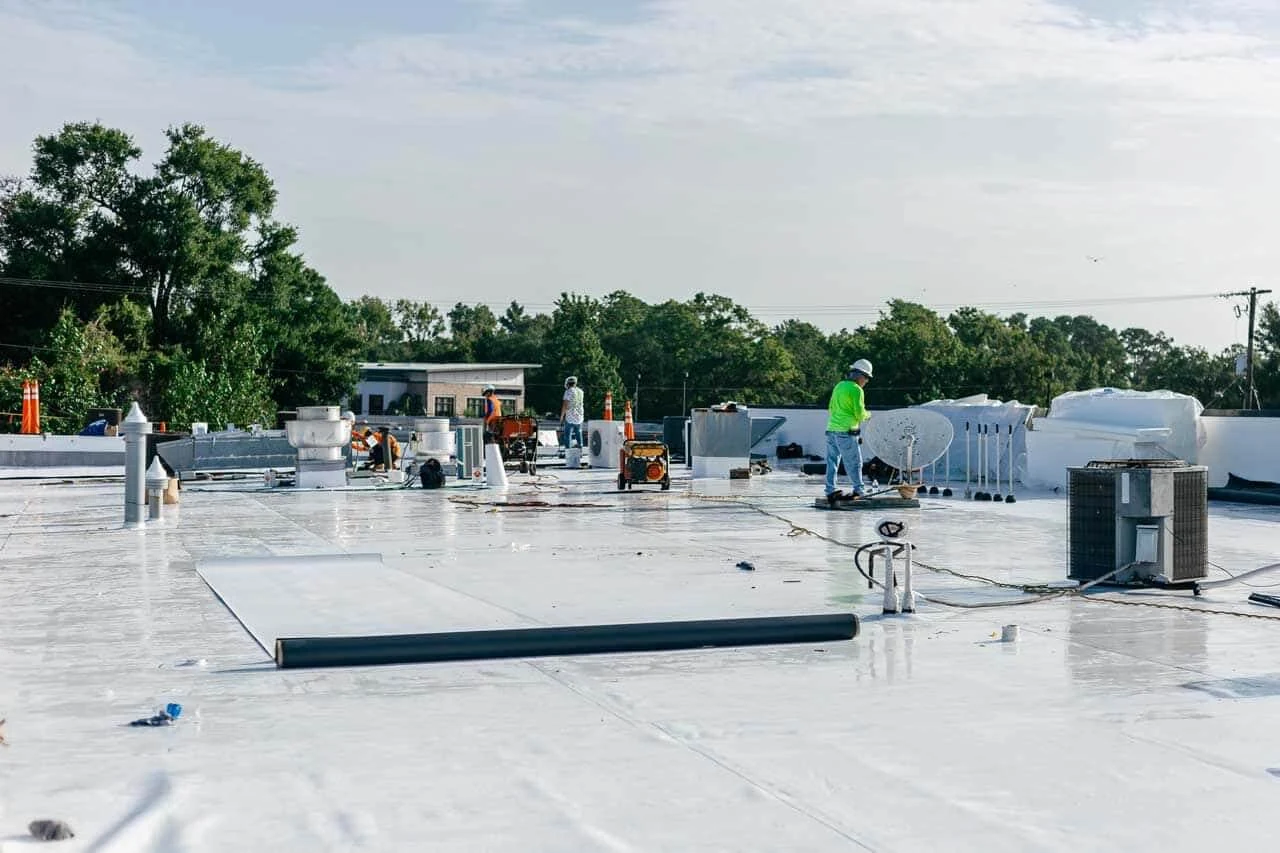
SPF is sprayed on-site as a two-component liquid that reacts and expands into a rigid closed-cell foam within seconds, bonding directly to the substrate with no seams anywhere in the field. That's the core advantage: every square foot of the roof, including corners, curbs, and pipe penetrations, is monolithic. There's no seam to fail because there's no seam.
The foam also insulates. It carries a high R-value per inch compared to board insulation, and because it's applied at variable thickness, we can build slope directly into the foam itself rather than relying on tapered board insulation cut and pieced together underneath a membrane. On a roof with multiple drains and an existing flat or poorly sloped deck, that's a real fix rather than a workaround.
Where Built-In Slope Solves Real Problems
Additions and mechanical retrofits at Loma Linda University Medical Center's campus tend to have exactly the kind of roof SPF handles well: dense equipment, curbs added at different points over decades, and drainage that was never quite right to begin with. Spraying foam at variable thickness lets us crown the field toward drains and eliminate the ponding that a flat membrane retrofit would just sit on top of.
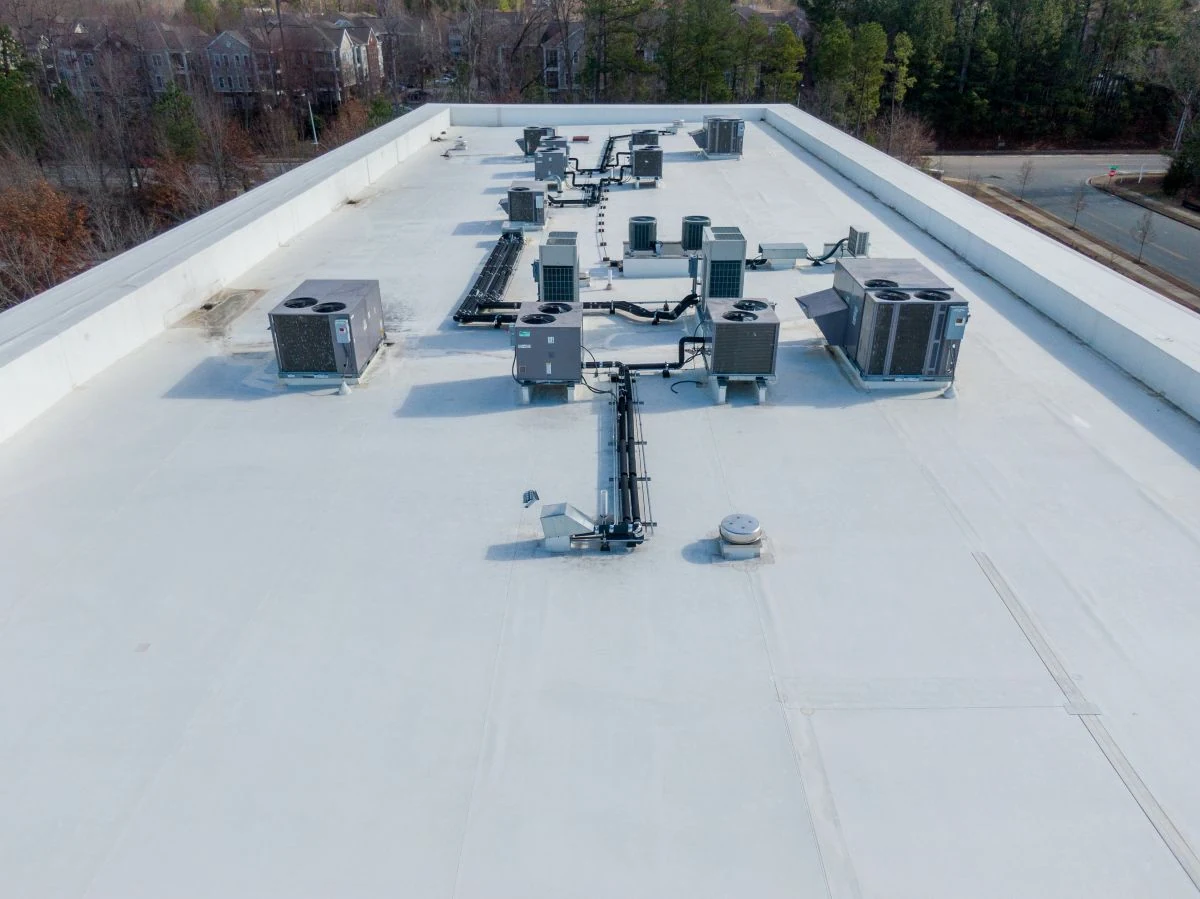
Multifamily apartment buildings scattered through the county's suburban commercial pockets often have similar issues at a smaller scale: vent stacks, bath fan penetrations, and HVAC curbs punched through a roof that was flat from day one. Foam's ability to taper drainage toward scuppers while sealing every one of those penetrations without a separate flashing detail at each one saves real labor on a roof with that much clutter.
The Coating Isn't Optional
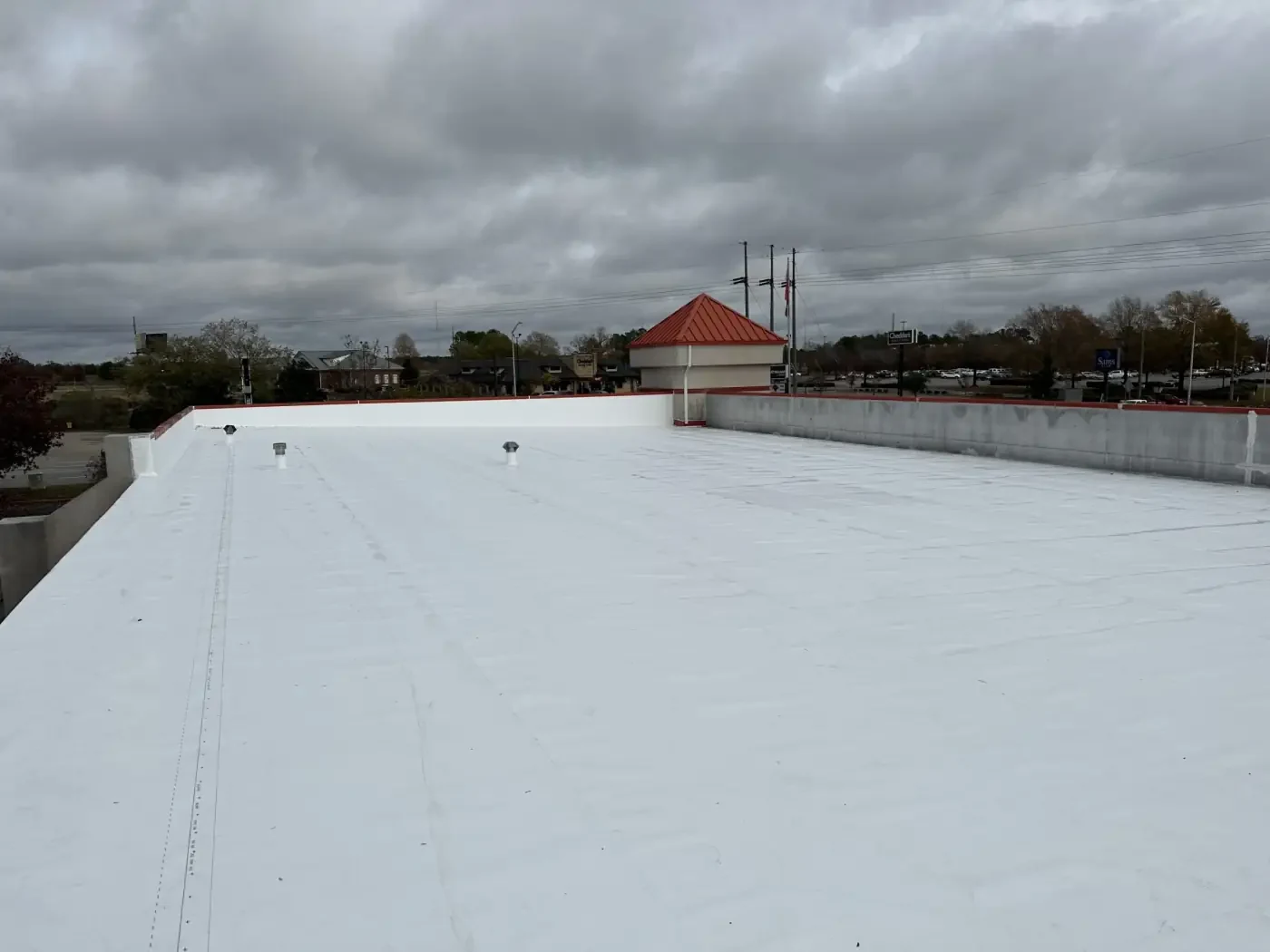
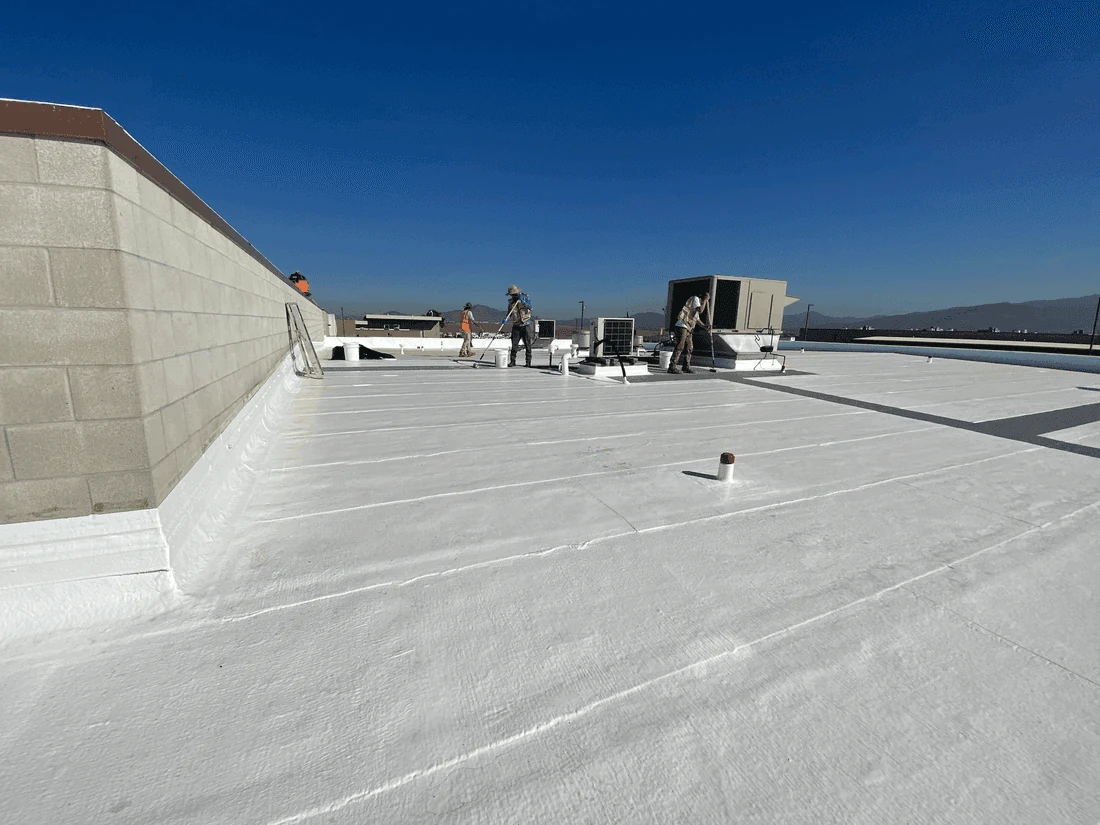
Foam is never left exposed. It gets a protective elastomeric topcoat, almost always silicone, immediately after curing, and that topcoat is what actually faces the weather. The foam provides insulation value and shape; the coating provides UV resistance, walkability, and weatherproofing. This isn't a two-step process we'd skip on a budget job; foam without a proper coating degrades under UV exposure within a single season in this climate.
That coating layer also means SPF roofs are maintenance roofs by design, not a set-it-and-forget-it system. Recoat cycles run roughly every 10 to 15 years depending on foot traffic, hail exposure, and UV load, and skipping a scheduled recoat is the single biggest cause of SPF roof failures we get called out to diagnose.
What We Check Before, During, and After Application
- Substrate moisture confirmed dry before spraying, since foam bonds permanently and traps whatever's underneath it
- Wind and temperature conditions monitored closely, since foam application is far more weather-sensitive than membrane installation
- Thickness verified in cross-section cuts across the field rather than at a few sample points
- Slope built to positive drainage at every low point and drain, checked with water testing before coating
- Granule or aggregate broadcast into the topcoat at walkway paths for traction and impact resistance
- Full topcoat mil thickness verified before the crew leaves the job
Where We Steer Owners Away From Foam
Above the snow line, in Crestline, Lake Arrowhead, and Running Springs, we generally don't recommend SPF. Snow load, ice formation at eaves, and the mechanical stress of snow removal don't pair well with a coated foam surface the way they do with rubber or granulated mod-bit, and the maintenance discipline required for foam is a harder sell on seasonal mountain properties that don't get walked as often. EPDM and modified bitumen are the better answer up there.
We also pull back on hail-prone or heavy-foot-traffic roofs without a robust protective topcoat and aggregate broadcast, since foam without adequate surface protection is genuinely vulnerable to impact in a way a reinforced membrane isn't. And on very large, simple warehouse fields with straightforward geometry and adequate existing drainage, membrane roofing is usually the more economical choice; foam's advantage is complexity, and a clean rectangular warehouse roof doesn't have much.
Spray Foam Questions From Owners
Is spray foam roofing actually durable, or is it a temporary fix?
Properly coated and maintained on the recoat schedule, SPF roofs run decades of service. The system depends on that maintenance discipline more than membrane roofs do, which owners should go in understanding.
Does foam work well on a roof with a lot of vents and curbs?
That's exactly the roof type SPF handles best. Multifamily and older institutional buildings with dense penetrations are strong candidates because foam seals around each one without a separate flashing detail.
Why wouldn't you use foam in the mountain communities?
Snow load and ice at eaves put mechanical stress on a coated foam surface that rubber and granulated mod-bit tolerate better, and seasonal mountain properties don't always get the routine inspection foam maintenance depends on.
What happens if the recoat gets skipped?
UV exposure starts degrading unprotected foam within a season, and once that happens the foam itself, beyond the coating, needs repair or replacement rather than a straightforward recoat.
Can foam fix a roof with drainage problems?
Often yes. Variable-thickness application lets us build slope into the foam directly, which is one of the material's real advantages over membrane systems on a flat or poorly draining deck.