
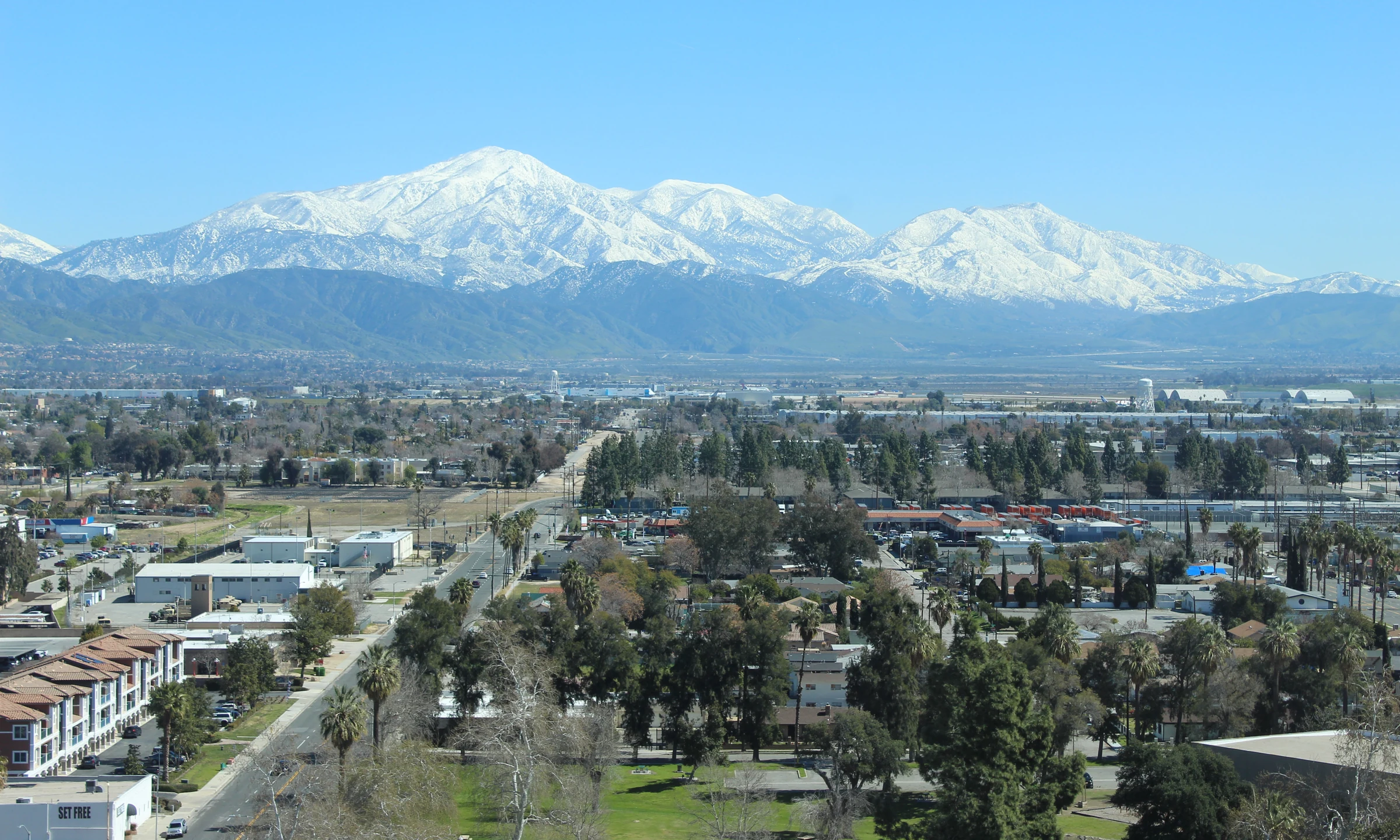
Commercial Roofers in Highgrove, CA
For commercial properties in Highgrove, CA, the defensible choice between repair, restoration, and replacement starts with roof-system condition, moisture findings, drainage performance, and remaining service life. Highgrove is a small unincorporated pocket wedged between Riverside's Hunter Park industrial area and Grand Terrace, split by I-215 and the BNSF main line. The commercial roofs here are a mix: citrus-era buildings near Center Street, mid-century steel shops, and newer light-industrial infill. We repair, restore, and replace all of it.
Old Buildings, Old Roof Assemblies
Some of the industrial buildings around Center Street and Main Street date back to Highgrove's packing-house days. That means plank decks, bowstring trusses on a few of them, and built-up roofing that has been patched in layers for fifty years or more. You cannot treat these roofs like a modern tilt-up. Before we quote anything, we take core cuts to find out how many roof layers are up there and whether the deck underneath is still sound.
Two layers of existing roofing is the legal limit in California. A lot of Highgrove roofs are already there, which takes a simple recover off the table. When that is the case we price the tear-off honestly, including deck repair allowances, so the owner is not hit with surprise change orders once the old roof comes up.
Working Next to the Rail Line
The BNSF corridor and the Metrolink layover facility define the east side of Highgrove. Buildings close to the tracks take constant low-frequency vibration, and over the years that works on a roof: fasteners loosen, old bitumen flashings crack at the walls, and counterflashing joints open up. On inspections near the rail line we pay extra attention to wall terminations and equipment curbs, because vibration failures show up there first.
Rail-adjacent yards also collect diesel soot and steel dust on the roof surface. On white membranes that film cuts reflectivity and cooks the building harder in summer. A maintenance wash and inspection every year or two keeps a reflective roof doing its job.
The I-215 Infill Buildings
Between the freeway and Iowa Avenue, newer concrete and metal light-industrial buildings have filled in over the past couple of decades, and Spring Mountain Ranch construction has brought more traffic and more development pressure to the area. These buildings mostly carry single-ply membranes or standing seam metal, and they fail in predictable ways: ponding at clogged drains, split pipe boots, and seam probes that open after years of inland heat.
Highgrove summers regularly clear 100 degrees, and the daily heat cycle is what ages these roofs. Membrane seams and terminations move every single day. Our repair details account for that movement instead of fighting it, which is why we use manufacturer-matched materials rather than a bucket of mastic.
What Highgrove Owners Call Us For
- Core sampling and honest assessments of layered built-up roofs
- Tear-off and replacement where the two-layer limit has been reached
- Modified bitumen repairs and restorations on older low-slope decks
- Seam, drain, and boot repairs on newer single-ply roofs near I-215
- Wall flashing and counterflashing rework on rail-adjacent buildings
- Reflective coating systems to cut summer heat gain
Small Community, Real Response
Highgrove does not have a city hall or a big commercial tax base, and owners here sometimes tell us they get treated like an afterthought by contractors chasing Riverside work. Our crews already run the I-215 corridor daily between San Bernardino, Grand Terrace, and Hunter Park. Stopping in Highgrove is not a detour for us, so scheduling is straightforward and follow-up visits actually happen.
Every job here gets the same paper trail we produce on a distribution center: photos before and after, a marked-up roof plan, and a written scope. For the owners of older buildings, that file becomes the roof's service history, and it makes every future repair decision easier and cheaper.
Questions From Highgrove Building Owners
My building has a very old flat roof with many patches. Is it worth restoring?
It depends on what the core cuts show. If there are fewer than two existing layers, the insulation is dry, and the deck is sound, a restoration or recover can work well. If the assembly is saturated or already at two layers, tear-off is the only honest recommendation, and we will show you the cores that prove it.
Do you handle the permit with Riverside County?
Yes. Highgrove is unincorporated, so reroof permits go through Riverside County rather than the City of Riverside. We handle the paperwork and the inspection scheduling as part of the job.
Can you work around a tenant running a shop in the building?
Yes. Tear-offs over an occupied shop get planned in sections so the building is never opened up beyond what we can dry-in the same day. Dust and odor control matter on old built-up roofs, and we plan for both.
The trains shake my building. Can a roof really be detailed for that?
Detailed for movement, yes. We use termination details with mechanical fastening plus sealant rather than sealant alone, and we spec flashings with enough flexibility to handle constant minor movement. Then we recommend a periodic inspection, because near a rail line small openings appear sooner than elsewhere.
Do you offer maintenance visits for just one or two buildings?
Yes. A twice-yearly visit to clear drains, check seams and flashings, and photograph conditions costs little and catches almost everything early. Owners of single buildings use us for this all over the corridor.