
Commercial Roofers in Highland
For commercial properties in Highland, the defensible choice between repair, restoration, and replacement starts with roof-system condition, moisture findings, drainage performance, and remaining service life. Highland is smaller and quieter than the logistics corridors to its west, and its commercial roof stock reflects that: strip retail along Baseline and Boulder, medical and professional offices serving a growing residential population, and newer commercial development pushing east along Greenspot Road toward the base of the mountains. The roofing concerns here have less to do with warehouse scale and more to do with aging retail centers and proximity to wildland fire terrain.
The Greenspot Corridor's Newer Commercial Buildings
Development along Greenspot Road and the areas feeding it has brought newer retail pads, medical office buildings, and small commercial centers to what used to be open land at the city's edge. These roofs are recent enough that most of our work is standard maintenance and warranty-period inspection rather than replacement, checking flashing at rooftop units, confirming drainage performs as designed, and catching installation issues while they are still cheap to fix.
A few of these newer pads sit close enough to open foothill land that erosion runoff during heavy winter rain carries silt and gravel onto low roof sections and into scupper openings. It is a different drainage problem than a flat industrial roof faces, more sediment, less standing volume, and it calls for scupper screens and a post-storm check rather than the drain-clearing routine we would run on a distribution building.
Older Strip Retail Along Baseline and Boulder
Highland's older commercial spine carries the roof problems every aging strip center accumulates: multiple tenant improvements over the years, HVAC units added and swapped without anyone updating the roof plan, and patchwork sealant at penetrations that nobody has tracked consistently. We start these jobs by mapping what is actually on the roof against what the property records assume is there, because the two rarely match after a decade of tenant turnover.
Restaurant tenants along this corridor bring the same grease-exhaust problems we see on retail strips elsewhere in the valley, softened membrane around exhaust fan curbs that needs isolation and proper detailing rather than a quick caulk job that fails again within a season.
Medical Office Roofs and Zero-Disruption Work
Highland's growing medical office base means more roofs over occupied exam rooms, imaging suites, and pharmacy space than a purely retail corridor would have. These buildings do not tolerate surprise leaks or disruptive roof work during business hours. We schedule around clinic hours, protect interior finishes during any cut-in work, and treat a medical office roof with the same documentation discipline we use on larger institutional buildings, even when the roof itself is modest in size.
Fire Terrain at the City's Edge
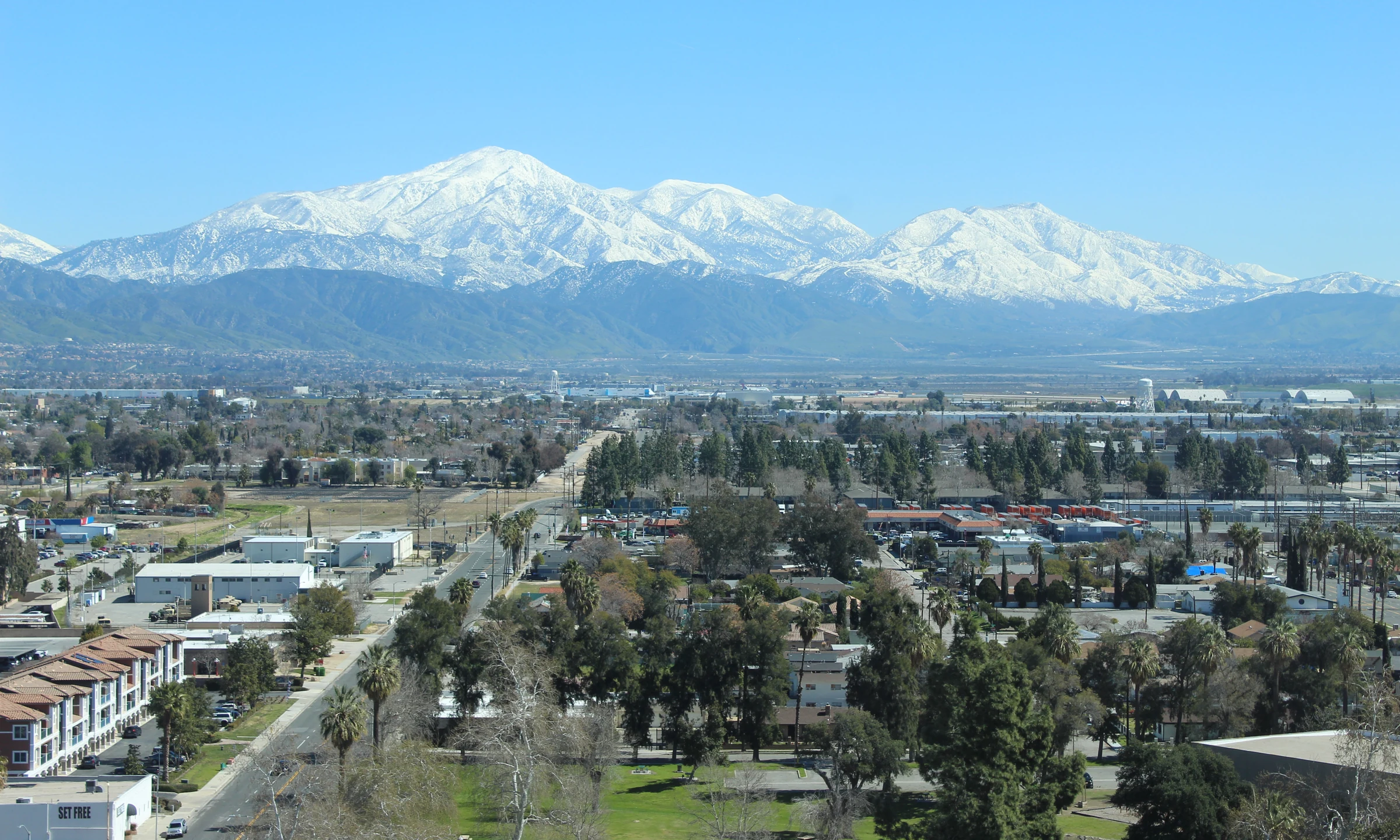
Highland's northern edge runs up against the San Bernardino National Forest, and the foothill neighborhoods and commercial buildings closest to that line sit inside real wildfire exposure territory. Fires burning in the mountains above San Bernardino and Highland have reached close enough to city development in past fire seasons that owners near the forest boundary take the question seriously. For commercial roofs in that zone, we look hard at vent screening, eave detailing, and roof covering class, because embers find the gaps in a roof assembly long before flame ever reaches the building.
Buildings closer to the Santa Ana River wash on the south side of Highland face a different seasonal concern: debris and vegetation carried by wash flow during heavy winter rain can end up against loading docks and low-lying roof drains on adjacent commercial parcels, so we check those drainage points ahead of the wet season specifically for that reason.
What We're Called For in Highland
- Warranty-period inspections on new Greenspot Road corridor commercial buildings
- Rooftop equipment mapping and update on older Baseline and Boulder strip centers
- Grease-exhaust membrane repair at restaurant tenant spaces
- Zero-disruption scheduling for medical office roof work
- Ember-resistant vent and eave detailing review for foothill-adjacent buildings
- Drain checks ahead of winter storms for buildings near the Santa Ana River wash
A Smaller Market With Its Own Priorities
Highland does not carry the warehouse scale of Fontana or Rialto, and the ownership here looks different too, more independent landlords and small medical groups, fewer institutional asset managers. We size our recommendations to that reality: straightforward findings, clear numbers, and no scope written for a building three times the size of the one we are standing on.
Highland Building Owners Ask Us
How do you know what equipment is actually on an old strip center roof?
We walk the whole field and log every curb, penetration, and unit against what the paperwork shows, rather than trusting a leasing file that has not been updated through several tenant changes.
Is our medical office roof really at higher risk than a regular retail roof?
The roof itself is not more fragile, but the tolerance for a surprise leak is much lower with exam rooms, imaging equipment, or pharmacy stock underneath. We plan and document accordingly.
Does our building near the forest boundary need special roofing detail because of fire risk?
Buildings close to wildland terrain benefit from ember-resistant vent screening and attention to eave and roof-edge detailing. It is a reasonable question to ask on any building near that boundary.
What causes the soft, spongy membrane we keep finding near our restaurant tenant's exhaust fan?
Grease vapor breaks down unprotected membrane over time. It needs a properly detailed grease containment and isolation pad rather than a quick patch, or the same spot will fail again within a season.
Should we worry about debris from the river wash affecting our roof drains?
If your building sits near the wash on Highland's south side, yes, especially before winter storms. We check those drains on a schedule tied to the rainy season rather than waiting for a complaint.