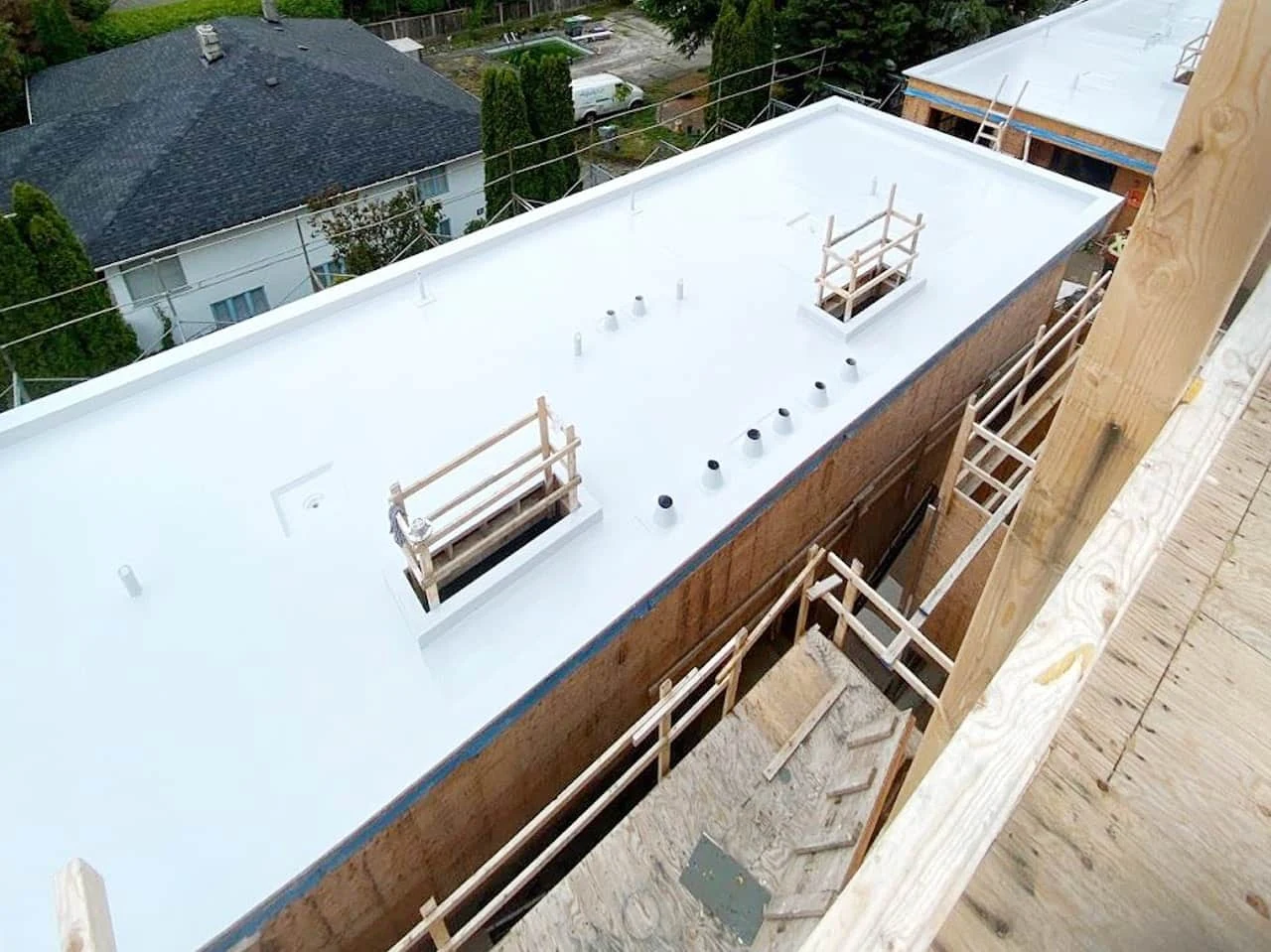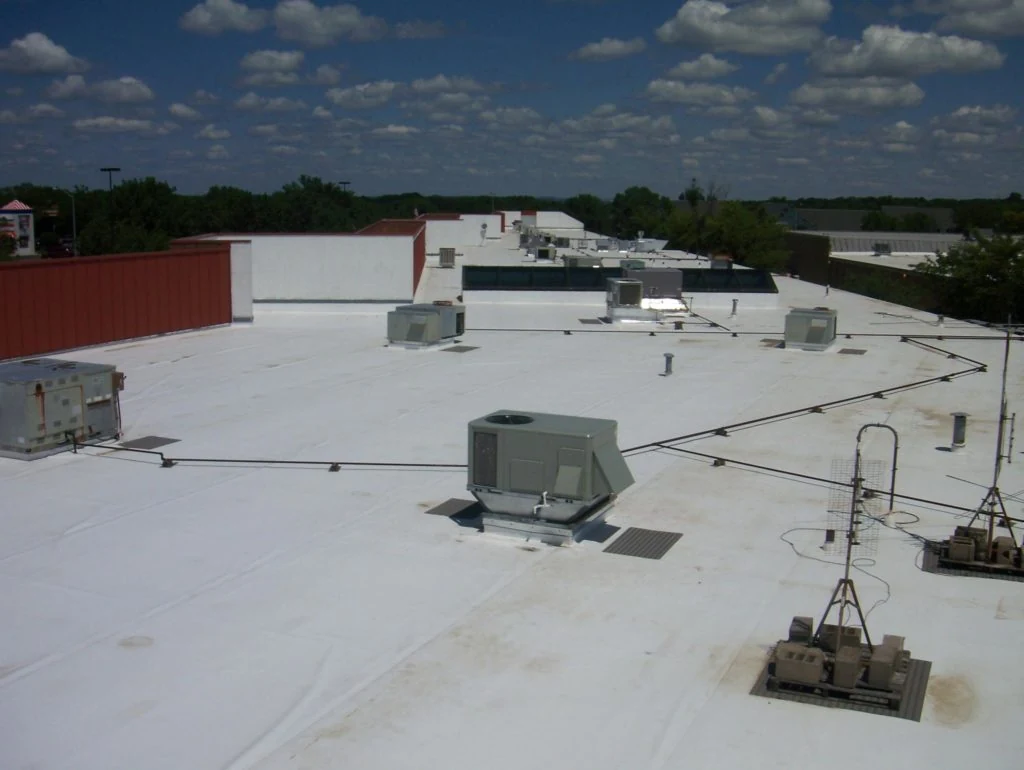
Elevate's EPDM Heritage and Where It Still Matters Here
Holcim Elevate is the rebranded successor to Firestone Building Products, and the RubberGard EPDM line that made Firestone's name in this industry is still exactly what we reach for on the mountain-community lodge and retail roofs above Crestline and Lake Arrowhead. Here's what we install from their current catalog and where each product actually fits this county's building stock.
RubberGard EPDM
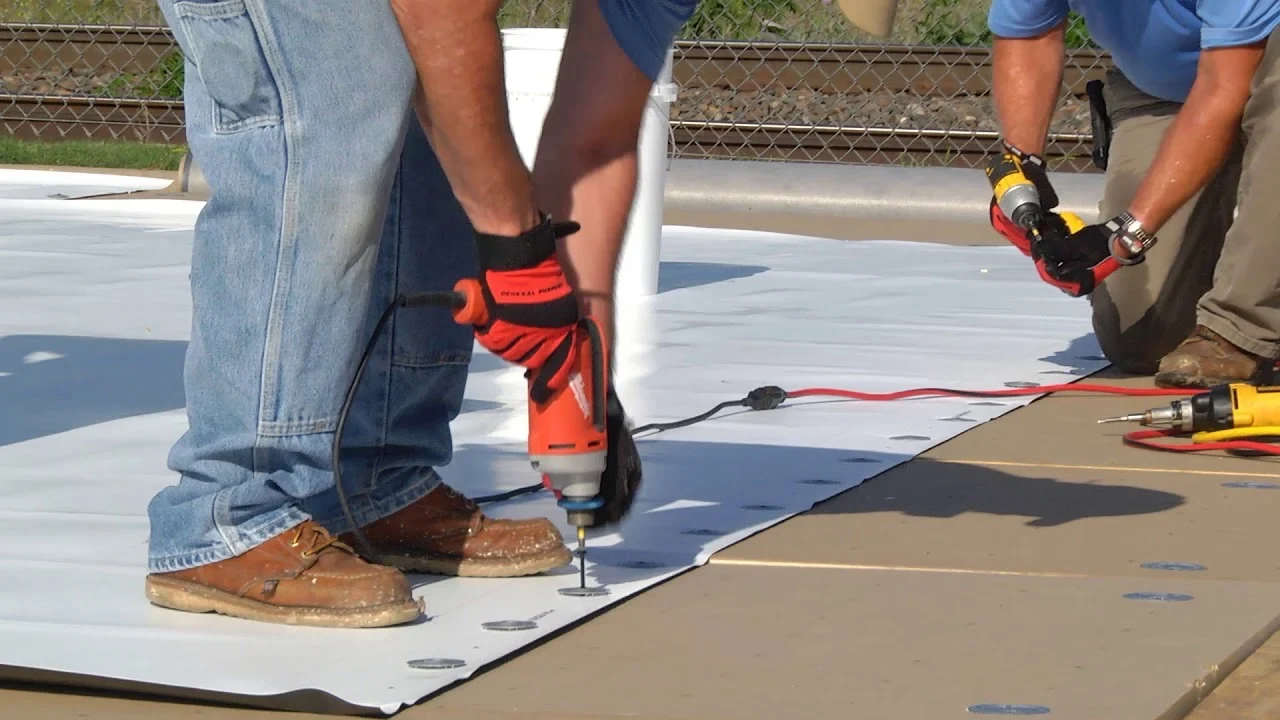
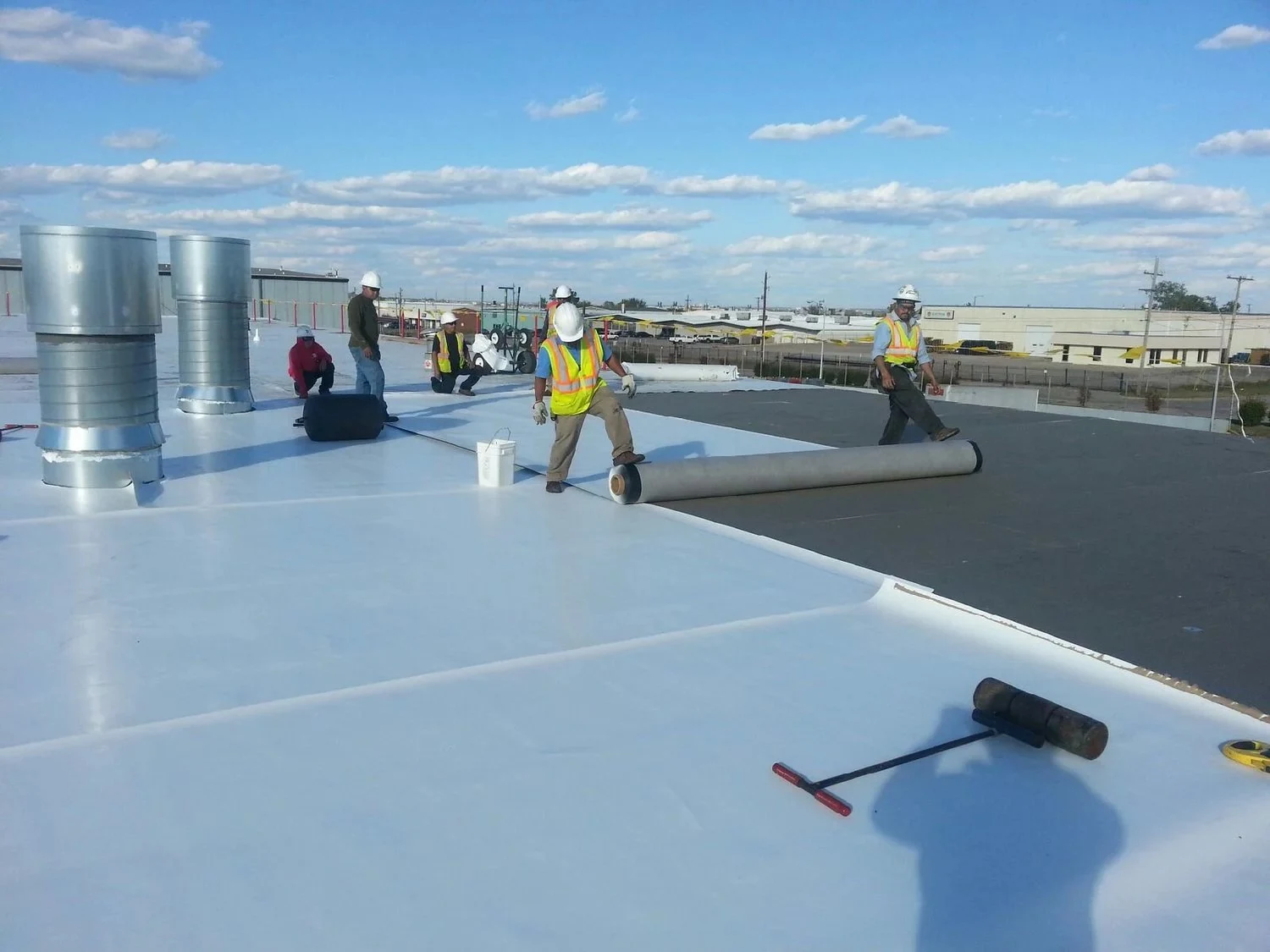
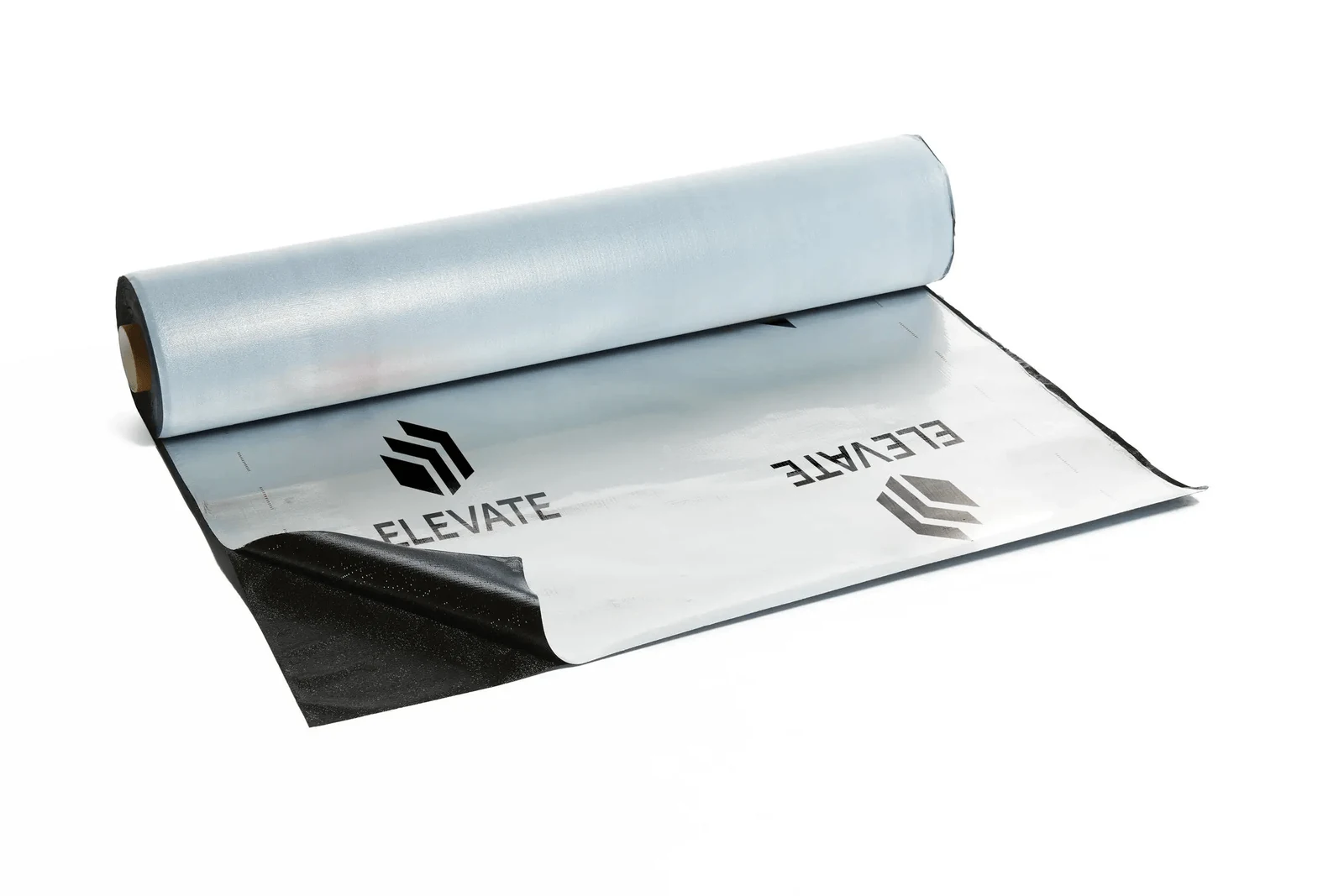
RubberGard is the direct continuation of the original Firestone rubber roofing product, available in black and white, and it carries one of the longest real-world service track records of any single-ply membrane on the market. We install it fully adhered on mountain buildings above Highway 18 where cold-weather flexibility and freeze-thaw tolerance matter more than reflectivity, and ballasted on select valley applications where the structure and code path support that assembly.
The reason we keep specifying this particular line at elevation isn't brand loyalty, it's that EPDM's fundamental cold-weather behavior, staying flexible where thermoplastics get stiff, is exactly what a snow-load roof needs, and Elevate's version of that rubber has decades of field performance behind the formulation.
UltraPly TPO
UltraPly is Elevate's TPO line, and we install it in the standard mil-thickness range across warehouse and distribution work when a project calls for their system rather than a competing manufacturer's. Field installation, welding, and detailing follow the same process as any TPO membrane; the choice of Elevate over another brand on a given job usually comes down to warranty program fit or material availability at the time of bid rather than a meaningful performance gap between comparable thickness sheets.
Warranty Structure
Elevate's commercial warranty program follows the same thickness-and-attachment logic as the rest of the industry:
- Standard system warranties scale by membrane thickness and attachment method, generally in the 15 to 20 year range at base thicknesses
- Extended terms into the 25 to 30 year range require thicker membrane and, often, a specified cover board
- Full-system coverage requires the complete assembly, insulation through membrane, to be Elevate-specified components
- Warranty issuance follows a completed-roof inspection process before final paperwork is delivered
We quote the whole assembly against whatever warranty term an owner wants, rather than pricing membrane alone and leaving the insulation and accessory requirements as a surprise later.
Elevate Insulation and Cover Board Systems
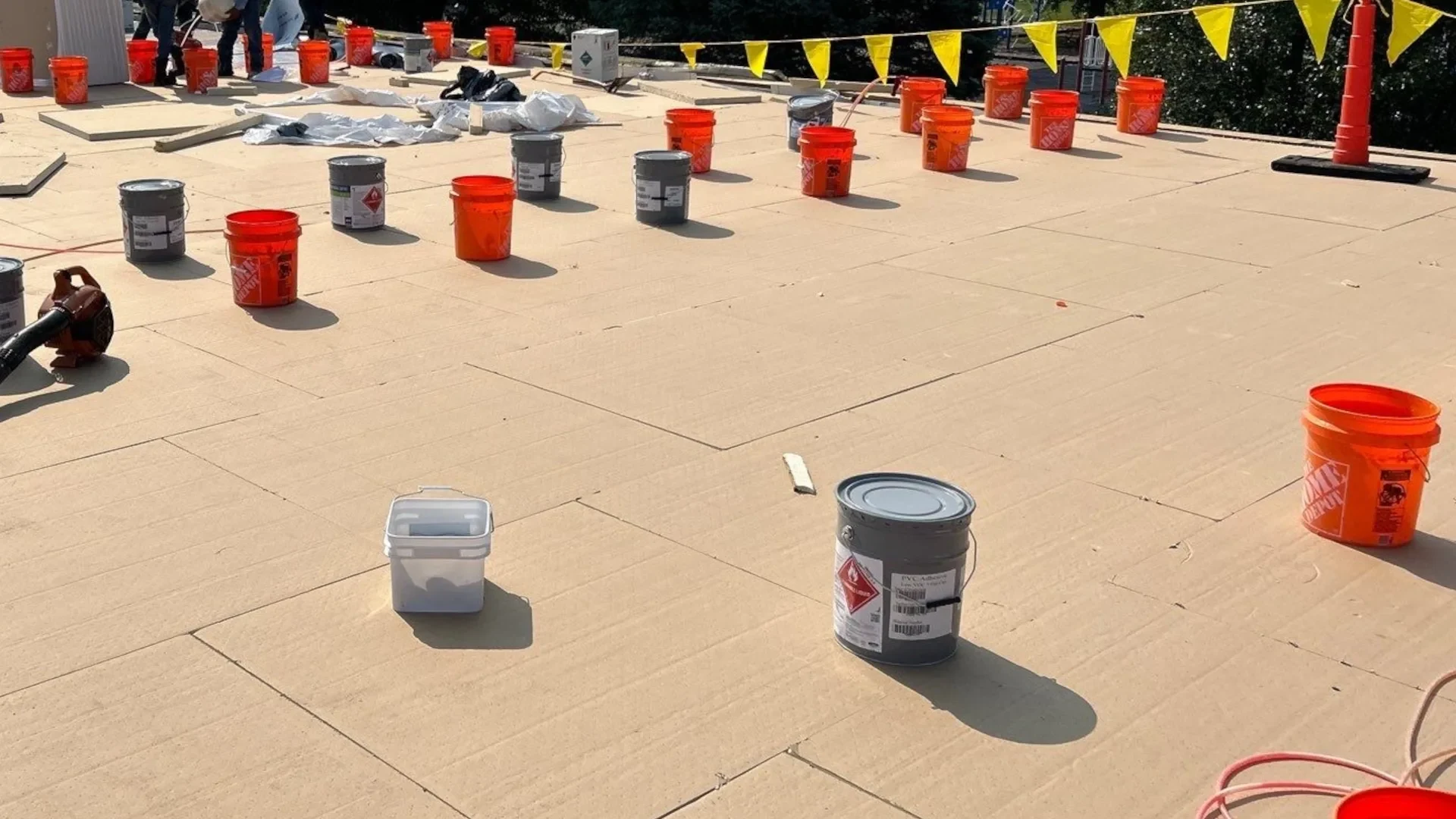
Full-system warranty coverage on an Elevate roof depends on more than the membrane. Their polyiso insulation boards and SecurShield HD cover board make up the rest of the assembly, and on most of the tear-off and recover work we do across the valley, getting that insulation package right matters as much as the membrane choice sitting above it.
Tapered polyiso is where a lot of the real problem-solving happens on a flat warehouse re-cover. Instead of leaving a deck as dead-flat as it was built decades ago, we cut tapered board to build slope toward existing drains, often the cheapest way to correct a ponding problem without touching the structure itself. SecurShield HD cover board goes down over that insulation package on re-covers over an old built-up roof with an uneven, gravel-scarred surface, giving the new membrane a harder substrate than the original deck ever offered.
We also spec ballasted RubberGard on recover jobs at institutional and older multifamily properties down in the valley, particularly buildings near Patton where the existing structure was built to carry ballast weight and a full tear-off isn't in the budget. That call always starts with a structural engineer confirming the roof can carry the added ballast load; where it checks out, ballasted RubberGard is often the least disruptive path to a new 20-year roof on a property that can't absorb extended vacancy or heavy construction traffic.
Building Types That Fit This Line
The mountain lodge, village retail, and camp-facility roofs around Lake Arrowhead, Crestline, and Running Springs are where Elevate's EPDM heritage matters most in this market; that's genuinely different climate and structural context from the valley floor, and rubber's decades-long track record at elevation is a real consideration for owners up there. On the valley side, UltraPly TPO competes for the same warehouse and distribution work as every other major TPO line, and we spec it when it's the right fit for a given bid rather than defaulting to any one brand.
What We're Not Claiming
We install Elevate systems per their published specifications and coordinate their inspection process for warranty issuance, which is a description of how the work gets done, not a claim to a specific certification level or exclusive dealer status. Ask us about installer standing for the particular warranty program a project requires.
Questions on Elevate Systems
Is RubberGard the same product as old Firestone EPDM?
It's the direct continuation of that product line under new ownership and branding following the Holcim acquisition. The formulation and manufacturing heritage carry forward.
Why EPDM specifically for mountain buildings?
Cold-weather flexibility and freeze-thaw tolerance are where rubber outperforms thermoplastics, and that's exactly the climate above the snow line in this county.
Does Elevate TPO perform differently than other brands?
Base chemistry across major TPO manufacturers is broadly comparable at equal thickness. Warranty structure and program fit are usually the deciding factor in choosing one brand over another for a given bid.
Can Elevate EPDM go on a valley warehouse roof?
Ballasted applications can work depending on structural capacity; exposed black EPDM typically doesn't meet Title 24 cool roof rules on new valley construction, same as any manufacturer's black EPDM.
How long do Elevate warranties run?
Base system warranties generally run 15 to 20 years, with 25 to 30 year terms available on thicker membrane with the required assembly components. We build the quote around the term an owner wants.